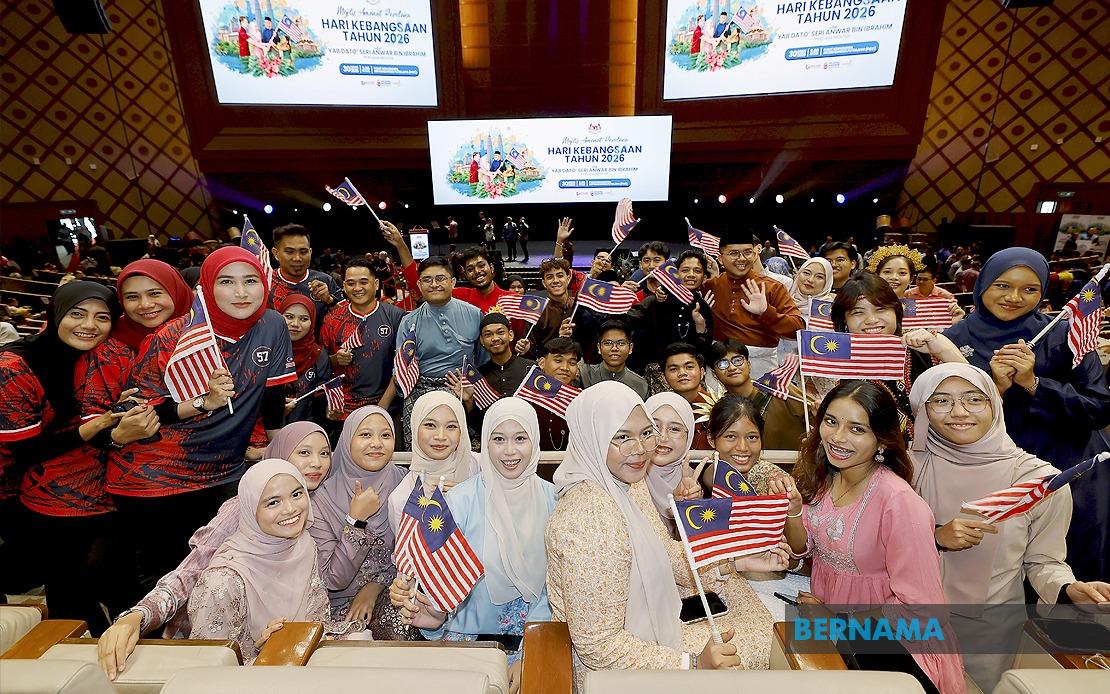
Prime Minister Datuk Seri Anwar Ibrahim announced six key government initiatives during his National Day address in Putrajaya, with observers noting that the measures are designed to provide tangible benefits across multiple demographic groups and economic sectors. The initiatives, delivered at the Putrajaya International Convention Centre, represent a comprehensive approach to addressing concerns facing middle-income earners, young people entering the workforce, and small business proprietors who form a significant part of Malaysia's economy.
Among the centrepiece announcements was the restoration of the Budi MADANI RON95 fuel subsidy programme allocation, increasing the basic monthly quota from 200 litres back to 300 litres per month. This adjustment directly addresses transportation costs for working Malaysians who rely on daily commuting for employment, particularly those in the private sector and individuals managing long-distance travel for professional obligations. The move acknowledges persistent concerns about fuel expenses as a significant portion of household budgets for those in the M40 income bracket, where discretionary spending remains constrained despite relative income stability.
The government also committed to substantially expanding investment in school maintenance infrastructure, pledging to increase the 2027 allocation by 50 per cent to reach RM1.5 billion. This enhancement responds to longstanding complaints from educators and parents regarding the condition of educational facilities, ranging from aging classroom buildings to deteriorating toilet facilities and inadequate classroom equipment. Beyond basic maintenance, the allocation signals government recognition that school infrastructure directly affects learning outcomes and student well-being, with particular implications for families unable to afford private education alternatives.
Small business operators received attention through two complementary announcements aimed at improving cash flow and reducing administrative burdens. The government allocated RM200 million through the Geran Sejahtera MADANI programme specifically targeting hawkers, night market traders, and home-based entrepreneurs, particularly women running micro-enterprises. This targeted grant scheme acknowledges the critical role informal and semi-formal businesses play in employment generation and urban economies across Malaysia, providing direct support rather than loan-based assistance that burdens operators with debt obligations.
Administrative relief for small and medium enterprises came through revision of the e-Invoice exemption threshold, raising the annual revenue ceiling from RM1 million to RM3 million. This adjustment removes compliance burdens from businesses currently falling within this revenue range, allowing operators to focus resources on business growth rather than implementing complex digital accounting systems. The measure reflects understanding that regulatory compliance costs disproportionately affect smaller operators with limited administrative capacity, effectively creating a competitive disadvantage against larger enterprises.
Microfinancing capacity expansion represents another pillar of the announcement, with the government committing an additional RM1 billion in funding, bringing total microfinancing availability for 2026 to RM6 billion. This increase provides crucial capital access for entrepreneurs and small business operators unable to meet conventional banking requirements, addressing a persistent gap in Malaysia's financial services ecosystem. Enhanced microfinance availability particularly benefits underrepresented entrepreneur groups and those operating in underserved geographic regions where commercial banking presence remains limited.
The Budi Diesel subsidy programme also received enhancement, with the monthly quota increasing from 300 litres to 400 litres per month. This adjustment benefits commercial vehicle operators, including transport and logistics businesses that form essential economic infrastructure, alongside agricultural producers and rural workers whose operations depend on diesel-powered equipment. The increase recognizes that diesel-dependent sectors operate with tighter margins than passenger vehicle users, making fuel cost fluctuations particularly impactful on business viability.
Young professionals aged 18 to 30 received specific consideration through an artificial intelligence initiative offering free three-month subscriptions to three AI applications for 100,000 participants completing modules under the AI for the People programme. This initiative positions Malaysia within the emerging global competition for digital talent development, recognizing that artificial intelligence competency increasingly determines career trajectories and earning potential for young workers. Access to premium AI tools during formative career stages provides educational opportunity that would otherwise require substantial personal investment, particularly benefiting participants from lower-income households unable to independently purchase such subscriptions.
The bundled nature of these six measures suggests strategic intent to address multiple stakeholder concerns simultaneously rather than concentrating support within single demographic groups. Fuel subsidy increases benefit both individual commuters and business operators relying on vehicles for operations. Infrastructure investment strengthens educational systems affecting families with school-age children across income levels. Small business support combines direct grants with regulatory relief and financing expansion, creating multiple entry points for entrepreneurs at different business development stages.
For Malaysian observers accustomed to fragmented policy announcements, the coordinated presentation of these measures during National Day conveys government acknowledgment that multiple challenges demand simultaneous attention. The initiatives avoid concentrated spending within single constituencies while maintaining sufficient substance to generate meaningful economic impact. Young professionals and students particularly benefit from AI access initiatives, suggesting government recognition that digital competency determines future economic opportunity in increasingly technology-dependent labour markets.
Implementation mechanics remain important considerations, as announced measures require effective government administration to translate policy intent into actual citizen benefit. Historical experience demonstrates that fund allocation announcements and actual disbursement sometimes diverge, particularly for initiatives requiring beneficiary applications or eligibility verification. Successful execution of these measures would provide measurable relief across targeted segments, whereas implementation delays or bureaucratic friction could substantially diminish perceived benefits.
The announcement arrives during sustained discussion about rising living costs and constrained household budgets affecting middle-income Malaysians. Specific dollar allocations and percentage increases provide concrete benchmarks against which government delivery can be measured, distinguishing these announcements from more abstract policy commitments. For regional observers, Malaysia's approach to supporting middle-income earners and small business operators provides comparative context within ASEAN, where economic support mechanisms vary substantially across member states.

