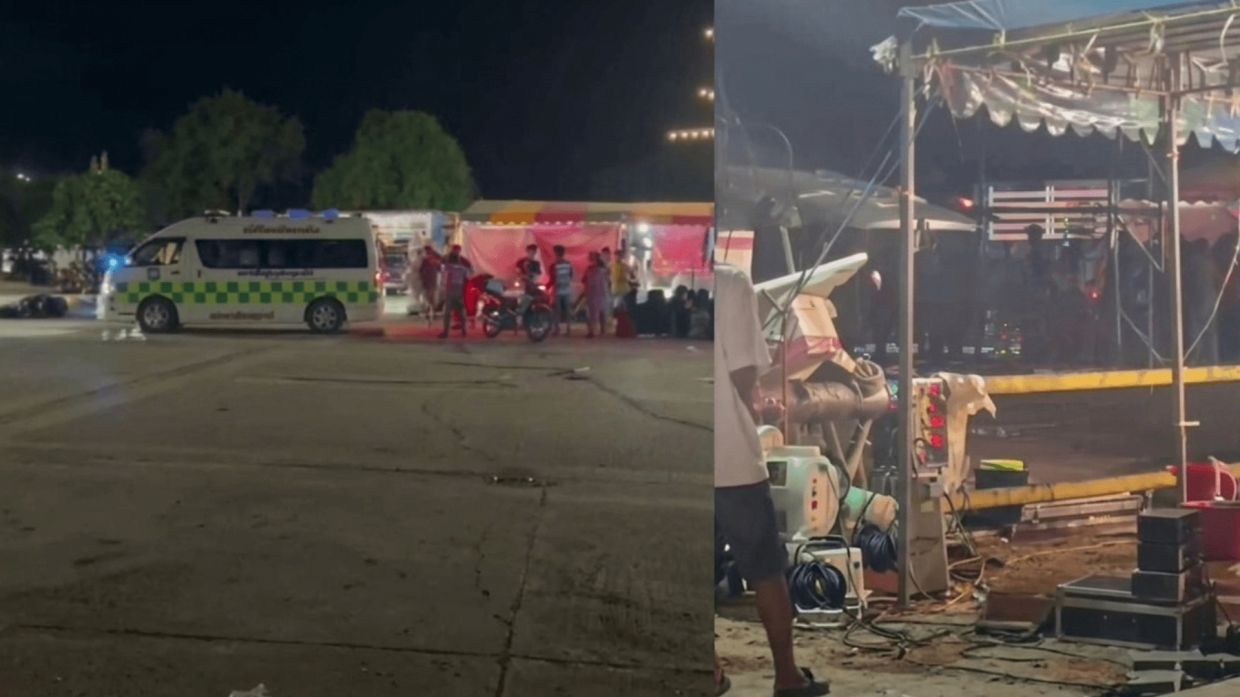
A shooting incident at a community shopping fair in Dan Khun Thot district, Nakhon Ratchasima province, has left six people injured, marking the third such violent episode to strike Thailand within a week. The attack unfolded late Wednesday evening at the "Chim Shop Chai" fair, an event designed to support local vendors and draw families from the surrounding area.
According to Prakob Patin, who organised the fair, the violence erupted around 10.30pm as the event was winding down and traders were dismantling their stalls. The assailants employed both bladed weapons and a homemade firearm in their assault against both vendors and visitors present at the gathering. The timing of the attack, as the crowd was thinning and commerce was concluding for the evening, suggests the perpetrators may have deliberately chosen a moment when attention was diverted and security was minimal.
All six victims received immediate treatment at Luang Pho Koon Parisuttho Dan Khun Thot Hospital. Two of the injured, however, sustained severe wounds necessitating transfer to the more advanced facilities at Maharat Nakhon Ratchasima Hospital. Among these two, one victim has remained unconscious since the incident—a condition that deepens concern over the severity of the injuries inflicted during the attack.
Police responded swiftly, with a team led by Dan Khun Thot Police Station Deputy Investigation Inspector Pol Lt Col Akom Chutkhunthot apprehending a 32-year-old male suspect. Officers also recovered the homemade firearm used in the assault. Initial investigative findings suggest the incident originated not from random violence but from a specific confrontation that escalated dramatically.
The preliminary probe indicates that the arrested suspect attempted to steal a motorcycle parked at the fairground. When the vehicle's owner confronted him over the theft attempt, tension mounted rapidly. Rather than submit to authorities or withdraw, the suspect allegedly fled the scene only to return shortly thereafter with armed accomplices—individuals equipped with knives and firearms who had seemingly been summoned to assist in what transformed into an assault.
The deliberate return to the scene with reinforcements suggests premeditation or at least a willingness to resort to extreme violence when challenged. This pattern—initial crime, confrontation, flight, and then a coordinated return with weapons and backup—indicates a troubling escalation in how the dispute was resolved. Such behaviour raises questions about access to weapons, coordination among criminal associates, and the motivations that drive individuals toward lethal violence over relatively minor incidents.
Authorities have charged the primary suspect with jointly attempting to murder others using a firearm, a serious felony that carries substantial penalties under Thai law. Police investigations remain ongoing as officers work to identify and apprehend the remaining accomplices involved in the assault. The incomplete resolution of the case means that additional arrests may be forthcoming once investigators locate other participants.
This incident arrives at a particularly troubling juncture for public safety in Thailand. It represents the third major shooting within seven days, following the horrific attack on Debsirin Nonthaburi School on August 7, which resulted in nine fatalities, and the alleged shooting of the president of the Nonthaburi Provincial Administrative Organisation by a former Thai lawmaker on Monday. The concentration of armed violence within such a compressed timeframe has amplified public concern about gun violence and the circumstances enabling such rapid succession of attacks.
For Southeast Asian observers, particularly Malaysian readers familiar with ongoing regional security discussions, these incidents underscore broader challenges facing Thailand regarding firearms regulation, the proliferation of homemade weapons, and community safety. The fact that a homemade firearm was employed in this incident highlights how informal manufacturing of weapons circumvents legal controls. Unlike licensed firearms, such weapons leave no paper trail and their production cannot be easily monitored or prevented through conventional regulatory frameworks.
The shopping fair setting—a gathering intended to foster community connection and local economic activity—illustrates how violence can penetrate even ordinary civilian spaces. Such incidents, when widely reported, can create a chilling effect on public participation in community events, potentially undermining the social fabric these fairs are meant to strengthen.
As Thailand grapples with this cluster of shooting incidents, questions emerge about potential underlying factors. Whether these represent isolated criminal acts, responses to personal grievances, or symptoms of deeper social dysfunction remains unclear. However, the speed with which multiple shooting events have occurred suggests systemic issues beyond individual pathology—issues that may require coordinated policy responses addressing weapon availability, conflict resolution mechanisms, and community violence prevention.
For Malaysia and other ASEAN nations observing Thailand's security landscape, these developments serve as a reminder of the ongoing challenges that even neighbouring countries face in maintaining public safety and preventing armed violence. The international community watches as Thai authorities investigate and respond to what has become an urgent public security matter demanding comprehensive attention.

