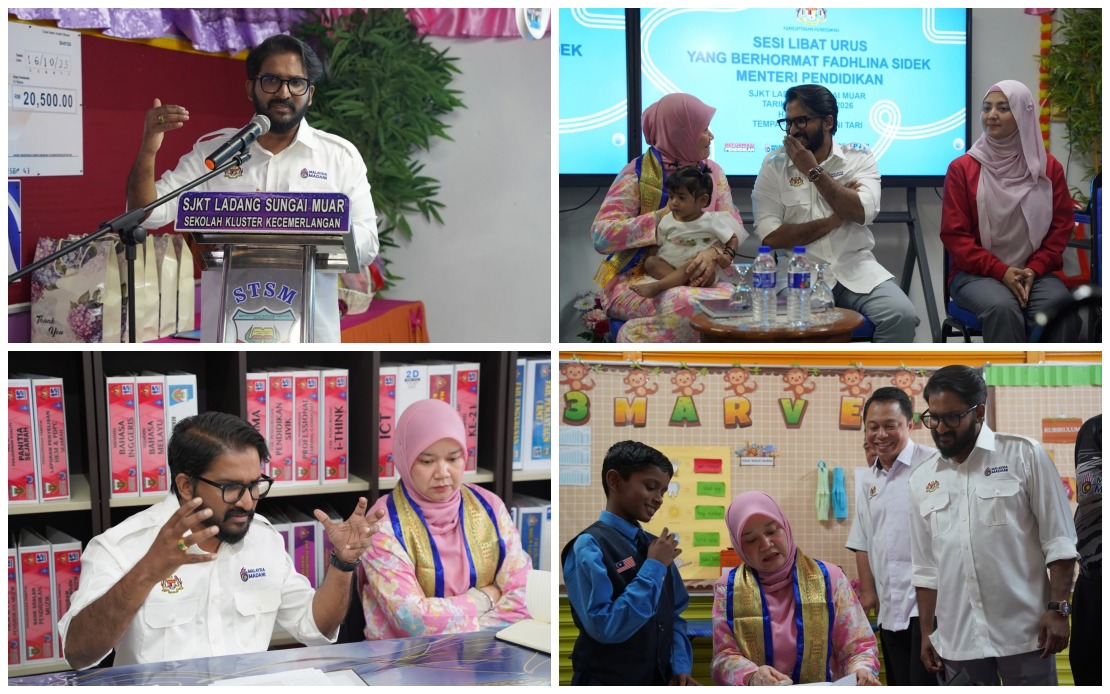
The proposed relocation of Sekolah Jenis Kebangsaan Tamil (SJKT) Ladang Sungai Muar has entered a critical phase with land ownership procedures now underway, marking tangible progress on a project championed since 2022. Segamat Member of Parliament R. Yuneswaran announced that the Segamat Land and Mines Office is handling the property transfer process, a development confirmed during an engagement session at the school on Wednesday with Education Minister Fadhlina Sidek in attendance.
The ministerial visit underscores the administration's commitment to improving educational facilities for Tamil-language schooling across the nation. Yuneswaran stressed that the Education Ministry's direct involvement demonstrates serious intent to resolve longstanding concerns affecting the student population and learning environment at the current Ladang Sungai Muar campus.
Since his election as Segamat's representative in 2022, Yuneswaran has persistently advocated for relocating the institution, citing three interconnected challenges that have constrained the school's operations and student welfare. The existing premises present safety hazards that pose risks to the daily activities of pupils and staff, while its isolated positioning relative to the wider Segamat community creates accessibility difficulties for families seeking to enrol their children.
Beyond security and location issues, the current site suffers from inadequate infrastructure that limits the school's capacity to deliver modern educational services. These deficiencies span physical structures necessary for classroom instruction to utilities and facilities that would typically support comprehensive schooling in an urban or suburban setting. The confluence of these problems has created an environment where students and educators operate under unnecessary constraints.
The MADANI Government has positioned educational advancement as a pillar of its policy agenda, with Yuneswaran noting that this relocation initiative aligns with broader commitments to enhance learning conditions nationwide. The government's willingness to mobilise the Ministry of Education and land authorities indicates recognition that Tamil-medium education deserves equal priority in infrastructure development as other educational streams.
For Malaysian Tamil communities in Johor, this relocation carries significance beyond Segamat itself. Tamil vernacular schools operate within a declining enrolment context, and facility improvements can help arrest the attrition of students to other education streams. A modernised campus with safer, more accessible premises may strengthen parental confidence in the institution and encourage stronger community engagement with Tamil-language education.
The land ownership phase represents a substantial hurdle in the relocation process, as property acquisition often entangles government agencies in lengthy negotiations and administrative procedures. By engaging the Segamat Land and Mines Office directly, authorities appear to be streamlining what could otherwise become a protracted bureaucratic exercise. This institutional clarity about which agencies hold responsibility suggests clearer project management compared to some infrastructure initiatives that languish without clear accountability.
Yuneswaran's commitment to ongoing monitoring and follow-up indicates that the relocation remains politically charged within Segamat's constituency. Educational facilities often become rallying points for community representation, and successful delivery would constitute a visible achievement for the elected representative. His emphasis on continued engagement suggests he views this matter as integral to his political mandate.
The Minister's participation in the engagement session, beyond its symbolic value, provides a direct channel for school administrators and parents to communicate with the Education Ministry about implementation timelines and any obstacles emerging during the land acquisition stage. Such dialogue can prevent information bottlenecks that sometimes delay government projects and allow for quicker resolution of unanticipated complications.
While the transition to land ownership procedures is positive, the project still faces potential delays typical of Malaysian government property acquisitions. Land surveys, title verification, valuation assessments, and formal transfer documentation require coordination across multiple agencies. Public sector procurement processes, while necessary for transparency, can extend timelines beyond initial projections.
The relocation's eventual completion would provide a template for how vernacular schools facing facility challenges can leverage political representation and ministerial goodwill to access government resources. Success here might embolden Tamil and Chinese school communities elsewhere in Johor and nationally to pursue similar infrastructure upgrades, establishing precedent for addressing systemic deficiencies in non-English medium institutions.
For Southeast Asian education observers, Malaysia's approach to managing vernacular schools amid modernisation pressures reflects broader regional tensions between preserving linguistic and cultural diversity through schooling while ensuring equitable access to contemporary educational infrastructure. How successfully the SJKT Ladang Sungai Muar relocation materialises will offer insights into the government's practical commitment to this balance.

