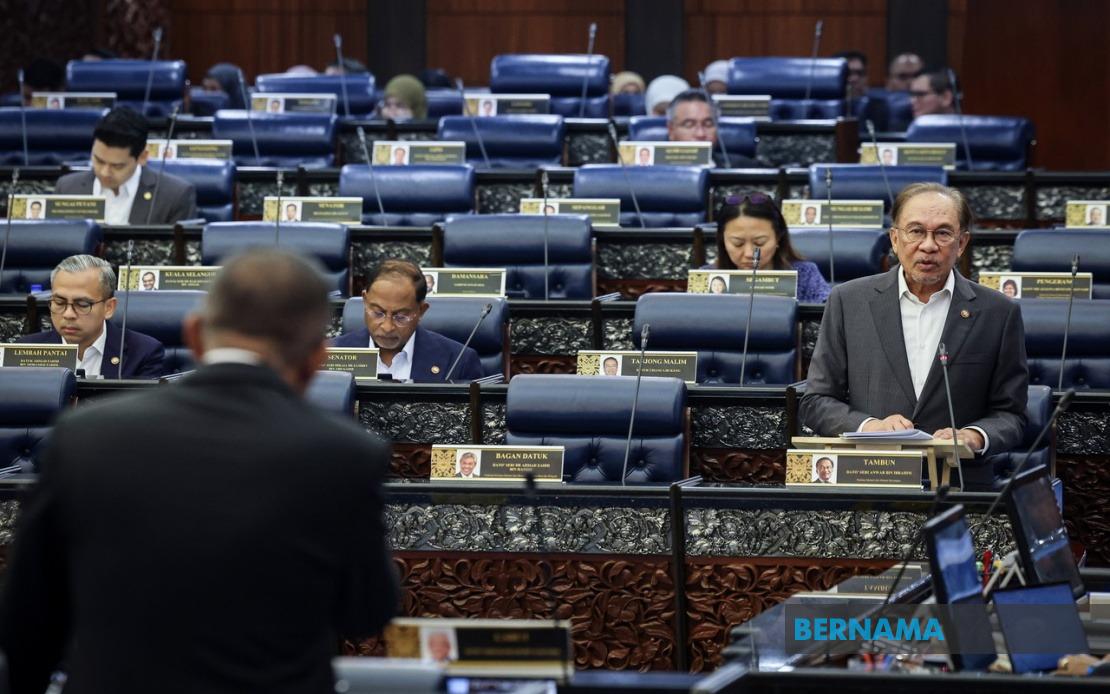
The Malaysian government has channelled RM4.9 billion in approved financing through the Syarikat Jaminan Pembiayaan Perniagaan (SJPP) to support over 6,000 micro, small and medium enterprises during the first half of 2026, according to Prime Minister Datuk Seri Anwar Ibrahim. The announcement, made during Minister's Question Time in Parliament, signals a sustained push by the MADANI administration to address liquidity constraints and operational challenges confronting the small business sector at a time when global economic headwinds continue to test regional competitiveness.
The SJPP, a fully owned subsidiary of the Minister of Finance (Incorporated), functions as a financial guarantee institution designed to mitigate lending risk for financial institutions extending credit to enterprises that might otherwise struggle to secure conventional financing. By assuming a portion of default risk, the scheme encourages banks and non-bank lenders to extend credit to borrowers typically underserved by mainstream financial markets. This mechanism has proven instrumental in expanding credit access beyond traditional collateral-dependent lending frameworks, particularly for newer or asset-light enterprises operating in services and technology sectors.
Prime Minister Anwar, who concurrently holds the Finance Ministry portfolio, emphasised that the RM4.9 billion in approvals represented a deliberate policy response to tackle multiple constraints hampering MSME sustainability. Beyond simply increasing available credit, the government recognises that small enterprises face compounding pressures from rising operational costs, supply chain disruptions stemming from geopolitical tensions, and intense competition from both domestic and cross-border players. The financing intervention thus serves a dual purpose: injecting working capital into enterprises to fund day-to-day operations while simultaneously demonstrating policy commitment to the entrepreneurial cohort that underpins employment and economic dynamism across Malaysia.
The question raised by Member of Parliament Lee Chuan How, representing Ipoh Timor under the Pakatan Harapan coalition, specifically probed whether the government recognised the mounting challenges facing entrepreneurs operating within an increasingly uncertain global environment. This parliamentary query reflects widespread concern within the business community about the cumulative effect of multiple headwinds—inflationary pressures, elevated financing costs, currency volatility, and shifting consumer demand patterns—that collectively constrain cash flow and limit expansion capacity for small operators. The government's response through SJPP approvals and broader financing initiatives signals political acknowledgement of these concerns and readiness to deploy targeted interventions.
Contextualising the RM4.9 billion in first-half approvals within a broader policy architecture, Prime Minister Anwar disclosed that the government has mobilised more than RM15 billion in aggregate loans and financing guarantees to address working capital needs across the MSME ecosystem. This substantially larger figure demonstrates the scale of government commitment beyond the SJPP mechanism alone, incorporating various schemes administered through different agencies and financial institutions. The breadth of this financing landscape reflects an understanding that MSMEs access capital through multiple channels, and that comprehensive support requires coordination across institutional actors rather than reliance on a single vehicle.
Among the RM15 billion total, RM5 billion has been specifically reserved for Bumiputera-owned enterprises, underscoring the government's commitment to ethnic-based economic participation objectives enshrined in the Federal Constitution. This ringfenced allocation acknowledges persistent disparities in business ownership distribution and entrepreneurial participation across demographic groups. By designating dedicated financing pools for Bumiputera entrepreneurs, the government seeks to redress historical imbalances while simultaneously leveraging the entrepreneurial potential of a demographic cohort that constitutes the majority of the Malaysian population. This targeted approach complements broader MSME support while advancing specific constitutional mandates regarding economic distribution.
The timing of these announcements merits consideration within Malaysia's current macroeconomic context. As the nation navigates inflationary pressures, moderating growth forecasts, and evolving trade dynamics following shifting global supply chain patterns, small enterprises face particular vulnerability. Unlike larger corporations with diversified revenue streams, established international networks, and balance sheet resilience, MSMEs typically operate with thinner margins and limited financial buffers. Enhanced access to affordable, guaranteed financing thus becomes a critical policy lever for sustaining employment levels, maintaining business continuity, and preserving the entrepreneurial momentum that Malaysia requires for long-term inclusive growth.
The SJPP financing approvals also carry implications for Southeast Asian regional competition and integration dynamics. As neighbouring economies similarly pursue MSME support initiatives, Malaysia's emphasis on guarantee-based financing rather than direct subsidies positions it within a pragmatic policy mainstream. This approach leverages private sector lending capacity while distributing risk responsibility across government and financial institutions. For Malaysian businesses seeking to expand into regional markets—whether through cross-border trade, regional supply chain participation, or market diversification—stronger domestic financing access provides competitive advantage and operational stability.
Looking forward, the government's multi-pronged approach to MSME financing raises questions about scheme effectiveness, capital absorption capacity, and sustained policy commitment. While RM4.9 billion in approvals within a single six-month period demonstrates substantial institutional output, measuring outcomes requires tracking not merely approval volumes but successful loan disbursement, enterprise utilisation patterns, and business survival and growth trajectories following financing access. Policymakers will need to monitor whether financing schemes efficiently reach intended beneficiaries, whether approval processes remain unencumbered by bureaucratic friction, and whether interest rates and collateral requirements remain commercially sustainable yet affordable for target borrowers.
The parliamentary exchange also highlights the political salience of MSME support within Malaysia's governance landscape. As electoral cycles approach and political parties compete for voter confidence, demonstrating concrete policy outcomes targeting entrepreneurial communities becomes strategically significant. The MADANI government's emphasis on SJPP approvals, coupled with disclosure of the broader RM15 billion financing mobilisation, constitutes political communication aimed at reassuring business stakeholders of sustained governmental commitment. Whether these financing initiatives ultimately translate into measurable improvements in business formation rates, job creation, and enterprise resilience will significantly influence perceptions of government economic stewardship heading toward electoral contests.

