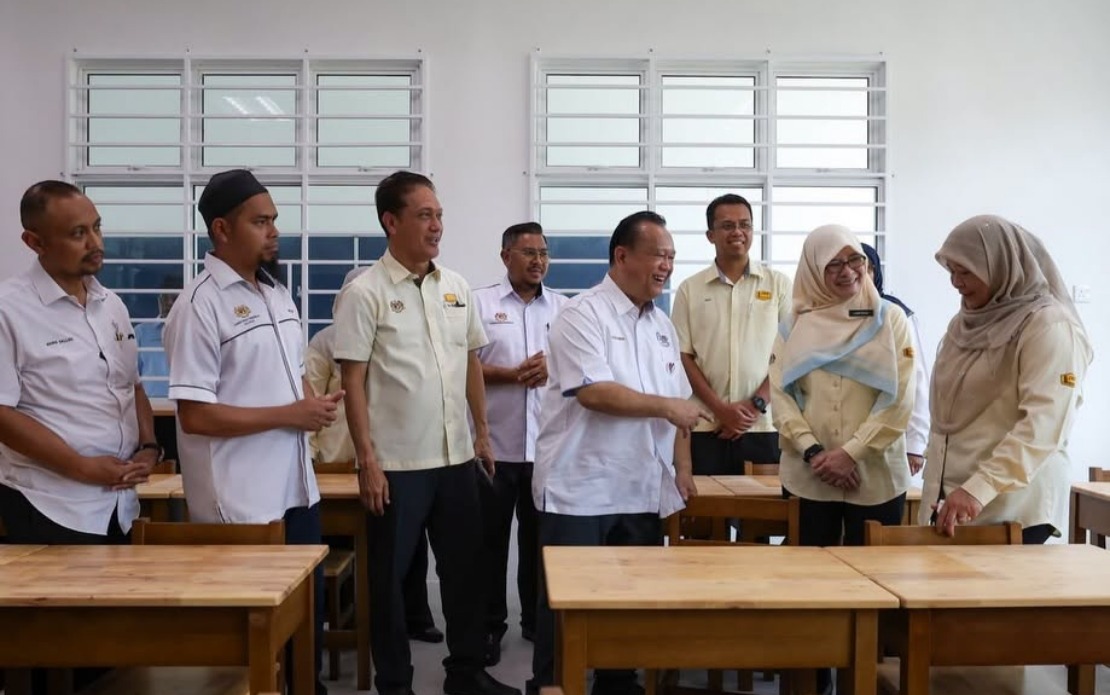
The reconstruction of a deteriorating school building at SK FELDA Kota Gelanggi 1 in Jerantut, Pahang has reached completion without delays, marking a significant achievement in public infrastructure delivery. Works Minister Datuk Seri Alexander Nanta Linggi announced that the RM7.998 million undertaking finished on June 26, substantially earlier than the original May 2, 2027 deadline—a margin of nearly 310 days that demonstrates efficient project management and contractor performance.
Nanta attributed the accelerated completion to strong oversight and contractor diligence throughout the implementation period. The project commenced on January 13 and proceeded without requesting any extension of time, a notable accomplishment in a sector where delays frequently frustrate communities and strain budgets. At a handover ceremony held at the school, the minister stressed that such timely delivery reflects positively on how government construction initiatives can be executed when all parties work cohesively toward agreed milestones.
The reconstruction scope encompassed the erection of a new academic block featuring three classrooms designed to accommodate regular pupils, together with dedicated science and health instruction rooms. Beyond these general-purpose spaces, the project included construction of a dedicated Special Education Integration Programme (PPKI) block—a facility specifically configured to serve students with diverse learning and developmental needs. This dual-purpose approach ensures that the school now caters comprehensively to its entire student population, addressing both mainstream and specialist educational requirements within a single, cohesive campus environment.
Approximately 17 pupils identified as having special educational needs stand to benefit directly from the new PPKI block and its purpose-built amenities. The provision of this facility represents a material improvement in educational access and inclusion for this vulnerable cohort, offering them learning spaces that accommodate their specific requirements rather than forcing them into generic classroom settings. For schools serving FELDA communities—primarily populated by smallholder plantation workers and their families—such targeted investments in inclusive education carry particular significance, as access to specialised facilities in rural regions often remains limited.
Nanta indicated that similar reconstruction and upgrading initiatives targeting other deteriorating school buildings throughout Pahang are presently underway at various stages of implementation. The minister expressed optimism that these parallel projects would also achieve completion ahead of their contracted schedules, establishing a pattern of efficiency across the state's educational infrastructure portfolio. This sentiment reflects an apparent shift toward tighter project management and accountability within government construction contracting, possibly driven by enhanced oversight mechanisms or revised contractor vetting procedures.
During his remarks at the ceremony, Nanta placed considerable emphasis on the importance of quality assurance throughout and beyond project delivery. He directed contractors to handle any defect complaints that emerged during the defect liability period with dispatch and thoroughness, ensuring that any construction shortcomings be remedied promptly before final acceptance. This directive underscores awareness that completing projects early holds limited value if workmanship quality suffers or post-handover problems emerge requiring expensive rectification.
The Works Minister also instructed the Public Works Department to maintain robust monitoring of the newly completed facilities during the post-handover period. This ongoing oversight aims to guarantee that all physical infrastructure remains structurally sound, that building systems function as designed, and that maintenance standards are upheld consistently. For a rural school facility serving a comparatively disadvantaged community, such sustained attention to condition and performance is essential to maximising the asset's useful lifespan and educational impact.
The completion of this project carries implications beyond SK FELDA Kota Gelanggi 1 itself. Rural schools in Malaysia frequently operate from ageing infrastructure, with limited resources for maintenance and upgrade. When reconstruction projects not only proceed ahead of schedule but also incorporate inclusive educational facilities, they signal commitment to bridging the urban-rural divide in educational infrastructure quality. For FELDA settlement communities specifically—which have historically faced development disparities relative to major urban centres—such initiatives contribute meaningfully toward levelling the educational playing field.
The successful early completion also provides a template for other government agencies managing construction projects. In an environment where infrastructure projects frequently exceed budgets and timelines, the SK FELDA Kota Gelanggi 1 reconstruction demonstrates that disciplined project governance, clear accountability structures, and motivated contractors can deliver results efficiently. This model becomes especially relevant as Malaysia pursues expanded infrastructure investment across education, healthcare, and transport sectors, where predictable, on-time delivery remains a persistent challenge.
From a broader Southeast Asian perspective, Malaysia's approach to ensuring quality construction outcomes through post-handover monitoring and defect liability enforcement reflects international best practices gaining traction across the region. As neighbouring countries increasingly invest in educational infrastructure to support economic development and human capital formation, the mechanisms and accountability structures demonstrated here offer valuable lessons in combining schedule performance with quality assurance.

