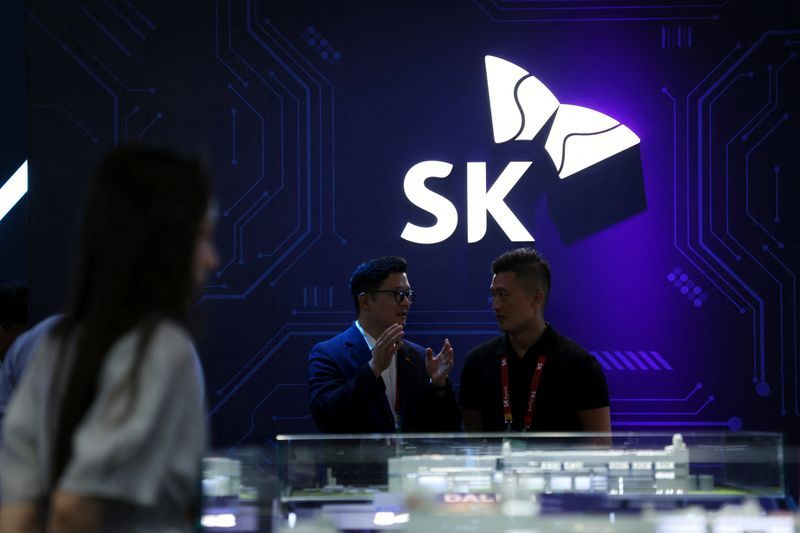
South Korea's SK Hynix, the world's second-largest memory chipmaker, announced on Wednesday plans to raise as much as 45.45 trillion won (approximately $29.43 billion) through an American Depositary Receipts listing on the Nasdaq exchange. The offering marks a significant capital-raising effort aimed at broadening the company's investor base while simultaneously funding an ambitious expansion of its manufacturing capacity to meet explosive demand for chips powering artificial intelligence applications. The final amount may fluctuate following the bookbuilding process, though the company has signalled its intention to proceed with the listing regardless of market conditions within a reasonable range.
The listing represents a watershed moment for SK Hynix's strategic positioning within the semiconductor industry. The company intends to issue 17.79 million new shares to support the ADR offering, with each ADR equivalent to ten common shares. The Nasdaq debut is scheduled for July 10, making it one of the most significant equity offerings by a South Korean technology company in recent years. A consortium of major investment banks including BofA Securities, Citigroup Global Markets, Goldman Sachs and JP Morgan Securities are coordinating the offering, underscoring the global significance of the transaction.
Should the offering price at the upper end of the indicated range, SK Hynix would surpass Alibaba's 2014 New York listing, which raised $21.8 billion, to become the largest ADR offering ever completed. This distinction alone speaks to investor appetite for exposure to companies positioned at the intersection of semiconductor manufacturing and artificial intelligence infrastructure. The comparison to Alibaba's debut also highlights how the semiconductor and artificial intelligence sectors have become central to global capital markets, attracting institutional investment comparable to major e-commerce platforms.
The company's plans for deploying the capital are ambitious and strategically focused. SK Hynix will utilise the proceeds to construct a new chip manufacturing facility in Yongin, a city in the greater Seoul metropolitan area that has emerged as a critical hub for South Korean semiconductor production. Additionally, the company will establish an advanced packaging fabrication plant in Cheongju, reflecting the increasing importance of packaging technology in semiconductor manufacturing. The investment programme also encompasses purchases of cutting-edge manufacturing equipment, particularly Extreme Ultraviolet Scanners, which represent the frontier of semiconductor lithography technology and are essential for producing the most advanced chips.
SK Hynix's ascendancy reflects the structural shifts reshaping the global technology landscape. The company has positioned itself as a dominant supplier of high-bandwidth memory chips, a specialised category of semiconductor that has become critical infrastructure for artificial intelligence systems. Major customers including Nvidia and Alphabet's Google have become increasingly dependent on SK Hynix's supply of these components to power their artificial intelligence platforms and services. This customer concentration underscores both the opportunity and the risk inherent in SK Hynix's business model, as large technology companies account for a disproportionate share of the company's revenue.
The company's recent market performance reflects the fervour surrounding artificial intelligence investment. On Monday, SK Hynix overtook Samsung Electronics to become South Korea's most valuable publicly traded company, a remarkable achievement given Samsung's historical dominance in the South Korean economy. This change in relative valuation demonstrates how investors are reassessing which technology companies stand to benefit most from the artificial intelligence revolution. While Samsung remains a diversified conglomerate with interests across consumer electronics, semiconductors and telecommunications, SK Hynix's focused positioning as a specialised chip supplier has captured investor imagination.
The timing of the ADR listing carries additional strategic significance for SK Hynix's long-term positioning. By accessing American capital markets, the company gains direct exposure to the large pool of American institutional investors, pension funds and other financial institutions that might not previously have held significant positions in the company's domestic Korean stock listings. This diversification of the shareholder base provides SK Hynix with greater financial stability and potentially a higher valuation multiple as American investors gain direct access to the company's shares without having to trade on the Korea Exchange.
From a regional perspective, SK Hynix's capital-raising effort represents a significant vote of confidence in South Korean technology manufacturing capabilities at a time when regional semiconductor competition is intensifying. Taiwan's Taiwan Semiconductor Manufacturing Company and China's domestic chip manufacturers have all been expanding capacity rapidly, yet South Korea's position as a producer of specialised, high-value memory chips remains competitive. The $29 billion investment programme signals South Korea's continued commitment to maintaining technological leadership in semiconductor manufacturing despite formidable international competition.
The expansion plans detailed by SK Hynix also carry implications for Malaysia and the broader Southeast Asian region. Malaysian companies supply materials, equipment and services to semiconductor manufacturers throughout Asia, and SK Hynix's manufacturing expansion will likely generate increased demand for inputs sourced from Malaysian suppliers. Additionally, the company's investment in advanced packaging facilities may create opportunities for regional suppliers of packaging materials and equipment, broadening the economic benefits of SK Hynix's growth beyond South Korea's borders.
Investor appetite for the offering will likely be robust, given the structural tailwinds supporting artificial intelligence chip demand. Major technology companies have committed substantial capital to artificial intelligence infrastructure, and the semiconductor supply chain has struggled to keep pace with demand. SK Hynix's position as a critical supplier of high-bandwidth memory chips places it at the centre of this supply constraint, effectively guaranteeing strong demand for the company's products throughout the forecast period. This demand visibility should translate into strong interest from institutional investors seeking exposure to artificial intelligence-related capital expenditure cycles.