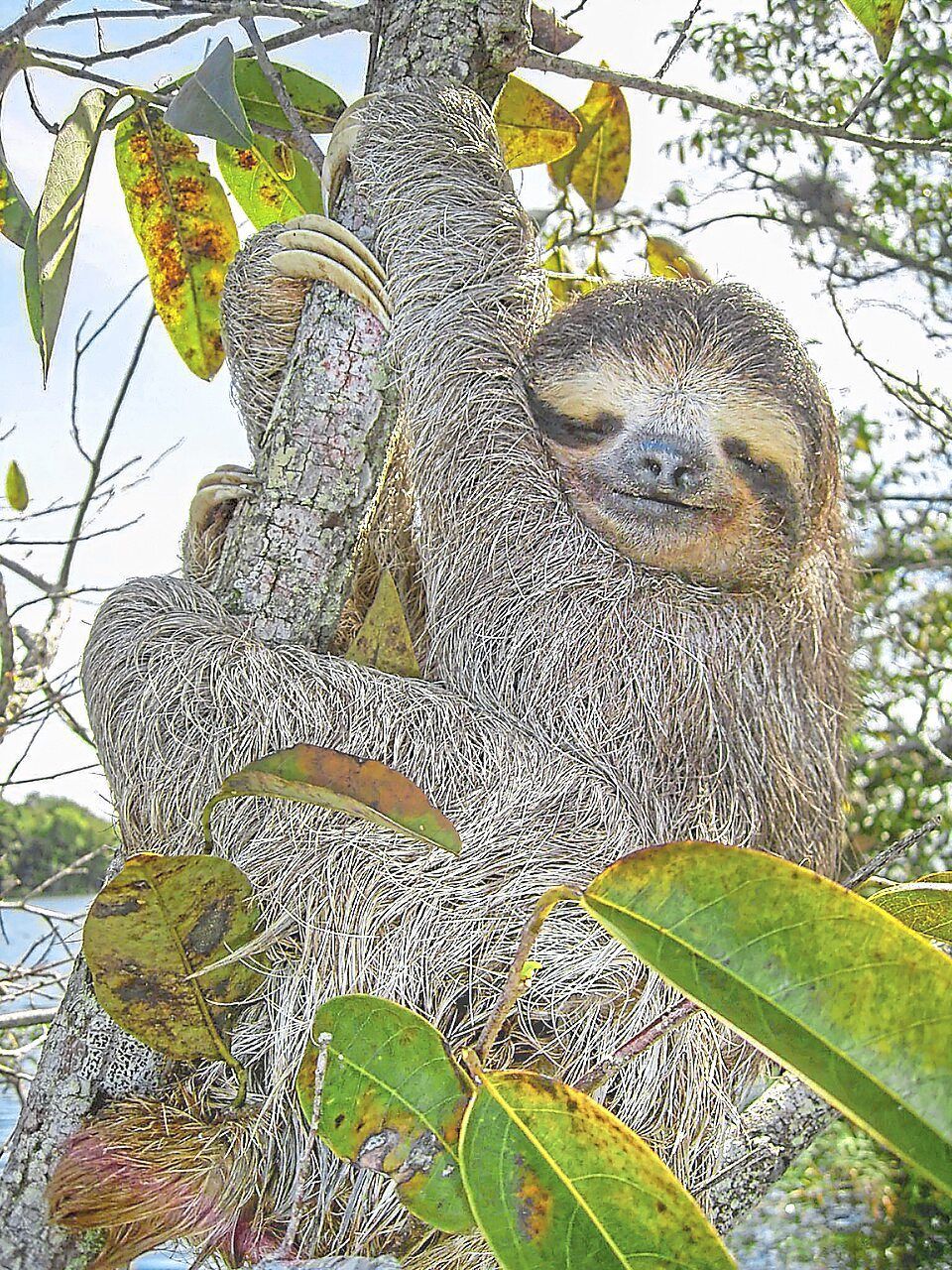
Scientists have identified a remarkable genetic feature in sloths that could fundamentally change how researchers approach human ageing and metabolic disease. An international team of researchers sequencing the tree-dwelling animal's genome for the first time has uncovered conserved "jumping genes" — DNA sequences that shift positions within the genetic code — which may explain why sloths have evolved the slowest metabolism of any mammal while remaining healthy. The discovery opens a novel avenue for understanding how organisms manage energy production and raises tantalising possibilities for treating age-related conditions and even preserving tissue for long-duration space missions.
The research consortium, comprising scientists from the Wellcome Sanger Institute, the Leibniz Institute for Zoo and Wildlife Research (IZW), the Hospital Sirio Libanes, and collaborating institutions, undertook a methodical examination of sloth genetics that represents a scientific first. Working from tissue samples taken from a captive sloth, the team extracted and sequenced DNA at the Max-Planck Institute for Molecular Cell Biology & Genetics in Germany. They then employed comparative genomics, a technique that identifies genetic variations by analysing one species' genome against those of other mammals, to pinpoint what distinguishes sloths from their evolutionary relatives.
The comparison proved particularly illuminating because sloths belong to Xenarthra, a unique South American placental mammal clade that includes anteaters and armadillos. By examining the genetic sequences of these related species alongside those of other mammals, researchers could isolate the genetic innovations unique to sloths. What emerged was striking: the sloth genome contains multiple active copies of transposable elements, commonly known as "jumping genes." These short DNA sequences possess an unusual ability to relocate themselves from one position in the genome to another, a characteristic that distinguishes them from the largely dormant jumping genes found in human DNA.
What makes this discovery particularly significant is its evolutionary antiquity and conservation. Through genomic analysis tracing the animal's evolutionary history, researchers determined that these transposons first appeared in the common ancestor of all sloth species approximately 30 million years ago. Rather than accumulating random mutations and degrading into non-functional sequences as typically occurs with jumping genes, sloths have actively maintained these genetic elements intact across millions of years of evolution. This deliberate conservation suggests that the jumping genes provide a selective advantage that has been preserved through natural selection, indicating their importance to sloth biology.
The functional significance of these genes crystallises when examining their chromosomal associations. The research team discovered that many of the active transposons are positioned near or within genes connected to mitochondria, the cellular structures responsible for energy generation and metabolic regulation. This connection is not coincidental; researchers theorise that these jumping genes have played a direct role in the evolution of the sloth's unusually low metabolism. By maintaining genetic backup systems and modifying energy-related pathways, these elements may have enabled sloths to thrive while consuming vastly less energy than other mammals of comparable size.
The implications for human medicine are substantial. Dr Pedro Galante, co-lead researcher at the Hospital Sirio Libanes in São Paulo, Brazil, emphasises that numerous human conditions — from type 2 diabetes and age-related disorders to neurodegenerative diseases and sarcopenia (age-related muscle wasting) — involve disrupted energy production and compromised mitochondrial function. Sloths, by contrast, maintain robust health despite their extraordinarily slow metabolic rates. Understanding the genetic mechanisms underpinning this apparent paradox could revolutionise therapeutic approaches to diseases currently considered incurable or progressive.
Dr Marcela Uliano-Silva, senior bioinformatician and co-lead author at the Wellcome Sanger Institute, articulates the broader principle guiding this research: evolution has conducted billions of natural experiments across millions of species, producing biological solutions that no single human laboratory could design. By studying organisms with unusual adaptations like sloths, scientists can identify genetic strategies that evolution has validated but that humans never required because our metabolic needs differ fundamentally. The jumping genes conserved in sloths represent one such evolutionary solution — a genetic innovation that could inform human medicine if its mechanisms are properly understood.
The potential applications extend beyond conventional medical treatments. Dr Camila Mazzoni, head of evolutionary and conservation genomics at the IZW in Berlin, suggests that sloth genetics might offer insights into tissue preservation techniques critical for organ transplantation, critical care medicine, and the physiological challenges of long-duration space travel. Astronauts on extended missions face metabolic decline and muscle atrophy similar to conditions observed in sedentary individuals; understanding how sloths maintain cellular function during prolonged periods of low energy expenditure could yield countermeasures. Additionally, knowledge of how sloth cells efficiently manage energy under extreme scarcity might enable development of better preservation protocols for transplantable organs, potentially saving lives by extending tissue viability windows.
The research demonstrates how genomic technologies are transforming our capacity to learn from nature's diversity. Rather than viewing unusual animals primarily through conservation or ecological lenses, scientists increasingly recognise them as repositories of genetic wisdom accumulated over evolutionary time. Sloths, long celebrated for their leisurely lifestyle and seemingly passive disposition, emerge as sophisticated biological engineers whose genomes encode elegant solutions to fundamental challenges in energy metabolism and cellular ageing.
However, the journey from laboratory discovery to clinical application requires substantial additional research. While the identification of jumping genes and their associations with metabolic pathways provides a compelling lead, scientists must now conduct functional studies to determine precisely how these genes regulate energy production and maintain cellular health. Cultivating and studying sloth cell lines offers a natural model system for these investigations, avoiding the artificial conditions of purely computational or in vitro research. The team's findings thus represent not a conclusion but an opening chapter — one that invites the global scientific community to explore how an unlikely source, the world's slowest mammal, might ultimately help humanity age better and live longer.
For Malaysian and Southeast Asian readers, this research carries particular relevance given the region's rising burden of metabolic and age-related diseases. As populations across Southeast Asia age rapidly and obesity-linked conditions proliferate, novel therapeutic approaches rooted in understanding fundamental metabolic mechanisms could prove transformative. The sloth genome study exemplifies how biodiversity-rich tropical regions — where many such unusual species evolved — represent invaluable scientific resources for addressing universal health challenges.

