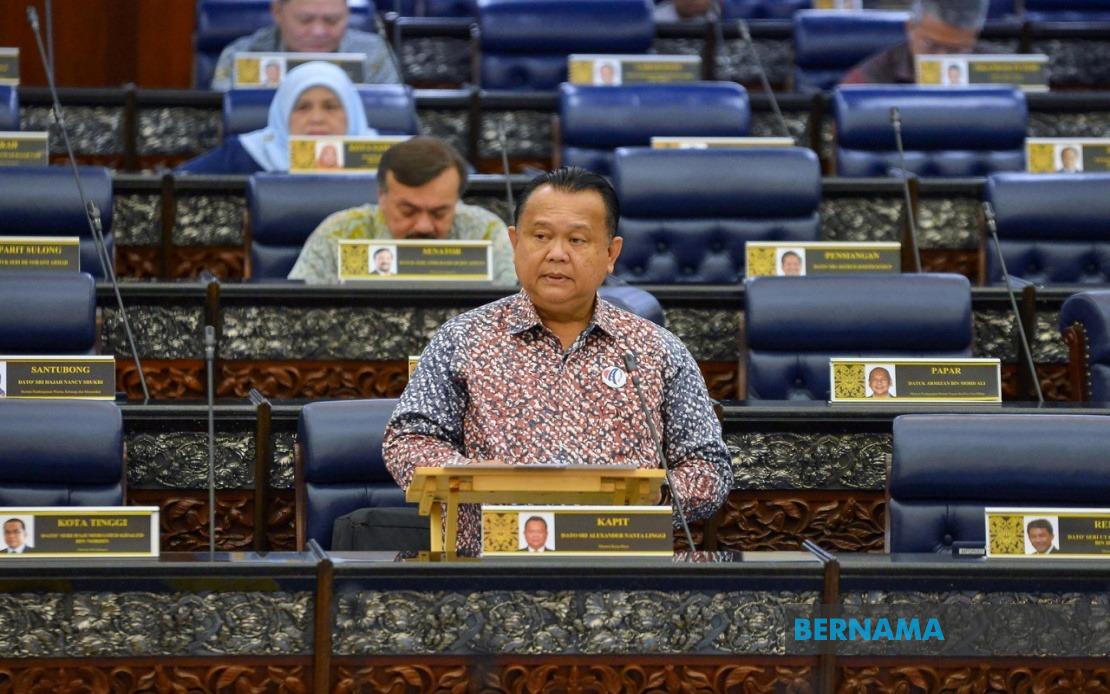
Works Minister Datuk Seri Alexander Nanta Linggi has highlighted the growing success of the Smart Lane programme, which has been operating across designated sections of the North-South Expressway (PLUS) since 2023. Speaking in the Dewan Rakyat, Nanta disclosed that the initiative has delivered measurable improvements in traffic flow, reducing congestion levels by between 30 and 50 per cent based on comprehensive monitoring data compiled by the Malaysian Highway Authority (LLM). The results represent a significant advancement in Malaysia's efforts to tackle chronic highway congestion, particularly during high-demand periods such as peak commuting hours and festive holidays.
The Smart Lane concept, which allows motorcycles and vehicles to utilise reserved lanes more flexibly during periods of varying traffic density, has proven particularly effective in managing congestion hotspots. Rather than maintaining rigid lane designations regardless of actual traffic conditions, the Smart Lane system adapts to real-time demand patterns, enabling more efficient use of available road capacity. This dynamic approach has resonated with transport planners and highway operators, who view it as a practical solution to the persistent gridlock that characterises Malaysia's major expressways.
When questioned by Zakri Hassan, an opposition member from Kangar representing Perikatan Nasional, about safety concerns—particularly regarding motorcycle riders sharing lanes—Nanta provided detailed assurances. He emphasised that rigorous technical evaluations are continuously performed to verify the safety standards maintained throughout Smart Lane zones. The minister noted that motorcyclists, being more acutely aware of the shared-lane environment, often exercise greater caution, resulting in accident rates that are remarkably lower than would be expected given the volume of traffic passing through these sections.
Statistical evidence backing Nanta's claims emerged from accident data compiled over the first five months of 2023. Across 12 Smart Lane locations monitored on weekdays, only 36 accident cases were recorded—a figure that becomes even more impressive when contextualised against the extremely high traffic volumes these routes handle daily. Critically, the proportion of accidents involving motorcyclists within Smart Lane zones proved significantly lower than on comparable regular highway sections, suggesting that the enhanced visibility and rider awareness associated with shared-lane operation actually enhances rather than diminishes safety outcomes.
However, the minister's response also acknowledged that not all incidents stem from the Smart Lane concept itself. Rather, comprehensive analysis of the 36 accidents revealed that human behaviour remained the primary causal factor, with violations including improper use of emergency lanes, reckless lane-changing manoeuvres, and unauthorised vehicle stops accounting for the majority of incidents. This finding underscores a critical reality: technological and infrastructural improvements can only succeed when complemented by driver and rider discipline and adherence to safety protocols.
To strengthen oversight further, the Malaysian Highway Authority has mandated that expressway concessionaires engage independent road safety auditors. These auditors must conduct comprehensive stage 5 road safety assessments every five years, examining all aspects of Smart Lane implementation and operational safety. The audit framework extends well beyond motorcyclist considerations, encompassing the complete spectrum of safety performance metrics. Any deficiencies identified through these audits trigger corrective action plans designed to systematically reduce accident risk and enhance overall corridor safety profiles.
Beyond traditional monitoring approaches, highway authorities are rapidly modernising their surveillance and traffic management capabilities. The LLM and expressway operators are currently rolling out an expanded network of closed-circuit television (CCTV) cameras integrated with artificial intelligence technology. These advanced systems can analyse traffic density patterns instantaneously, enabling real-time adjustments to lane management protocols and providing operators with granular visibility into congestion formation and dissipation dynamics. This technological upgrade promises to make Smart Lane operations progressively more responsive to actual traffic conditions.
The Smart Lane initiative carries particular significance for Malaysian transport policy given the country's ongoing struggle with urban and interurban congestion. The North-South Expressway, as one of the nation's arterial routes connecting major population centres from Bukit Kayu Hitam to Johor Bahru, carries enormous traffic volumes daily. Reducing congestion along this corridor generates ripple benefits across the entire logistics and passenger transport ecosystem, lowering delivery times, reducing fuel consumption, and decreasing emission levels from idling vehicles. For businesses reliant on time-sensitive deliveries, the 30 to 50 per cent improvement in throughput translates directly to cost savings.
The programme also reflects a broader regional trend toward intelligent transportation systems that leverage technology and data analytics to optimise existing infrastructure rather than constantly expanding physical capacity. As land acquisition for new highways becomes increasingly difficult and expensive in Malaysia's densely populated corridor areas, maximising the efficiency of existing expressways through dynamic lane management represents a pragmatic alternative that delivers tangible results without requiring major capital expenditure or environmental disruption.
Looking forward, the success of Smart Lane on the North-South Expressway has positioned it as a candidate for expansion to other congested highway corridors, including the Kuala Lumpur-Selangor Expressway (KLIA Expressway) and other East Coast routes. Transport officials will likely study the implementation data carefully to determine whether the model can be adapted to highways with different characteristics, traffic compositions, and infrastructure layouts. The precedent established by the North-South initiative suggests that Malaysian highways can evolve beyond static designs toward responsive systems that adapt to real-time conditions, potentially setting a template for Southeast Asian expressway operators grappling with similar congestion challenges.

