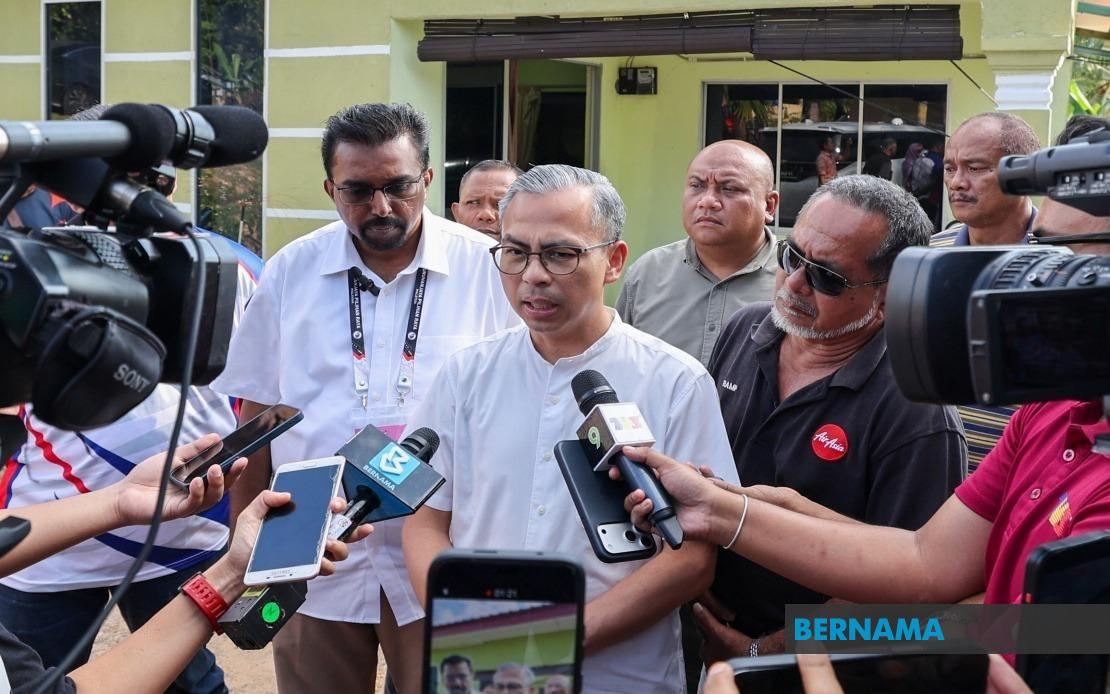
Communications Minister Datuk Seri Fahmi Fadzil has declared that online activity surrounding the Negeri Sembilan state election remains largely orderly, with the Malaysian Communications and Multimedia Commission receiving just 16 complaints since the campaign officially launched. The figure suggests that electoral participants and voters have largely observed boundaries around social media conduct during this initial phase of the six-week campaign period.
Of the 16 complaints submitted to MCMC, the vast majority—14 cases—dealt with telecommunications infrastructure deficiencies rather than election-related violations. Only two complaints addressed the emergence of fraudulent social media profiles. Fahmi made these remarks while attending the Ziarah Kasih MADANI programme at Felda Palong 1, which featured Pakatan Harapan's Jeram Padang candidate G. Manivannan, underscoring the government's engagement across constituencies.
The communications minister emphasized that public vigilance remains essential for maintaining campaign standards. He encouraged citizens to flag content suspected of breaching electoral rules or platform policies directly to social networks, and to escalate matters to MCMC only if companies fail to respond appropriately. This layered approach relies on platform operators as first-line enforcers while reserving regulatory intervention for persistent violations.
Fahmi warned that the final stretch of campaigning typically witnesses intensified online mobilization. With roughly one week of campaign activities remaining before polling on August 1, he expressed concern about a potential explosion of activity in the critical 72 to 96 hours before voting concludes. The minister flagged misinformation and coordinated disinformation campaigns as particular threats during this compressed timeline, when emotional engagement peaks and fact-checking becomes increasingly difficult.
Beyond electoral conduct, Fahmi identified a pressing infrastructure gap affecting rural constituencies. His visit to Felda Palong 1 revealed that internet connectivity problems concentrated along major approach roads rather than within residential settlements themselves. This distinction matters significantly for accessibility—while rural residents near homes may access services, travelers and visitors along transit routes face dead zones, creating both communication and safety hazards during medical or security emergencies.
The minister directed MCMC to prioritize fixing these coverage gaps with urgency, anchoring his intervention in a fundamental principle that internet access should follow road infrastructure. This framing elevates connectivity from convenience to essential service, comparable to electricity or water provision. The gap reflects broader digital inequality that disadvantages plantation workers and farming communities whose livelihood often depends on reliable communications.
Telecommunications companies signed a network-sharing memorandum of understanding in the preceding year, yet implementation has lagged substantially. Fahmi attributed the slow progress to coordination challenges among multiple carriers operating in populated areas. Rather than waiting for comprehensive infrastructure upgrades, authorities have identified three immediate remedies: constructing new transmission towers, reconfiguring existing equipment to expand coverage, and deploying satellite internet services such as Starlink as temporary solutions.
The government has also pressed telecommunications providers to strengthen complaint management systems, incorporating artificial intelligence tools that allow users to track resolution status in real time. This transparency mechanism aims to build public confidence in telecommunications companies' responsiveness while generating data about network performance across regions. For Malaysian consumers accustomed to fragmented customer service, such tracking represents a meaningful improvement.
The timing of Fahmi's remarks—on the sixth campaign day with a week remaining—suggests authorities are calibrating messaging to sustain order without appearing heavy-handed. Early success in maintaining decorum allows the government to emphasize stability while cautioning against complacency. With early voting scheduled for July 28, authorities maintain several days to address emerging issues before the bulk of voters cast ballots.
For Southeast Asian governments facing similar election seasons, the Negeri Sembilan experience offers instructive lessons. Relatively low complaint volumes may reflect either genuine restraint or ineffective reporting mechanisms. Malaysia's approach of distributing responsibility among platforms, regulators, and vigilant citizens distributes enforcement burden but risks accountability gaps when no actor takes decisive action. The infrastructure deficiencies exposed during this campaign underscore how digital divides intersect with rural deprivation, a pattern resonating across the region where plantation and agricultural workers often inhabit connectivity-poor zones.
The election itself carries broader implications for Malaysian politics. As one of Malaysia's smaller states, Negeri Sembilan's outcome will test whether Pakatan Harapan can consolidate support after recent electoral setbacks, while providing early indicators of voter sentiment heading toward potential federal elections. Clean campaign conditions—both online and offline—enhance the legitimacy of whatever results emerge on August 1.

