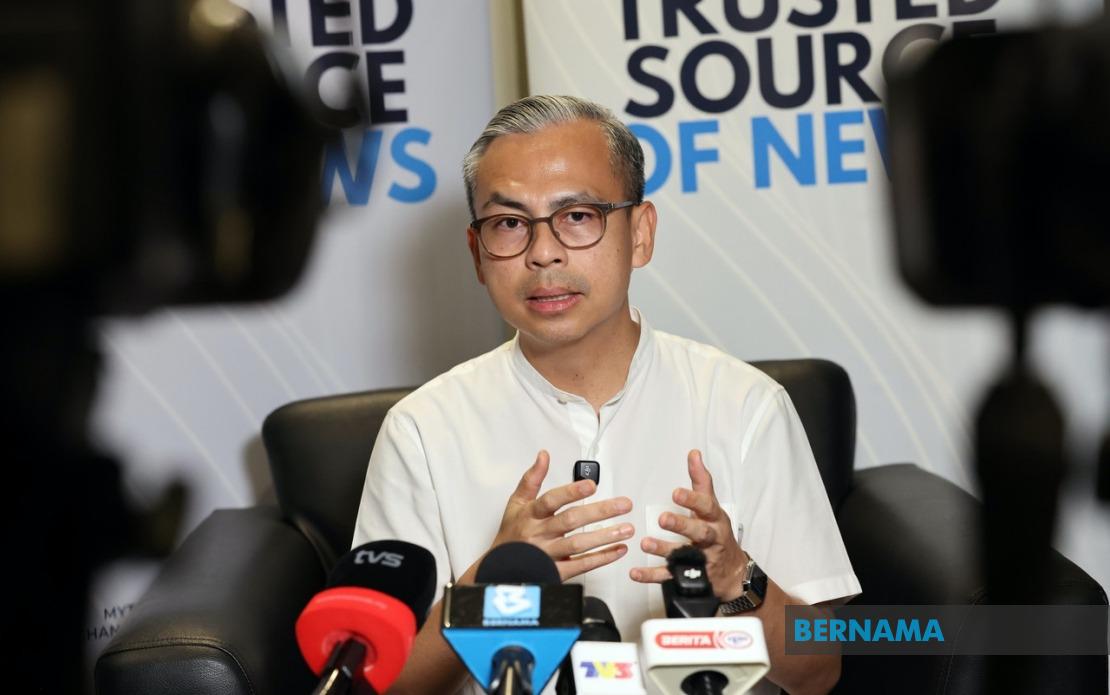
With voting scheduled for Saturday in the 16th Johor state election, Communications Minister Datuk Fahmi Fadzil has issued a pointed call for social media platform operators to strengthen their response to false information circulating online. Speaking at the Malaysian National News Agency (Bernama) operations centre in Johor Bahru on July 7, Fahmi underscored that platforms already maintain policies prohibiting disinformation, yet their enforcement mechanisms require substantial reinforcement, especially during the critical hours surrounding polling day.
The minister's concerns centre on the specific vulnerability of election nights, when unverified claims about results or seat winners can spread rapidly across digital networks before official tallies are released. This timing creates what Fahmi characterised as a high-risk window for coordinated or opportunistic disinformation campaigns that could mislead the public and undermine confidence in the electoral process. The fear reflects broader anxieties across Southeast Asia about digital platforms' role in shaping electoral integrity, particularly given the region's history of contentious online campaigns during major political contests.
Fahmi, who also serves as spokesperson for the MADANI Government, emphasised that tackling misinformation requires a multi-layered approach involving both the platforms themselves and regulatory authorities. He flagged the Malaysian Communications and Multimedia Commission (MCMC) as the key coordinating body, noting that it must work in tandem with platform providers to address the problem comprehensively. Previously, the MCMC and Malaysian Media Council had signalled readiness to combat deceptive practices such as the unauthorised use of media logos to fabricate convincing election graphics, indicating some institutional appetite for intervention.
However, the minister acknowledged that combating fake graphics represents only part of the challenge. The more complex and difficult dimension involves user-generated content—the countless posts, images, and written commentary produced by ordinary social media users themselves. These grassroots contributions, whether intentionally misleading or merely careless, constitute a diffuse misinformation ecosystem that cannot be managed through top-down regulation alone. Platform algorithms often amplify emotionally charged content, particularly during high-stakes political moments, meaning that even false claims without malicious intent can reach millions before fact-checkers intervene.
So far, Fahmi reported that the MCMC had received no formal complaints regarding campaign rule violations on social media channels, though this may reflect incomplete reporting rather than the absence of problems. He pressed social media companies to demonstrate greater urgency in their moderation response times, particularly as election day approached. This appeal speaks to a persistent tension between platforms' stated commitment to removing false content and their actual operational capacity or willingness to do so at scale across multiple languages and regional contexts.
Beyond the misinformation question, Fahmi outlined Pakatan Harapan's strategy for the final campaign week, centring on mobilising Johorean voters who had relocated elsewhere for work or study. The coalition appeared confident in this approach, framing it around civic responsibility and voter turnout maximisation rather than specific policy appeals. This emphasis on participation itself suggests that PH viewed the election as fundamentally winnable through sheer mobilisation of its potential support base.
The government has facilitated this outreach through practical means, including coordination with public transport operators to provide convenient services for returning voters. Several bus companies reportedly introduced special promotional packages to reduce the cost and logistical friction of travelling home to vote, effectively subsidising electoral participation. Such initiatives reflect recognition that Malaysia's dispersed workforce, particularly young people and skilled professionals working in Klang Valley or Singapore, require tangible support to exercise their franchise.
Fahmi also noted that the Youth and Sports Skills Training Institute (ILKBS) had granted leave to its students, signalling government endorsement for civic participation among younger citizens. More broadly, he appealed to employers across retail and food and beverage sectors to grant flexibility on polling day, acknowledging that many voting-age workers in these industries lack the formal leave entitlements that would otherwise guarantee their participation. This plea reflected the practical reality that informal sector employment remains widespread in Malaysia, and that workers in these categories might face pressure to prioritise jobs over voting.
The minister set an ambitious turnout target of exceeding 60 per cent, explicitly calling on parents to persuade children living elsewhere in the country to return home. His framing of this appeal shifted between two registers: first, as a matter of individual civic duty and constitutional responsibility, and second, as a specifically Johorean interest in determining the state's governance trajectory for the next four to five years. This dual messaging attempted to invoke both universal democratic principles and localised identity, recognising that electoral mobilisation often depends on connecting abstract civic concepts to particular communal stakes.
The combined push for increased turnout and tighter moderation of online false content reveals the government's assessment that the Johor election outcome remained sufficiently contested to justify intensive intervention. Neither outcome could be regarded as predetermined, suggesting genuine uncertainty about voter behaviour and sentiment in the state. The emphasis on preventing disinformation specifically on polling night implies concern that late-breaking false claims could sway undecided voters or suppress turnout among specific constituencies.
Fahmi's statements also highlight the ongoing gap between what social media platforms claim they will do and what they actually accomplish in practice. Despite years of international pressure and local regulatory attention, platforms consistently struggle to remove content quickly enough to prevent virality, particularly in non-English languages and regional contexts. Malaysia's particular vulnerability stems from its multilingual population and the presence of numerous informal channels—WhatsApp groups, Telegram communities, private Facebook pages—where moderation policies have minimal effect.
The outcome of the Johor election would likely offer some indication of whether enhanced platform cooperation materialised and whether targeted misinformation attempts meaningfully influenced voter decisions. The messaging from government officials also suggests awareness that electoral legitimacy increasingly depends not just on transparent counting procedures but on public confidence that the information environment itself remained uncorrupted by systematic falsehood, a challenge that traditional election administration methods alone cannot address.

