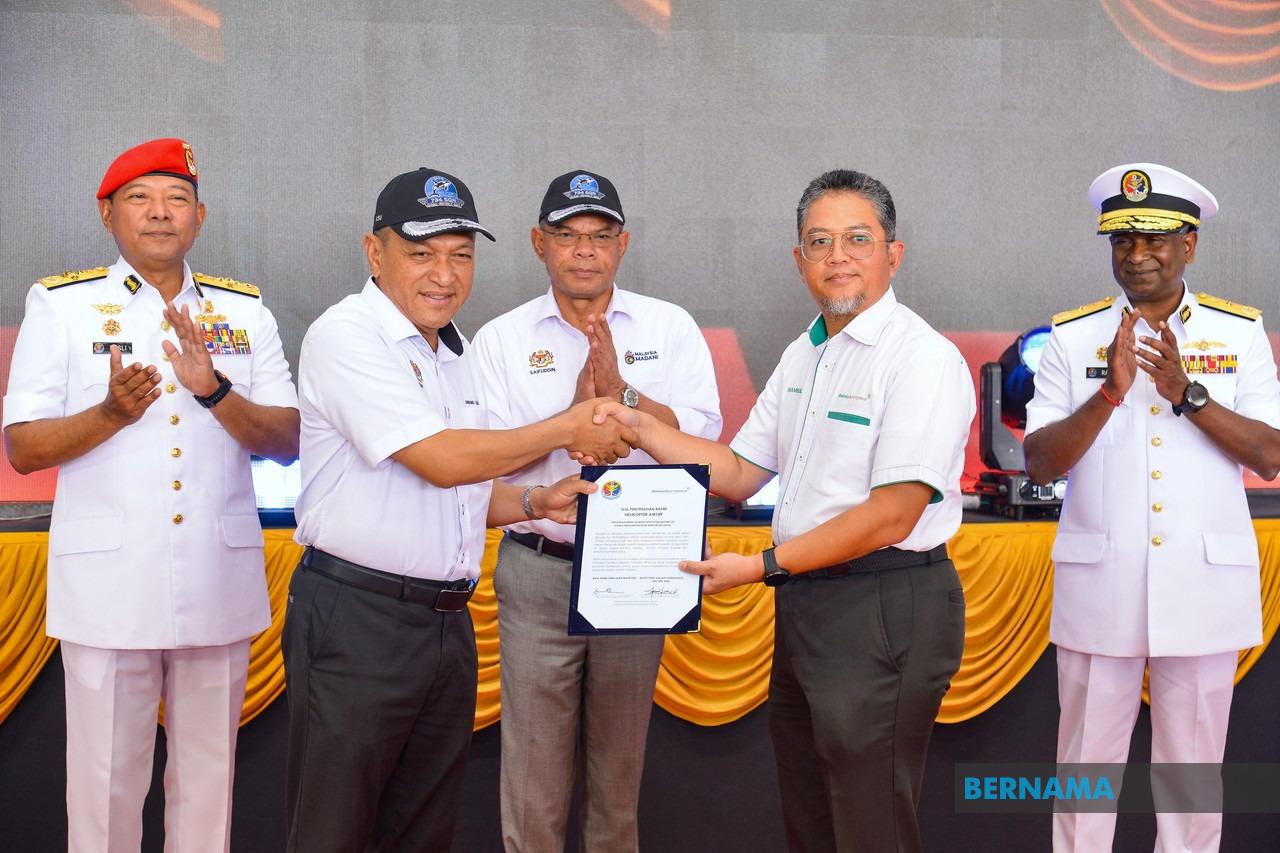
Home Minister Datuk Seri Saifuddin Nasution Ismail has called for rigorous and comprehensive scrutiny of two critical policy areas that have dominated recent national discourse: the Security Offences (Special Measures) Act 2012 (SOSMA) and the handling of refugee populations. Speaking after chairing a discussion on these matters in Kuala Lumpur on August 13, Saifuddin stressed that both issues demand careful examination to ensure governmental responses remain pertinent to evolving circumstances and align with Malaysia's long-term strategic interests.
The Home Minister's remarks reflect mounting pressure from multiple stakeholders seeking clarity on how these policies are formulated and executed. Rather than permitting isolated institutional perspectives to guide decision-making, Saifuddin advocated for a holistic approach that incorporates contemporary developments, practical field-level realities, and forward-looking strategic considerations. This broader framework represents a departure from compartmentalised policy-making and signals recognition that security and humanitarian concerns are deeply intertwined within Malaysia's demographic and geopolitical landscape.
SOSMA, enacted in 2012, fundamentally restructured Malaysia's counter-terrorism and security architecture by introducing special investigative powers and preventive measures previously unavailable under standard criminal procedure. The legislation replaced the Internal Security Act 1960, which had become increasingly controversial for its detention provisions and perceived capacity for abuse. Since SOSMA's introduction, civil society organisations, legal academics, and international observers have repeatedly questioned whether its mechanisms maintain adequate safeguards against overreach whilst simultaneously providing security forces with necessary operational tools.
The scrutiny surrounding SOSMA has intensified in recent years as Malaysia grapples with evolving security threats spanning transnational extremism, sophisticated cybercriminal networks, and organised transnational crime. Critics argue that the legislation's broad definitional scope regarding security offences creates ambiguity in implementation, potentially affecting individuals engaged in legitimate political expression or civil society activism. Conversely, security establishment advocates contend that modern threats require flexible legal frameworks and that SOSMA's provisions remain essential for protecting public safety and territorial integrity.
Parallel to these security considerations, Malaysia faces an unprecedented humanitarian and administrative challenge stemming from large refugee populations, particularly those fleeing conflict in Myanmar. The Rohingya crisis and ongoing ethnic violence in Myanmar have displaced hundreds of thousands, with significant numbers seeking refuge across Southeast Asia. Malaysia, as a major transit and settlement country, has absorbed substantially larger refugee populations than many neighbouring states, creating simultaneous imperatives around humanitarian obligation and national security management.
The refugee question demands integration of diverse policy considerations that extend beyond immediate security screening. Economic integration, access to education and healthcare, labour market dynamics, and community cohesion all factor into sustainable refugee management frameworks. Malaysia's approach must balance humanitarian principles with legitimate concerns regarding resource allocation, public health administration, and potential security vulnerabilities. The Home Minister's emphasis on multi-perspective assessment reflects understanding that purely security-focused responses risk generating humanitarian crises that ultimately undermine national stability and regional reputation.
Saifuddin's insistence that policy measures address not merely pressing immediate challenges but also develop lasting, evidence-based foundations suggests growing governmental awareness that ad-hoc responses create cascading complications. Establishing permanent institutional mechanisms for policy review, incorporating diverse expertise spanning security, humanitarian affairs, international law, and community integration, would strengthen Malaysia's capacity for adaptive governance. Such frameworks would enable regular reassessment as circumstances evolve and allow incorporation of operational lessons learned from implementation.
The discussion platform convened by Saifuddin represents a potentially significant step toward institutionalising policy dialogue around these contested issues. Meaningful engagement across governmental agencies, civil society organisations, academic institutions, and international partners can generate shared understanding of underlying challenges and foster consensus around pragmatic solutions. This collaborative approach contrasts with more insular decision-making processes and acknowledges that effective governance increasingly requires expertise and legitimacy derived from multiple institutional sources.
For Malaysia's broader policy framework, these developments carry important implications. As the nation seeks to position itself as a responsible regional actor and mature democracy, its handling of security legislation and humanitarian crises significantly influences international standing and domestic political legitimacy. Other Southeast Asian governments facing comparable challenges will likely observe Malaysia's approach, potentially adopting elements that prove successful. Conversely, perceived policy failures or human rights concerns could undermine Malaysia's regional leadership aspirations and complicate bilateral relationships with key partners.
The intersection of SOSMA review and refugee policy reform also connects to Malaysia's constitutional commitments and international obligations. The Federal Constitution's fundamental liberties provisions constrain how extensively security legislation can restrict rights, while Malaysia's international treaty commitments regarding refugees and human rights establish baseline expectations for humanitarian treatment. Reconciling these legal frameworks with operational security needs requires sophisticated policy architecture that cannot emerge from single-perspective analysis or narrow institutional consultation.
Moving forward, the efficacy of governmental response will depend substantially on genuine multi-stakeholder engagement and willingness to acknowledge legitimate concerns across different constituencies. Security establishment perspectives warrant serious consideration, as do civil liberties advocates' cautions regarding regulatory scope. Similarly, humanitarian organisations' concerns about refugee welfare must inform policy design alongside security professionals' assessments of vulnerability vectors. Only through sustained, structured dialogue incorporating these diverse viewpoints can Malaysia develop resilient policies that serve genuine national interests whilst maintaining democratic values and humanitarian standards.

