South Africa's Department of International Relations and Cooperation has escalated its legal confrontation with Israel by presenting a substantive filing to the International Court of Justice, asserting that the Israeli government has systematically disregarded provisional measures imposed by the tribunal in the genocide case initiated by Pretoria. The submission, formally registered under Article 11 of the ICJ's Resolution governing internal judicial procedure, represents an intensification of South Africa's legal strategy to compel Israeli compliance with binding court orders, underscoring the growing frustration among certain nations with what they perceive as deliberate non-compliance by a major state actor.
The South African government's position rests on the fundamental principle that provisional measures issued by the ICJ carry full legal force and constitute binding obligations. Rather than treating these orders as advisory or aspirational guidelines, Pretoria contends that Israel is obligated to implement them immediately and completely. This distinction carries significant weight in international law, as it determines whether a nation can merely acknowledge a court ruling while disregarding its substance, or whether non-compliance constitutes a separate violation warranting additional legal consequences.
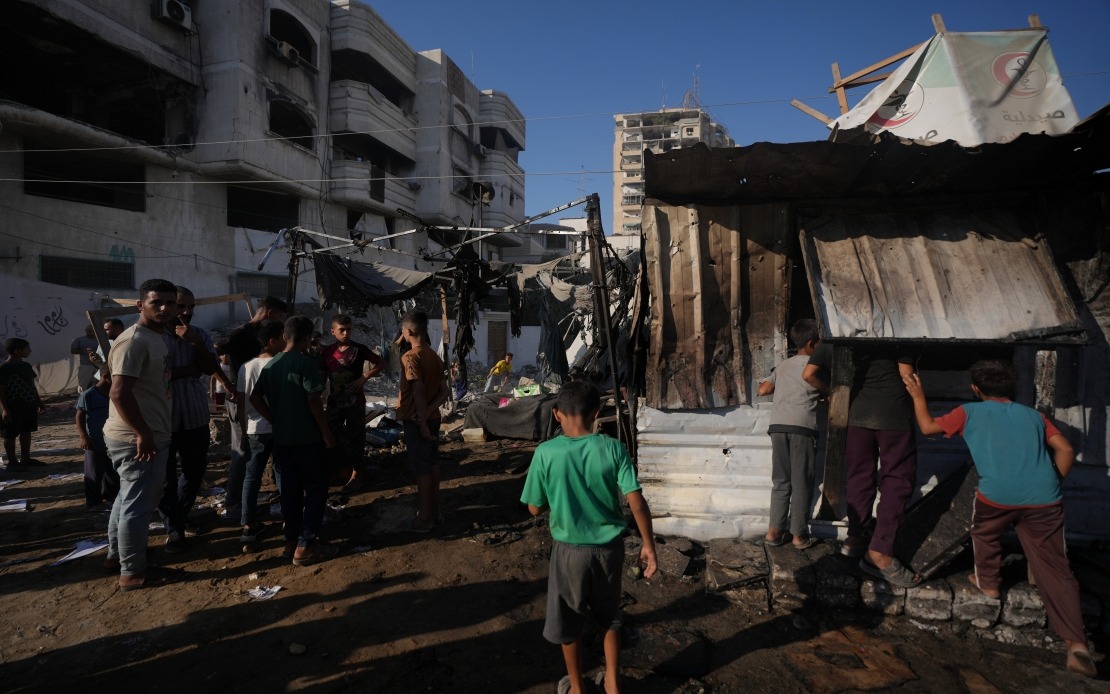
The humanitarian dimension forms the cornerstone of South Africa's grievance. The filing emphasises that Palestinian survivors residing in the Gaza Strip continue to experience compounding trauma, having endured years of conflict and now facing survival conditions deteriorating across an increasingly constrained geographic space. According to South Africa's submission, the situation represents not merely a continuation of previous suffering but an active worsening—a critical distinction in legal arguments concerning irreparable harm and the urgency of enforcement mechanisms.
Since a ceasefire took effect on October 10, 2025, the documented toll has continued mounting, with over 1,300 Palestinians killed and more than 4,330 wounded according to casualty figures presented in the filing. Additionally, recovery teams have extracted hundreds of bodies from collapsed buildings, suggesting either the ceasefire has been substantially violated or that recovery operations are uncovering victims from earlier phases of the conflict. These figures carry particular legal weight because they accumulate after the ICJ's provisional measures were supposed to be in effect, potentially demonstrating ongoing violations rather than historical ones.
The genesis of this legal confrontation traces to December 29, 2023, when South Africa filed its initial case against Israel, invoking the 1948 United Nations Convention on the Prevention and Punishment of the Crime of Genocide. Rather than alleging that genocide has already occurred—a determination requiring specific intent and other demanding legal criteria—South Africa's approach focuses on Israel's obligation to prevent potentially genocidal acts and to refrain from conduct that might constitute genocide. This preventive framework proved potent enough to convince the ICJ to issue provisional measures on three occasions: in January, March, and May 2024.
Each provisional measure order directed Israel to undertake all requisite steps to prevent acts explicitly prohibited under the Genocide Convention. The convention's scope covers not merely completed genocide but also conspiracy to commit genocide, direct and public incitement, and preparatory attempts—meaning Israel's obligations extend beyond preventing the most severe outcomes. The issuance of three separate orders across multiple months suggests either that the ICJ deemed the initial orders insufficient or that evidence of continued violations prompted successive reinforcements.
Palestinian Health Ministry data cited in South Africa's filing indicates that the broader conflict commencing October 7, 2023, has claimed 73,438 Palestinian lives and inflicted wounds upon 174,447 others. These figures serve dual purposes within South Africa's legal strategy: they establish the scale of harm that provisional measures are intended to prevent, and they potentially demonstrate the inadequacy of compliance if such numbers continue escalating. For Malaysian observers, these casualty figures underscore the human cost embedded within ostensibly legal and procedural disputes at the ICJ.
South Africa's decision to pursue this additional filing reflects the distinctive position that nation has cultivated within African and developing-world politics. As a country with its own history of systematic oppression and a constitutional commitment to international humanitarian law, South Africa has positioned itself as a guardian of the Genocide Convention's integrity. This role carries both moral authority and practical complications, as it requires sustained legal engagement and diplomatic capital regardless of immediate prospects for success.
The filing's emphasis on safeguarding Palestinians' rights under the Genocide Convention rather than merely documenting breaches demonstrates sophisticated legal argumentation. South Africa frames the case not as punishment for past acts but as prevention of irreparable harm before the ICJ reaches final judgment on the substantive case. This framing matters because it shifts focus from contested questions of intent and causation toward clearer obligations regarding conduct and prevention—potentially firmer legal ground.
For Malaysia and other Southeast Asian nations, this development carries significance beyond the immediate Israeli-Palestinian context. The case tests whether international courts possess meaningful enforcement mechanisms when powerful states allegedly violate binding orders. The answer to that question affects the credibility and utility of the entire international legal system that smaller and medium-sized powers depend upon for protection and dispute resolution. If the ICJ can be defied without consequence, the institutions underpinning the international order that benefit nations like Malaysia become substantially weakened.
South Africa's commitment to exhaust all available legal remedies reflects both principled persistence and practical realism about enforcement challenges. International courts lack police forces and cannot compel compliance through traditional enforcement mechanisms. Instead, they depend upon states' voluntary adherence and upon peer pressure and reputational consequences. By maintaining its case and filing successive motions, South Africa keeps the issue prominent within international discourse and maintains legal options should circumstances shift.
The interaction between this ICJ case and the broader geopolitical configuration remains fluid. How the international community responds to South Africa's contentions—whether through support, indifference, or counter-litigation—will influence both the case's trajectory and the precedents established for future disputes involving alleged breaches of provisional measures. For nations invested in the international legal order's integrity, including Malaysia, these developments warrant careful attention.

