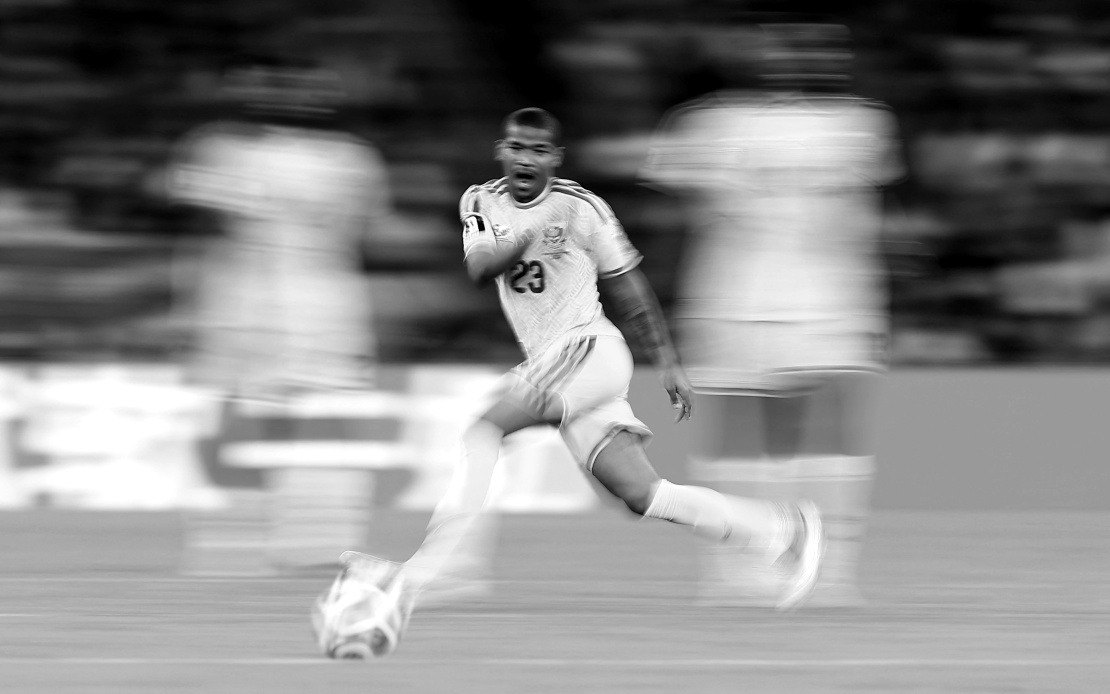
South Africa's football community is in mourning following the death of midfielder Jayden Adams at age 25, a loss that has reverberated through the sport just weeks after his country's breakthrough World Cup campaign. The Confederation of African Football confirmed the tragedy on Saturday, marking an unexpected end to what had been a promising career for one of the nation's emerging talents. Adams' passing comes at a moment of historical significance for South African football, which had just experienced its finest World Cup performance ever by advancing to the knockout round for the first time.
Adams had been a cornerstone of South Africa's group-stage efforts at the tournament, appearing in all three matches as his team navigated their opening fixtures. His presence in the squad underscored the depth of talent emerging in South African football at a time when the nation's programme was gaining international recognition. The midfielder's contribution to the team's historic progression beyond the initial phase highlighted his importance to the national setup, even at a relatively early stage of his international career.
The circumstances surrounding Adams' death remain under official investigation. South African police confirmed they had opened an inquiry after a 25-year-old male was discovered at a residence in Schotschekloof in central Cape Town on Saturday morning. The cause of death has not yet been publicly disclosed, and authorities are continuing their examination of the case. Minister for Sports, Arts and Culture Gayton McKenzie called for restraint from the public and media, urging people to refrain from speculation while the family and his club, Mamelodi Sundowns, await definitive information from official channels.
McKenzie's statement reflected the shock felt across South African sporting circles. "South African football has lost one of its brightest young talents," the minister said, offering his condolences to Adams' family members, his teammates, and the broader supporter base. The remarks underscored how Adams had come to represent a new generation of players capable of competing at the highest international level, a perception solidified by his selection for the World Cup squad.
Adams' trajectory through professional football had been marked by steady progression and notable achievements. He made his senior debut for the South African national team in 2022, establishing himself relatively quickly within the competitive landscape of African football. His selection for the 2023 Africa Cup of Nations squad, which reached the tournament's semifinals, demonstrated his value to the national programme and his ability to perform on continental stages where the standard of play is exceptionally high.
At club level, Adams began his professional journey at Stellenbosch FC before making a significant move to Mamelodi Sundowns in January 2025. His time at the Johannesburg-based club proved fruitful, as he contributed to their domestic league success and their campaign in the African Champions League, one of the continent's most prestigious club competitions. These achievements with a top-tier continental club further validated his standing as a player with genuine quality and potential for sustained excellence.
South Africa's World Cup campaign, in which Adams played such a prominent role, represents a watershed moment for the nation's football development. The team's progression from the group stage marked the first time in the country's World Cup history that a side had advanced beyond the opening matches. Their eventual elimination by co-hosts Canada in the round of 32 on June 28 came after Adams and his teammates had proven capable of competing with established international sides. The tournament had showcased South African football's capacity to deliver on the world's biggest stage, making Adams' participation all the more significant.
The international football community has joined South Africa in expressing grief over the loss. FIFA President Gianni Infantino released a statement acknowledging Adams' passing and recognising his contribution to global football. "Adams would be sorely missed by the global football community," Infantino noted, emphasising how the player had represented not just his nation but the broader values of international sport. Such tributes from world football's governing body underscored the respect Adams had earned among his peers and officials despite his relatively brief career at the elite level.
For Malaysian and Southeast Asian observers, Adams' story carries particular resonance given the region's own aspirations in international football development. South Africa's progress in this World Cup cycle demonstrates how emerging football nations can build competitive programmes capable of challenging established powers. Adams exemplified the type of young talent—technically skilled, physically capable, and mentally prepared for international competition—that countries throughout Asia are endeavouring to cultivate. His achievements at such a young age offered a blueprint for rapid player development and integration into national teams, lessons applicable across the region's football federations.
The loss of Adams also highlights the vulnerabilities and complexities that professional athletes face beyond the pitch. While the circumstances of his death remain under investigation, the tragedy serves as a sobering reminder that footballers, despite their public prominence and apparent privilege, are not immune to personal crises. For South African football specifically, losing a player of Adams' calibre and trajectory during what should have been the beginning of his most productive years represents a setback to the nation's football development plans and the continuity of the momentum built through their World Cup campaign.
As South Africa processes this loss, the broader implications for the national team's future planning cannot be overlooked. Adams was positioned as part of a new generation capable of sustaining the nation's football competitiveness in coming international competitions. His absence will require the South African Football Association to reassess its midfield options and accelerate the development of alternative players who can fill the void left by his unexpected passing. The football community will likely use this moment to reflect on the structures needed to support young players comprehensively, extending beyond tactical and technical preparation to encompass their overall wellbeing.

