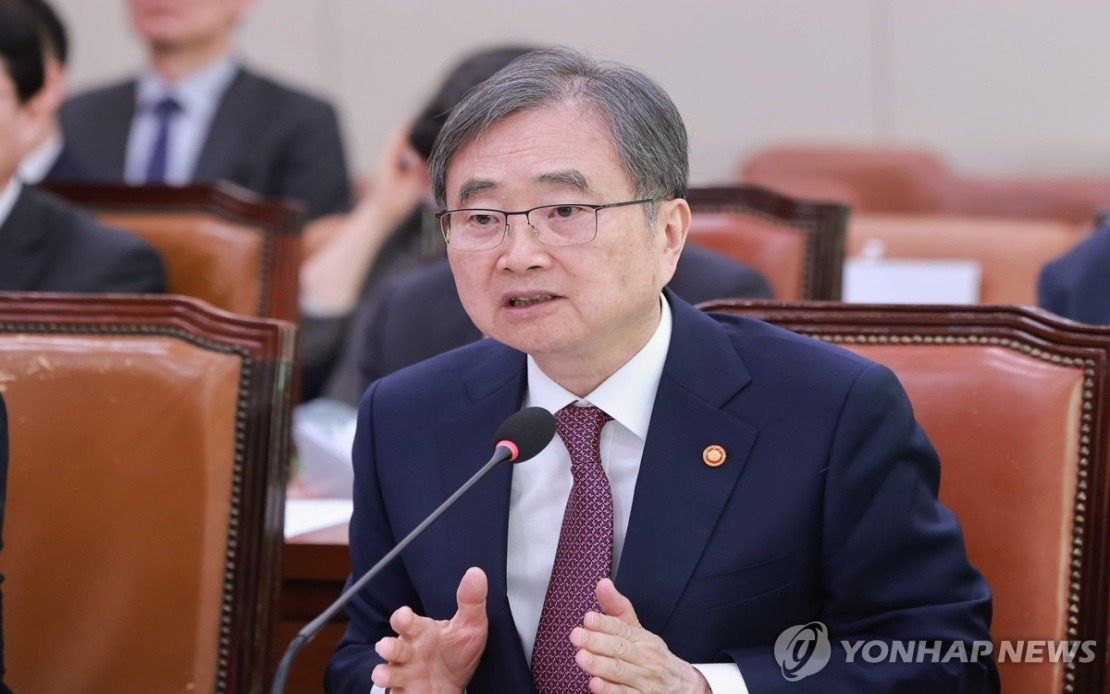
South Korea's diplomatic establishment faced an unusual and awkward situation when Foreign Minister Cho Hyun disclosed that his government had learned about significant reductions to joint military drills with the United States entirely through President Donald Trump's social media post. The revelation underscores the unpredictable nature of modern diplomacy and the potential pitfalls of policy announcements conducted through non-traditional channels, raising questions about communication protocols between longstanding allied nations.
During testimony before the parliamentary committee for foreign affairs and unification, Cho Hyun explained that neither Seoul's government nor its American counterparts had been given advance notification of Trump's announcement. This absence of standard diplomatic channels meant that official exchanges occurred only after the public disclosure, reversing the customary order in which sensitive military matters are typically handled between allies. The foreign minister's remarks highlighted the breach of protocol that has become increasingly common in contemporary international relations.
The South Korean Defence Ministry moved swiftly to engage with American counterparts following the social media announcement. Defence Minister Ahn Gyu-back initiated close consultations with the US side immediately after Trump's post appeared, working to understand the rationale and scope of the proposed changes. Cho stressed during his parliamentary testimony that these subsequent discussions should not be characterised as Seoul receiving a unilateral notification, but rather as an ongoing dialogue between defence establishments seeking clarity and coordination on the matter.
The specific change announced affected the Ulchi Freedom Shield, a major annual joint military exercise conducted during summer months. According to South Korea's Joint Chiefs of Staff, the exercise duration was reduced from the originally scheduled 11-day period running from August 17 to 27, down to just five days ending on August 21. This compression represents a substantial curtailment of training activities designed to test readiness and interoperability between the two militaries during what has historically been viewed as a critical period for maintaining defensive capabilities.
Trump's August 16 social media post indicated that he had directed the Pentagon to significantly scale back the scope and scale of joint exercises conducted with South Korea. This instruction came as part of broader policy discussions regarding America's military posture in the Indo-Pacific region and approaches to engagement with North Korea. The announcement preceded a visit by Commander of the US Forces Korea Xavier Brunson to South Korea's defence ministry building the following day, suggesting that diplomatic damage control and clarification were already underway.
The Ulchi Freedom Shield exercise encompasses multiple components critical to peninsular security architecture. The drill typically includes field manoeuvres that test troops' ability to respond to contingencies, computer-simulated command post exercises that evaluate decision-making under stress, and civil defence drills that engage civilian authorities in crisis response scenarios. Each component plays a role in maintaining the joint readiness framework that has underpinned the South Korea-US security alliance for decades.
From a Southeast Asian perspective, this episode carries implications beyond the Korean peninsula. The region closely watches the stability of the US commitment to allied defence arrangements, as several nations including the Philippines, Thailand, and Vietnam maintain their own security partnerships with Washington. When military exercises—traditionally considered the backbone of allied interoperability—are dramatically altered through informal channels without consultation, it may prompt other regional partners to reassess assumptions about the reliability and predictability of their American commitments.
The incident also reflects broader tensions in US-Korea relations that have periodically surfaced since Trump's previous presidency. Questions about defence cost-sharing, the presence of American troops in Korea, and the overall strategic approach to North Korea have long been contentious. This latest move, while presented as a practical adjustment to military readiness postures, may signal shifts in how the current American administration prioritises alliance management and exercises relative to diplomatic openings or other strategic objectives.
For South Korea, the challenge extends beyond the immediate diplomatic awkwardness. Seoul must balance its response to Washington's military decisions with its own security requirements and domestic political pressures. The military establishment has long argued that regular, large-scale joint exercises are essential for maintaining deterrence capabilities against North Korea. Any reduction in training intensity or frequency must be carefully managed to avoid signalling weakness or reduced commitment to the defence of the peninsula.
The reliance on social media as a vehicle for announcing military policy changes represents a departure from established diplomatic practice and raises questions about institutional messaging and coordination within the Trump administration. When major policy announcements bypass standard governmental channels, it can create confusion, complicate implementation, and strain relationships with allies who expect consultation and advance notice on matters affecting their security arrangements.
Moving forward, this episode will likely prompt discussions between Seoul and Washington about establishing clearer protocols for announcing military policy changes. South Korea, as a frontline state facing direct military threats, has a vested interest in ensuring that any modifications to defence cooperation are thoroughly vetted through appropriate channels and understood by all relevant stakeholders before public disclosure. The incident serves as a cautionary tale about the importance of maintaining traditional diplomatic channels even in an era of instant global communication.

