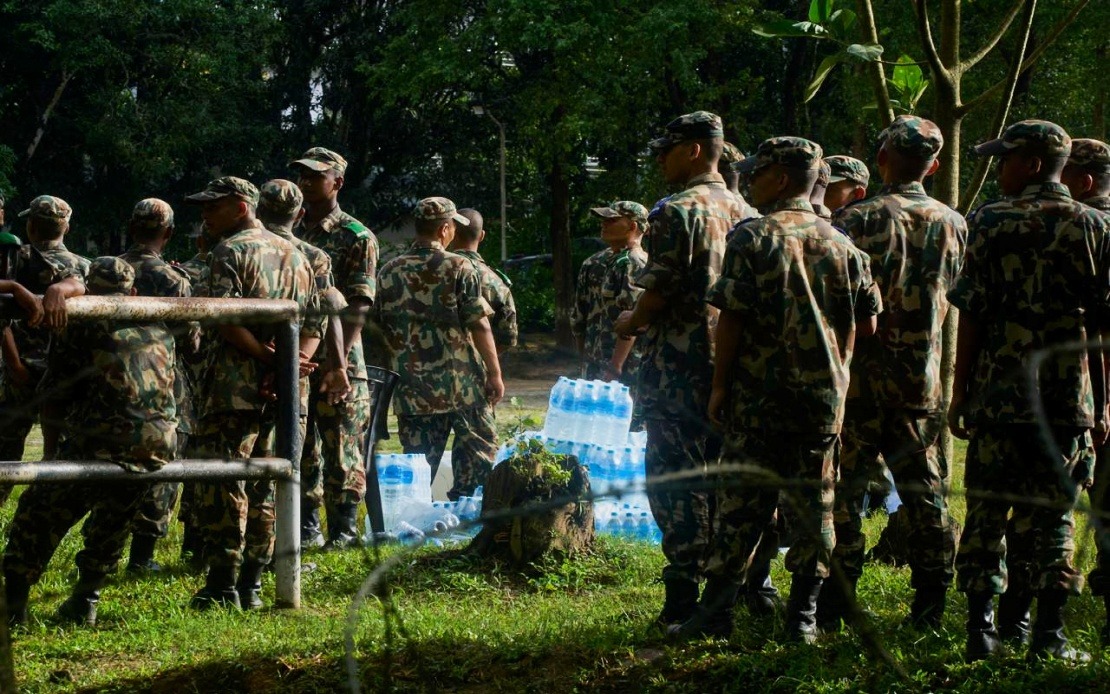
Seoul has mobilised a dedicated emergency response team to Nepal following the disappearance of nine South Korean workers in a catastrophic flooding disaster that has gripped the Himalayan nation. The deployment represents a coordinated government effort to locate and assist nationals stranded in one of the region's deadliest natural disasters in recent memory, with authorities acknowledging the scale of the humanitarian crisis unfolding across Nepal's disaster-stricken areas.
The nine missing individuals comprise six employees from Doosan Enerbility Co., a major plant construction firm, alongside three personnel from Korea South-East Power Co., a state-run power generation enterprise. These workers vanished while engaged in construction activities at a hydropower plant facility situated in Nepal's Rasuwa district, located in the country's rugged north-central terrain near the Tibetan border. The catastrophe struck when a massive flash flood combined with destructive mudslides swept through the region on Wednesday, catching workers in the construction zone unprepared for the ferocity of the natural disaster.
Amidst the broader tragedy, South Korean authorities confirmed that an additional ten workers from Doosan had been located and verified as alive, though they remained in precarious circumstances awaiting extraction from the affected area. These individuals had successfully evacuated the immediate danger zone alongside approximately 200 foreign nationals working across various roles at the hydropower construction project. The successful evacuation of this larger cohort provided some reassurance to officials in Seoul, though concern remained acute regarding the nine unaccounted individuals whose fate remained unknown.
The humanitarian scale of the Nepal disaster extends far beyond the Korean nationals involved. Official reports indicate that the flooding and mudslide event has claimed at least 160 lives across the affected regions, with a further 403 people reported missing. The international dimension of this crisis is particularly striking, as 341 of the missing persons are foreign nationals—a reflection of the substantial international workforce engaged in infrastructure development projects throughout Nepal's construction sector. This concentration of foreign casualties underscores the vulnerability of migrant workers engaged in high-risk construction activities in remote mountain regions.
The South Korean government's response has been swift and comprehensive. A specialized 11-member team representing the Foreign Ministry, national police forces, and firefighting authorities departed Seoul on Thursday with orders to reach Nepal's capital Kathmandu by evening. This coordinated interagency approach reflects Seoul's determination to bring maximum diplomatic and technical resources to bear on locating its missing citizens. The composition of the team signals Seoul's intent to engage simultaneously at governmental, diplomatic, and operational rescue levels.
Beyond the government's direct intervention, both Doosan Enerbility and Korea South-East Power Co. have established their own emergency command structures and begun mobilising field teams to the disaster site. These corporate initiatives complement official rescue operations, with the companies leveraging their on-ground presence, local knowledge, and construction expertise to support search efforts. The private sector mobilisation represents recognition that rapid response capacity often depends on the immediate availability of personnel and resources already present in-country.
At the highest political level, South Korea's Foreign Minister Cho Hyun has initiated direct diplomatic engagement with Nepal's foreign ministry to secure cooperation and information sharing regarding rescue operations. President Lee Jae Myung has issued explicit directives mandating that government agencies exhaust all available resources in searching for and rescuing the missing nationals. This top-level commitment signals the political importance Seoul attaches to the issue and reflects broader societal concern regarding Korean workers operating in hazardous international environments.
The infrastructure project at the centre of this disaster carries significant strategic and commercial implications for both nations. The Upper Trishuli-1 hydropower facility, situated on the Trishuli River approximately 70 kilometres northwest of Kathmandu, represents a substantial investment in Nepal's energy infrastructure development. The 216-megawatt capacity facility commenced construction in January 2022 under a timeline targeting commercial operation commencement by year-end. However, industry analysts recognise that the catastrophic flood damage sustained at the construction site will necessarily impose substantial delays on project timelines, with completion now likely extending well into 2025 or beyond.
For Malaysia and other Southeast Asian nations with substantial workforces engaged in regional and cross-border infrastructure projects, the Nepal disaster carries sobering implications regarding occupational safety in high-risk construction environments. The incident highlights the particular vulnerabilities of workers deployed to remote mountain locations with limited access to emergency services and evacuation routes. Malaysian construction companies and workers similarly engaged in hydropower, dam, and mountain infrastructure projects across the region must recalibrate their risk assessment protocols and emergency preparedness measures.
The coordinated response by Seoul also reflects evolving international protocols for managing disasters affecting foreign nationals in developing nations. The deployment of dedicated diplomatic and technical resources, combined with private sector coordination and top-level political direction, represents a model increasingly adopted by developed nations seeking to protect their overseas workers. Such approaches may provide useful precedent for Malaysian authorities managing the safety of its own nationals engaged in infrastructure development projects throughout the region and globally.
As rescue operations continue in Nepal, the South Korean government faces the dual challenge of locating missing nationals while simultaneously managing the humanitarian dimensions of a regional disaster affecting hundreds of foreign workers. The coming days will prove critical in determining outcomes for the missing Koreans, while the incident will inevitably prompt broader reconsideration of safety protocols and emergency preparedness standards for international construction workforces operating in geographically challenging environments across Asia.

