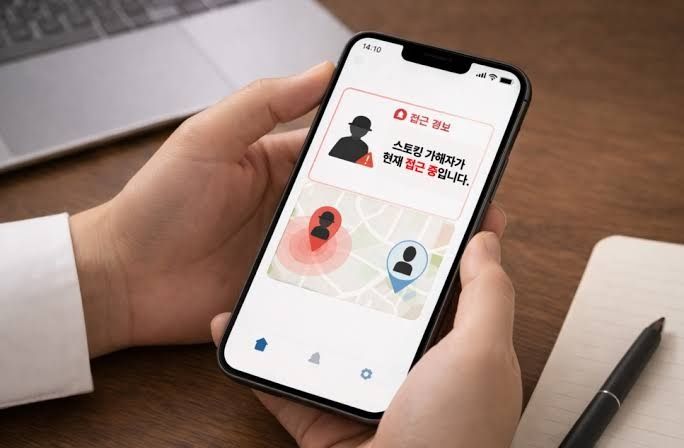
South Korea took a significant step in victim protection on June 24 by rolling out a cutting-edge mobile application that harnesses electronic monitoring technology to safeguard individuals targeted by stalkers. The system, managed by the Ministry of Justice, marks a watershed moment in how the country addresses the persistent threat of harassment and violence driven by obsessive behaviour. Rather than relying solely on emergency alert devices, the new platform grants victims direct visibility into a suspect's geographical position and directional movement through their smartphone, creating what authorities argue is a more proactive layer of defence.
The impetus behind this technological intervention stems from a recognition that traditional protections have fallen short of their intended purpose. Between 2021 and August 2025, according to data presented by Representative Lee Gwang-hee of the ruling Democratic Party of Korea, twenty-three stalking victims were either killed or subjected to attempted murder despite having been furnished with smartwatch-style emergency alert devices. These devices, which had been distributed to at-risk individuals for several years prior, were designed to permit victims to summon help instantly when they sensed immediate danger. Yet this reactive mechanism proved insufficient in preventing the gravest outcomes, prompting policymakers to contemplate a more comprehensive approach that shifts responsibility from victims detecting threats to authorities maintaining constant awareness of suspect movements.
The electronic monitoring component underlying the new system is relatively recent within South Korea's criminal justice framework. Beginning in 2024, courts began ordering the use of ankle monitors in particularly serious stalking cases, treating this surveillance technology as a supplementary safeguard beyond the emergency alert watches already in circulation. This judicial tool permits authorities to maintain continuous awareness of high-risk offenders' whereabouts, theoretically reducing the likelihood that perpetrators can approach victims undetected. By extending access to this location data directly to victims through a dedicated application, the government has essentially converted what was previously a law enforcement intelligence asset into a consumer-facing security tool.
However, this expansion of location-sharing capabilities inevitably raises thorny questions about personal privacy and the balance between public safety and individual rights. Citizens and civil liberties advocates have voiced legitimate concerns about surveillance scope and data governance. Recognising these sensitivities, the Justice Ministry moved to revise regulations governing electronic monitoring in December 2025, implementing safeguards intended to address privacy concerns and establish clear boundaries around how location information is accessed, stored, and utilised. These regulatory amendments signal that authorities recognise the need to earn public confidence in such systems through transparent governance frameworks.
The initiative carries particular resonance for Southeast Asian countries grappling with similar challenges. Stalking and harassment crimes have emerged as increasingly prevalent across the region, often inadequately addressed by existing legal infrastructure and victim support mechanisms. Malaysia, Indonesia, and Thailand have all witnessed growing awareness of such crimes, yet institutional responses frequently lag behind the sophistication of digital-age harassment tactics. South Korea's willingness to employ technology as a countermeasure—and to do so in ways that empower victims—offers a potential blueprint for regional governments considering their own protective strategies.
Yet the app deployment represents merely one component of a broader, multi-faceted reform agenda. Complementing the location-sharing technology, the Justice Ministry has announced plans to introduce a restraining order system in April 2027 that would fundamentally restructure how victims access court protections. Currently, the process requires victims to petition law enforcement agencies, who then present requests to courts on their behalf. This intermediary approach can introduce delays, inconsistencies, and bureaucratic friction. The forthcoming system would permit stalking victims to petition courts directly, removing a gatekeeping function and streamlining the path to legal remedies. This procedural reform acknowledges that victims themselves are often best positioned to articulate the urgency and severity of their situations.
The direct petitioning mechanism represents a significant philosophical shift toward victim-centred justice. Rather than positioning law enforcement as essential intermediaries, the system trusts victims' own assessments of danger and their capacity to present evidence to judicial officers. This approach aligns with contemporary international best practices in victim protection, which increasingly emphasise agency, autonomy, and meaningful participation in the processes intended to shield them. For countries across Southeast Asia where victims frequently encounter indifference or inaction from law enforcement, such systemic reforms could prove transformative.
Implementing these interconnected protections requires sustained investment in digital infrastructure, judicial training, and inter-agency coordination. South Korea's decision to house the system within the Ministry of Justice rather than distributing responsibility across multiple agencies suggests an intention to centralise accountability and streamline operations. Yet the technical challenge of maintaining secure, real-time location data while preventing unauthorised access or surveillance remains substantial. The December 2025 regulatory revisions likely represent an initial attempt to address these concerns, though ongoing refinement will prove necessary as the system encounters real-world usage patterns and edge cases.
The initiative also reflects broader societal conversations about technology's role in addressing violence and harassment. Unlike blunt-force approaches such as increased incarceration, the location-sharing and restraining order mechanisms operate on the premise that informed supervision and legal remedies can prevent escalation. This preventive orientation aligns with contemporary criminology emphasising desistance and early intervention over purely punitive responses. Yet sceptics might question whether visibility into a suspect's location actually deters determined offenders or merely shifts the locus of their harmful behaviour rather than eliminating it entirely.
For Malaysian policymakers and civil society organisations engaged in victim advocacy, South Korea's experience offers valuable lessons about both the potential and limitations of technological solutions. The fact that twenty-three individuals were killed despite possessing emergency alert devices underscores that no single tool guarantees safety; comprehensive approaches must combine technology, legal remedies, social support systems, and robust law enforcement engagement. South Korea's emerging ecosystem of real-time tracking, direct court access, and electronic monitoring represents an ambitious attempt to address these multiple dimensions simultaneously.

