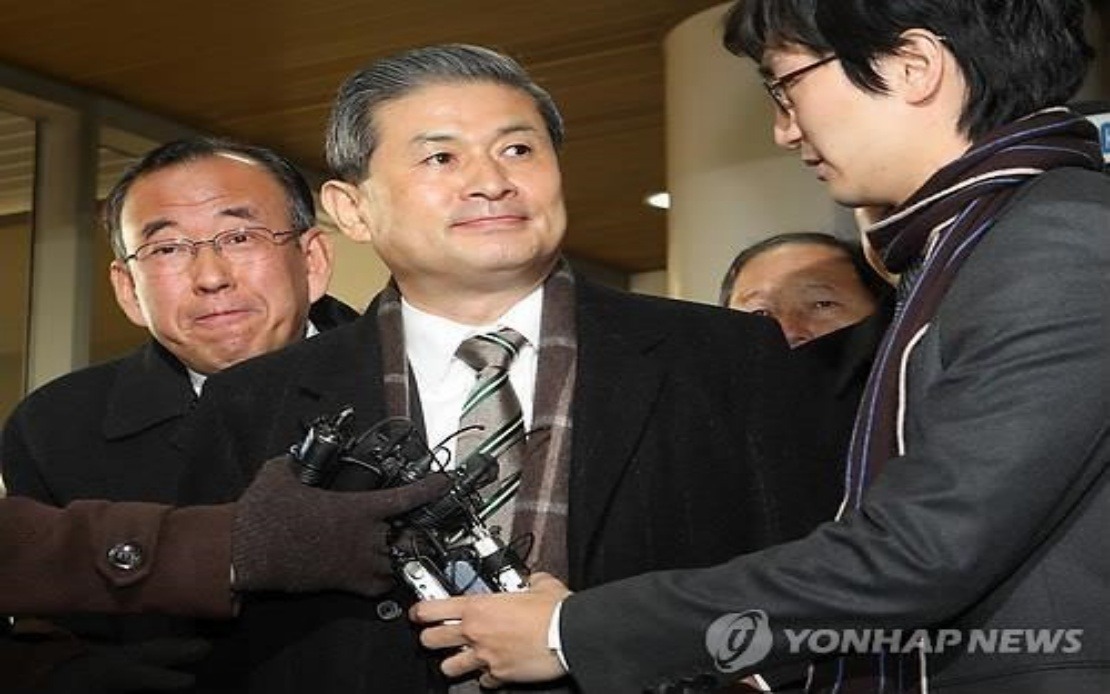
South Korea has completed the formal revocation of its highest science and technology honour from Hwang Woo-suk, the disgraced stem cell researcher whose fraudulent claims to have created the world's first cloned human embryo damaged the nation's scientific reputation two decades ago. The interior ministry announced on Wednesday that it had secured presidential approval to strip the prestigious Top Science and Technology Award from Hwang, nearly 22 years after he received it in 2004 for purportedly groundbreaking work in human embryonic stem cell research.
The protracted process of removing Hwang's honour reflects the complex legal and procedural obstacles that can accompany even clear-cut cases of scientific misconduct at the highest levels. South Korea's science ministry had formally requested the revocation in March, triggering a chain of administrative steps that culminated in Tuesday's presidential authorisation. The award itself represents a presidential distinction reserved for scientists and technologists deemed to have made transformative contributions to the nation's scientific and technological trajectory, making its conferral and removal matters of significant national symbolic weight.
When Hwang initially received the award in 2004, he was celebrated as a trailblazer in his field. The honour came with a monetary prize of 300 million won, equivalent to approximately US$201,200 at the time. His research on human embryonic stem cells had captured international attention and brought prestige to South Korea's scientific establishment, positioning the nation as a leader in cutting-edge biological research during an era when stem cell science was gaining prominence globally.
However, the credibility of Hwang's work unraveled rapidly in 2005 when investigations revealed that his landmark research paper contained fabricated data. Rather than demonstrating genuine breakthroughs in cloning technology, his publications had instead presented falsified evidence to support claims that simply could not withstand scrutiny. The revelation sent shockwaves through the international scientific community and exposed significant gaps in peer review processes that had allowed such wholesale fraud to pass initial scrutiny.
The consequences for Hwang's career were severe and swift. Seoul National University, one of South Korea's most prestigious institutions, dismissed him from his professorship in 2006 following his conviction for scientific misconduct. This sanction effectively ended his formal academic standing, though the broader implications of his fraud extended well beyond his individual career trajectory, casting a shadow over Korean scientific institutions and raising uncomfortable questions about the oversight mechanisms in place to prevent such deception.
The journey to this week's revocation was itself circuitous. South Korea's government had previously moved to rescind the award in 2020, demonstrating the authorities' commitment to erasing recognition of fraudulent achievement. However, that earlier revocation was subsequently challenged in court and ultimately nullified due to procedural defects in how the government had conducted the process. Rather than allowing that legal setback to stand indefinitely, the ministry chose to pursue the revocation again, ensuring that the proper administrative steps were followed this time to withstand potential legal challenges.
For Malaysian readers and Southeast Asian observers, the Hwang case offers instructive lessons about the resilience of institutional systems designed to maintain scientific integrity. It demonstrates that even prominent researchers at leading universities can perpetrate elaborate fraud, and that exposing such misconduct requires vigilant peer review, robust institutional oversight, and willingness to pursue consequences regardless of an individual's prior standing or accomplishments. The case also illustrates how scientific fraud can have cascading effects on public confidence in research institutions and national scientific capacity more broadly.
The revocation also underscores the importance of formal processes in addressing scientific misconduct. While the substance of removing honour from a fraud perpetrator seems straightforward, the legal mechanisms through which this occurs matter significantly. South Korea's experience shows that rushing such determinations without proper procedural safeguards can invite legal vulnerability, ultimately delaying justice and creating ambiguity about institutional commitment to accountability. This careful approach, while slower, ultimately produces more defensible outcomes.
The case carries particular relevance for Southeast Asian nations investing heavily in biomedical and stem cell research capabilities. As countries throughout the region seek to establish themselves as science and innovation hubs, the Hwang precedent serves as a cautionary tale about the dangers of insufficiently rigorous institutional oversight. Building research excellence requires not only attracting talented scientists but establishing governance structures capable of detecting and preventing fraud before it causes reputational damage.
Moreover, the temporal distance between Hwang's initial award and its revocation—spanning 22 years—highlights how institutional corrections to scientific fraud can be protracted affairs. This extended timeline reflects both the legal complexities involved and the weight institutions place on ensuring that such reversals are carried out with maximum legitimacy. For South Korea, completing this revocation represents closure on a painful chapter in its scientific history and reinforces its commitment to maintaining standards of research integrity going forward.

