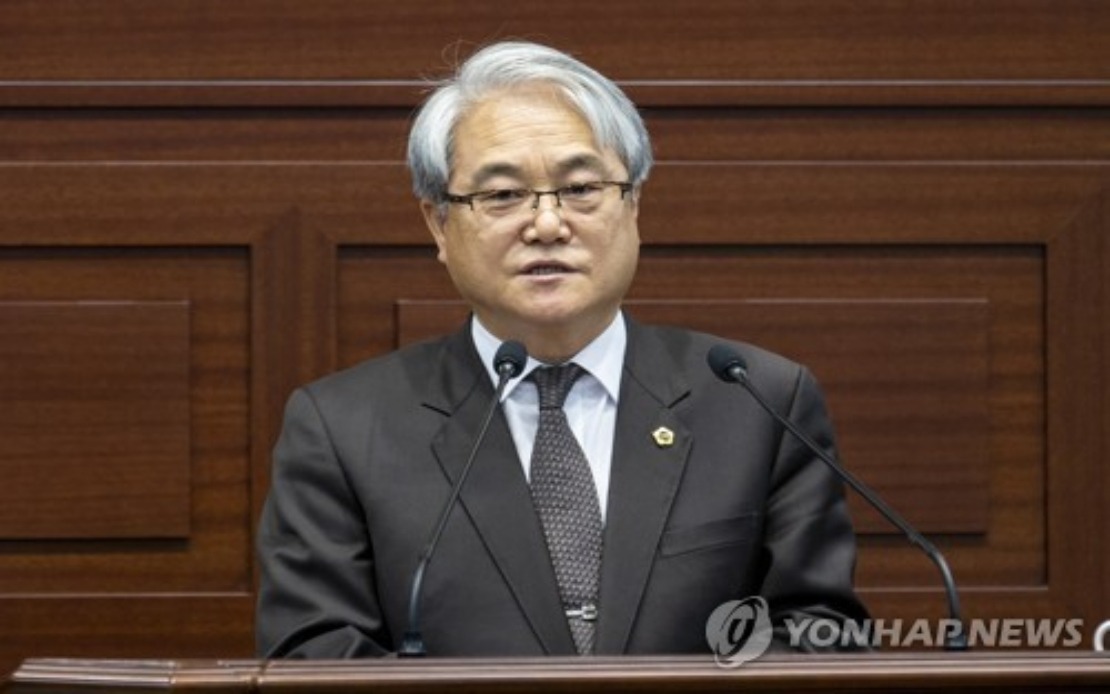
South Korea's political establishment faced another corruption scandal on Monday when Kim Ha-soo, the former chief administrator of Cheongdo county in the southeastern region, was found dead on a mountain. Rescue teams recovered the body at approximately 7 a.m., discovering what appeared to be a handwritten note at the scene. The discovery marks yet another episode in a pattern of high-profile deaths connected to criminal investigations that has periodically troubled Korean public life, raising fresh questions about the pressures facing officials entangled in legal troubles.
According to police officials quoted by Yonhap News Agency, Kim had been the subject of an active criminal inquiry spanning multiple serious allegations. The most significant charge involved his alleged receipt of unlawful payments from a government employee in exchange for facilitating a job promotion while he served as county chief between 2022 and early 2024. This type of quid pro quo arrangement, where advancement is explicitly tied to financial kickbacks, represents a fundamental breach of public trust and administrative integrity that Korean authorities treat with particular gravity.
The circumstances surrounding the bribery investigation grew more complex with the emergence of a crucial intermediary figure. A man suspected of acting as the conduit for delivering the bribes to Kim was discovered dead previously, though authorities have not disclosed details about the timing or circumstances of that death. The death of the alleged intermediary prior to Kim's own discovery raises intriguing questions about potential connections and whether pressure from the unfolding investigation may have influenced subsequent events.
Beyond the bribery allegations, Kim faced a separate but equally serious investigation that had already resulted in referral to prosecutors. He was accused of forcibly entering the residence of a nursing home director in January, an incident that suggested additional layers of potential misconduct or personal conflicts during his tenure. The combination of these distinct charges paints a picture of an official whose behaviour had generated multiple formal complaints and investigations simultaneously.
The death of Kim represents a significant development for South Korea's ongoing struggle with corruption at local government level. County chiefs wield considerable administrative authority over land development, budgeting, and personnel decisions in their jurisdictions, making these positions particularly vulnerable to abuse. When officials at this level are implicated in bribery schemes, it undermines public confidence in the fairness and impartiality of local governance across the nation.
For Malaysian and Southeast Asian observers, the case illustrates the persistent challenges facing East Asian democracies in combating entrenched patterns of official corruption. South Korea has implemented comprehensive anti-corruption reforms and established dedicated investigative agencies, yet cases like Kim's demonstrate that institutional safeguards alone cannot eliminate the problem entirely. The sophistication of schemes involving intermediaries suggests that networks of mutual obligation and financial benefit can persist despite regulatory oversight.
The discovery of a note apparently authored by Kim adds a poignant dimension to the unfolding story, though police have been characteristically tightlipped about its contents. In previous similar cases in South Korea, such notes have sometimes contained admissions, explanations, or expressions of despair regarding the investigations and their personal consequences. The psychological toll of facing corruption charges, particularly for individuals accustomed to positions of authority and respect, has proven in other instances to be considerable.
The timing of Kim's death—occurring while investigations remained active but before formal trial proceedings had commenced—means that questions about key details of the alleged schemes may never receive complete judicial clarification. This frustration mirrors similar outcomes in other high-profile cases where deaths have prevented comprehensive public examination of misconduct allegations, limiting the deterrent effect that publicised trials might otherwise provide.
Chongdo county, an agricultural region in North Gyeongsang Province, will now face administrative disruption as it adjusts to the loss of its former leader and manages the reputational damage from these allegations. The county's public institutions may require enhanced oversight during this transitional period to restore confidence among residents and ensure that the leadership vacuum does not create opportunities for further irregularities.
The incident underscores broader themes about accountability and governance that resonate throughout East and Southeast Asia. Corruption at county and municipal level remains a persistent challenge in many jurisdictions across the region, from local government bodies to provincial administrations. Cases that result in deaths before judicial resolution create ambiguity about the full extent of misconduct and leave unanswered questions for the public record.
South Korean authorities will likely intensify scrutiny of the relationships and financial arrangements that characterised Kim's administration, particularly given the apparent connection to the earlier death of the suspected intermediary. Prosecutors may seek to understand whether other officials or associates were involved in the alleged bribery scheme and whether similar patterns exist in adjacent jurisdictions.
The investigation into Kim's tenure and finances will presumably continue posthumously, with authorities attempting to trace the flow of illegal funds and identify all parties involved in the promotion arrangement. This process, though unable to result in criminal prosecution of Kim himself, may still yield valuable evidence about the operational mechanics of corruption networks within local government administration.

