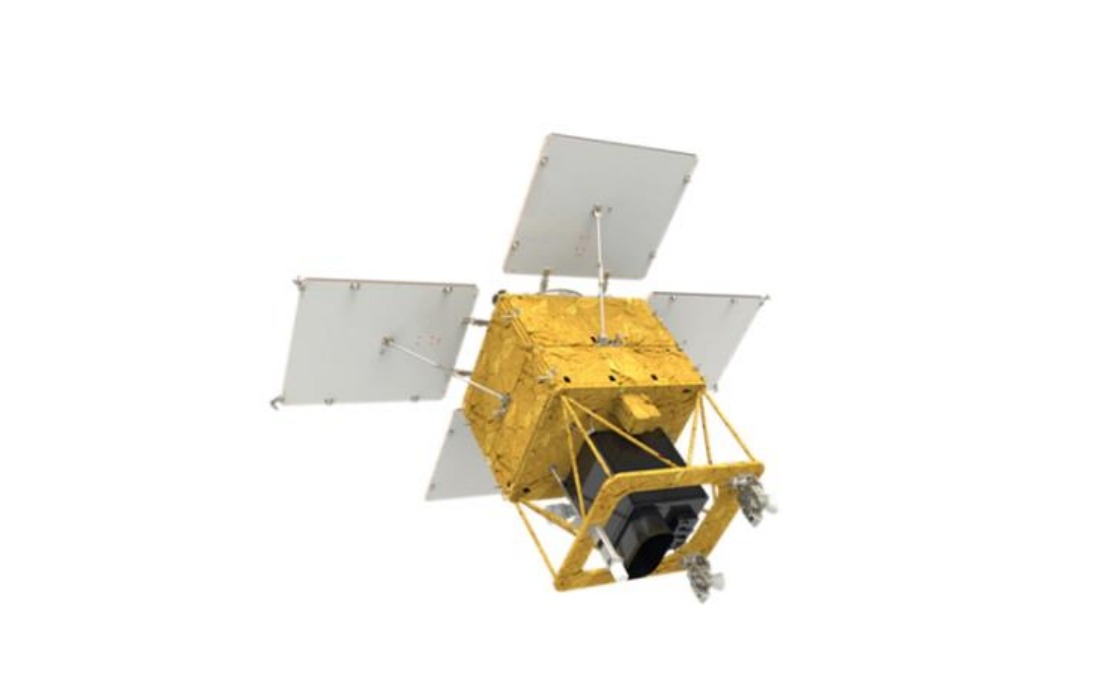
South Korea has proceeded with the launch of its fourth generation medium-sized Earth observation satellite, lifting off aboard a SpaceX Falcon 9 rocket from Vandenberg Space Force Base in California. The Korea AeroSpace Administration orchestrated the mission, which represents a significant milestone in the nation's expanding domestic space capabilities and regional surveillance infrastructure.
The 500-kilogramme satellite was dispatched into orbit at 4.10 pm Korea time on Tuesday, marking another step forward in Seoul's ambitious program to develop indigenous satellite technology independent of foreign reliance. The spacecraft completed rigorous functional verification procedures and propellant loading protocols over the preceding month, ensuring mission readiness before its ride aboard the American launch vehicle.
Following separation from the Falcon 9 approximately 2 hours and 22 minutes after liftoff, the satellite established ground contact roughly 31 minutes later through the Svalbard ground station positioned in Norway. This network of international receiving stations demonstrates the increasingly interconnected nature of space operations, even for nations pursuing autonomous orbital capabilities.
The satellite's primary payload centres on an observation camera engineered entirely within South Korea, specifically designed to capture imagery of the entire Korean Peninsula once every three days. This domestic technological achievement carries strategic significance for the region, as nations across Southeast Asia continue building their own Earth observation networks for enhanced situational awareness and resource monitoring capabilities.
South Korea's government has outlined an expansive vision for the satellite's applications, extending well beyond simple geographic surveillance. The spacecraft will support agricultural optimisation and forest inventory management, enabling more precise crop monitoring and sustainable land-use planning. Additionally, the satellite promises enhanced capabilities for tracking forest degradation and vegetation changes, critical for understanding environmental transformation across East Asia's rapidly industrialising landscape.
Disaster response represents another crucial application domain, particularly relevant given the region's vulnerability to typhoons, floods and seismic events. By maintaining continuous overhead observation, the satellite can facilitate rapid damage assessment and coordinate emergency response operations during natural catastrophes. This capacity has direct implications for Southeast Asian nations frequently affected by similar climatic hazards and seeking improved early-warning systems.
Climate change analysis constitutes an increasingly vital function as scientists and policymakers grapple with environmental shifts. The satellite's observational data will contribute to long-term climate monitoring efforts, tracking ice coverage, coastal changes and atmospheric patterns relevant to broader East Asian environmental research. Public safety enhancement rounds out the operational scope, encompassing applications from urban planning verification to infrastructure condition assessment.
The spacecraft will occupy an orbital altitude of approximately 888 kilometres, positioning it within the optimal range for moderate-resolution Earth observation missions. Upon reaching this operational orbit, the satellite will undergo four months of commissioning and systems validation before commencing full-scale scientific operations during the first half of next year. This deliberate testing phase ensures all instruments perform correctly and data transmission systems function reliably before mission-critical work begins.
South Korea's progression toward a constellation of Earth observation satellites reflects broader regional competition in space capabilities. Southeast Asian nations have observed this development trajectory closely, with several countries either operating or planning their own satellite systems. The success of South Korea's indigenous payload development may inspire additional regional investment in domestic space technology rather than reliance on foreign systems, potentially accelerating technological advancement across East and Southeast Asia.
The project demonstrates how medium-sized Earth observation satellites offer cost-effective alternatives to massive flagship missions, delivering practical monitoring capabilities within finite budgets. This scalable approach appeals to developing nations in Southeast Asia contemplating space programs, suggesting that sophisticated orbital capabilities need not require enormous capital expenditures. South Korea's achievement thus carries instructive value for regional peers evaluating their own aerospace ambitions and resource allocation priorities.
The successful launch sequence reinforces the established partnership between South Korea and SpaceX, reflecting the commercial space industry's pivotal role in national satellite deployment strategies. As launch costs continue declining and international cooperation expands, smaller nations gain unprecedented access to orbital infrastructure that previous generations could only imagine. This democratisation of space access carries profound implications for regional security monitoring, disaster preparedness and environmental stewardship across Southeast Asia and beyond.

