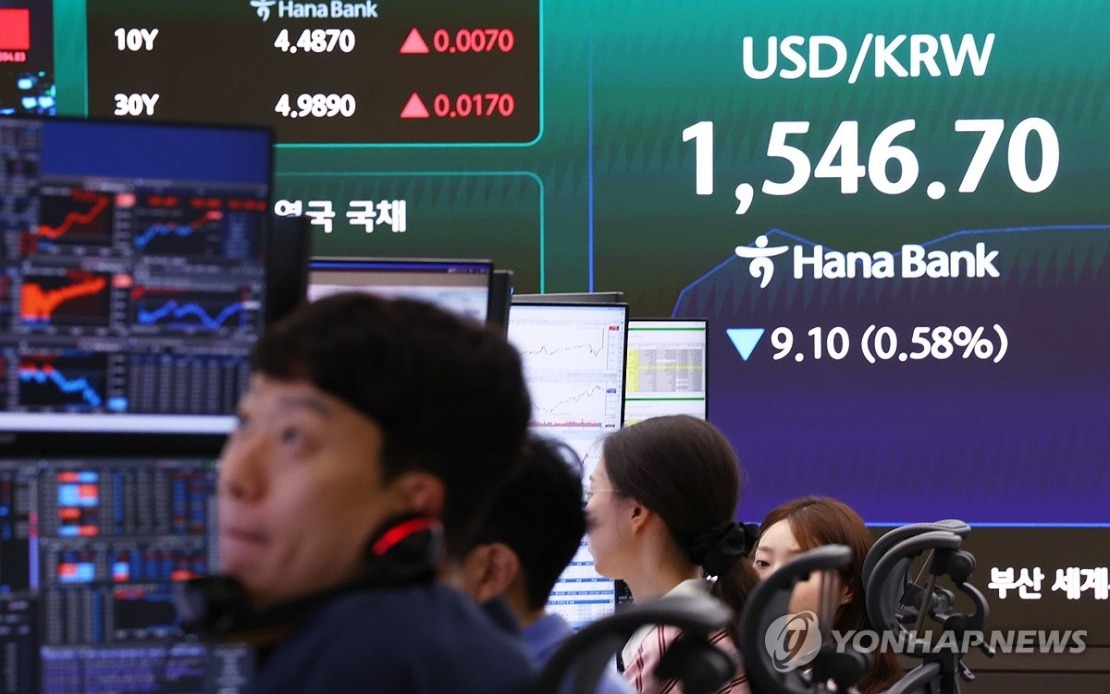
South Korea's government has taken a significant step to strengthen its position as a regional financial hub by implementing around-the-clock foreign exchange trading. Finance Minister Koo Yun-cheol marked the official start of the 24-hour trading system on Monday, visiting Hana Bank's dealing room in central Seoul to underscore the importance of the initiative. The new system represents a deliberate strategy to modernise Asia's fourth-largest economy's currency markets and respond to shifting global investment patterns.
The newly operational trading platform runs continuously from 6 am Monday through 6 am Saturday without interruption, closing only on weekends and New Year's Day. This continuous operation marks a substantial expansion from the previous system that was introduced in July 2024, when South Korea already extended trading hours from the traditional 9 am to 3:30 pm window to a broader 9 am to 2 am schedule. The progression from traditional daytime trading to extended evening hours and now to fully continuous trading reflects Seoul's determination to accommodate the global nature of modern financial markets, where investors across different time zones require seamless access.
The finance minister framed the launch within the context of South Korea's overall economic strength and international financial standing. Koo highlighted that the initiative demonstrates Seoul's confidence in its economic fundamentals, pointing specifically to the nation's robust external position and its achievement of record-breaking current account surpluses. These macroeconomic indicators provide a solid foundation for the expansion, signalling to foreign investors that South Korea's currency and markets are underpinned by genuine economic stability rather than speculative policy initiatives.
A significant motivating factor behind this move involves South Korea's recent inclusion in the World Government Bond Index, a development that has generated heightened international interest in Korean financial instruments. The finance minister explicitly connected the new trading system to this inclusion, suggesting that the expanded hours address growing demand from global investors seeking deeper access to South Korean markets. This inclusion represents a milestone in Seoul's efforts to integrate its bond market into mainstream international investment portfolios, and the around-the-clock currency trading system serves as a complementary measure to facilitate this integration.
The expansion creates operational advantages for multiple market participants. Domestic corporations engaged in international trade can now execute foreign exchange transactions at any hour suited to their global operations, without waiting for Asian trading hours or relying on international banks. Foreign institutional investors can adjust their Korean won positions immediately upon significant market developments, rather than queuing for the next day's opening. This fluidity theoretically reduces transaction costs, narrows bid-ask spreads, and enhances price discovery across the 24-hour cycle.
Bank of Korea Deputy Governor Min Soo Kwon acknowledged the central bank's commitment to monitoring the new system's effects on market dynamics and stability. The central bank's cautious watchfulness reflects prudent policymaking, as extended trading hours can occasionally introduce unforeseen volatility or operational challenges. The BOK's stance suggests that implementation will be evidence-based, with adjustments made if specific risks emerge. This approach balances Seoul's ambition to attract investors with responsible financial stewardship.
For Malaysian and Southeast Asian readers, South Korea's initiative carries important implications. The region's financial hubs, particularly Singapore and Malaysia's own Kuala Lumpur, face intensifying competition to attract global capital flows. South Korea's expansion of currency trading hours represents a competitive manoeuvre designed to position the Korean won as a more accessible vehicle for international investors. This could influence trading patterns across Asian currencies and potentially redirect some foreign exchange activity away from other regional centres.
The move also reflects broader regional trends toward deeper financial integration and extended trading accessibility. As regional economies increasingly interconnect through trade, investment, and technology partnerships, the infrastructure supporting these connections must evolve accordingly. Extended trading hours reduce friction in cross-border transactions and make regional currencies more practical for multinational corporations and institutional investors managing exposure across Asia.
The strategic context of this decision extends beyond mere market mechanics. South Korea faces persistent efforts to internationalize the Korean won and reduce reliance on dollar-denominated transactions. Extended trading hours support this longer-term objective by making won-based transactions more convenient for international participants. Over time, such convenience factors accumulate to drive behavioural change in currency preferences among traders and investors.
Implementation of a continuous trading system requires coordination between the central bank, financial institutions, market regulators, and technology providers. The successful launch suggests that South Korean authorities have carefully planned infrastructure upgrades, training programmes, and contingency procedures to manage risks associated with around-the-clock operations. This technical preparedness positions the system for sustained operation rather than treating it as a temporary pilot.
The competitive environment among Asian financial centres has intensified substantially over recent years. Singapore, Hong Kong, and Shanghai all compete vigorously for regional financial leadership. South Korea's 24-hour won trading system demonstrates that smaller economies can carve out distinctive positions through targeted infrastructure improvements rather than attempting to replicate larger competitors' entire offerings. By focusing on specific sectors and extending accessibility, South Korea creates value for particular investor segments.
Longer-term success of this initiative depends partly on whether it attracts the anticipated foreign investor participation. The system's mere existence does not guarantee increased trading volume or market deepening. International investors must perceive tangible advantages in accessing South Korean currency and capital markets through extended hours. Market adoption will develop gradually as traders incorporate the system into their routines and demonstrate its utility through sustained trading activity.
South Korea's decision to implement 24-hour foreign exchange trading exemplifies how emerging financial centres adapt and compete in increasingly sophisticated global markets. By removing temporal barriers to currency trading, Seoul positions itself as an investor-friendly jurisdiction while simultaneously signalling confidence in its economic fundamentals and financial stability. The initiative provides a useful case study for other regional economies evaluating how strategic infrastructure improvements can enhance competitiveness without requiring massive expansion of absolute market size.

