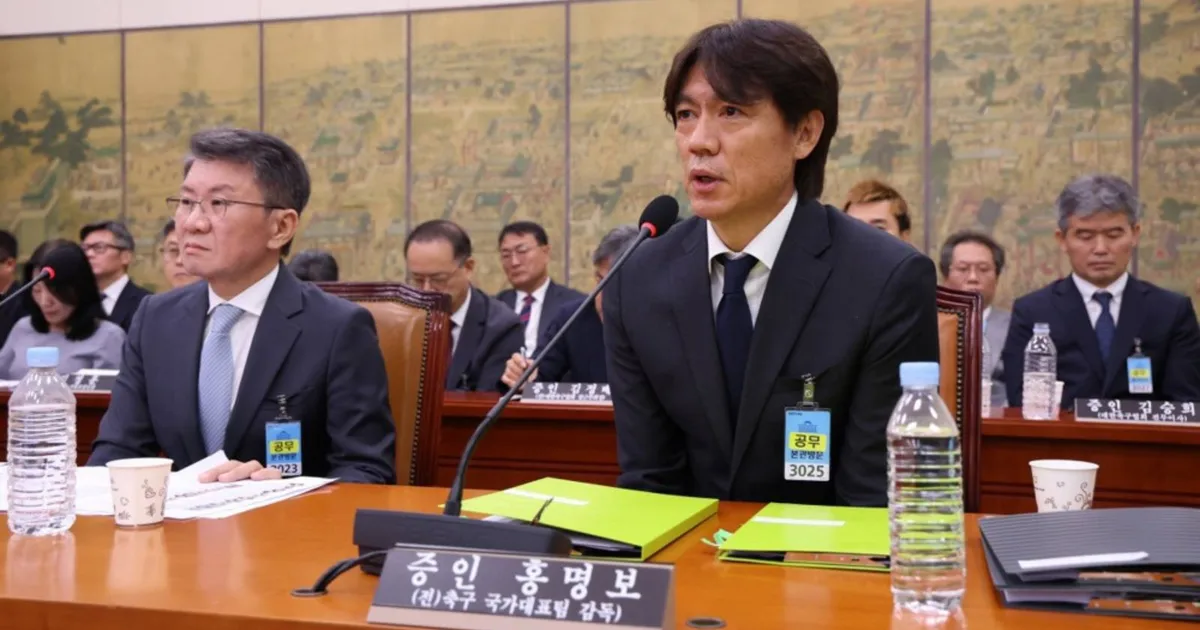
South Korean law enforcement authorities have moved to investigate the Korea Football Association in connection with the appointment of Hong Myung-bo as the national football team's head coach, casting a shadow over the federation's administrative practices and decision-making processes during a turbulent period for the sport in the nation.
The investigation centres on allegations that the appointment process involved obstruction of business operations, a serious charge that suggests potential procedural violations or interference with proper governance structures at the association. Officials conducting the probe are examining whether established protocols were compromised during the selection and appointment of Hong Myung-bo to the high-profile position, which typically serves as one of Korean football's most scrutinised roles.
The timing of this investigation is particularly sensitive, as Hong Myung-bo's appointment comes in the aftermath of South Korea's disappointing performance at the recent FIFA World Cup. The national team's campaign fell significantly short of expectations, intensifying debate within football circles and among the public about the direction of the programme and the competence of the federation's leadership. This combination of factors has created a perfect storm of controversy surrounding how the new coaching appointment was handled.
Hong Myung-bo, a legendary figure in Korean football circles with considerable pedigree both as a former international player and manager, faced an unusual level of scrutiny following his appointment. Rather than the standard celebration that typically accompanies the naming of a new national coach, his appointment immediately became entangled in questions about the legitimacy of the process itself. These questions suggest deeper institutional problems at the association level.
The World Cup disappointment that preceded his appointment has left Korean football stakeholders searching for explanations and accountability. Rather than focusing solely on on-field performance issues, investigators appear to be examining whether systemic problems within the federation's administrative apparatus may have contributed to poor decision-making. The federation's governance structures and the way major appointments are executed have become central to the inquiry.
For Malaysian and Southeast Asian football observers, this situation serves as an instructive case study in how major football nations handle institutional crises. South Korea's football infrastructure is regarded as sophisticated and well-resourced across the region, yet the current controversy demonstrates that even well-established systems can face serious governance challenges. The investigation suggests that proper checks and balances may have been insufficient to prevent alleged irregularities.
The allegations of obstruction of business operations represent a criminal dimension that extends beyond typical sporting governance disputes. If substantiated, such charges could have implications for multiple individuals within the association's hierarchy and potentially expose systemic weaknesses in how the organisation conducts major decision-making processes. This elevates the matter beyond internal sporting concerns into the realm of potential criminal misconduct.
The Korean Football Association's reputation now depends not only on achieving sporting success but also on demonstrating transparency and accountability in its operations. The investigation will likely determine whether the appointment process was conducted according to established protocols or whether shortcuts were taken that circumvented proper oversight mechanisms. How the federation responds to these charges will be closely watched by other Asian football bodies grappling with similar governance questions.
Hong Myung-bo himself faces an uncertain position as head coach while these investigations proceed. His ability to focus on team preparation and tactical matters is compromised by the administrative cloud surrounding his appointment. This situation creates additional challenges for the national team programme during a period when stability and clear direction are essential for performance improvement and rebuilding confidence after the World Cup setback.
The broader implications for Korean football extend beyond the current controversy. The investigation may prompt the federation to undertake comprehensive governance reforms and implement stricter oversight procedures for future major appointments. Such reforms could serve as a model for transparency and accountability across Asian football administration, potentially influencing how other national associations structure their decision-making processes.
For sponsors, broadcasters, and fans invested in Korean football, these developments create uncertainty about the federation's capacity to manage both sporting and administrative responsibilities effectively. The investigation's outcome will likely shape public confidence in the institution's ability to guide the national programme through recovery and rebuild competitive standards at international level.

