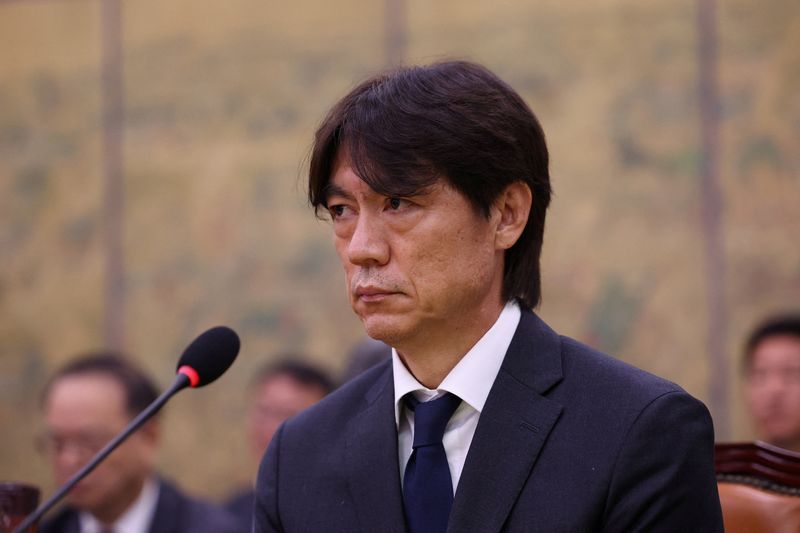
South Korea's football governance has come under intense scrutiny after Seoul police launched a formal investigation into the Korea Football Association's decision-making process surrounding the appointment of national team coach Hong Myung-bo. The raid on KFA offices on Thursday represents a significant escalation in a controversy that has festered since the controversial hiring and deepened following the nation's disappointing World Cup campaign. Authorities are examining allegations of obstruction of business, signalling that investigators believe proper procedures may have been circumvented during the recruitment process.
The appointment itself drew immediate criticism for its opacity and haste. The KFA had initiated what appeared to be a comprehensive search lasting several months, during which time the association engaged with multiple foreign coaching candidates. However, this methodical approach was abruptly abandoned, and the organisation instead appointed Hong following what officials characterised as a single meeting with the technical director. The decision to abandon the international recruitment process in favour of the domestic candidate raised eyebrows across South Korean sports circles and prompted questions about whether proper due diligence had been conducted.
Hong Myung-bo's return to the helm marked his second tenure as national team coach. He previously managed South Korea from 2013 to 2014, providing him with experience in the role but also a track record that should have been subject to proper competitive evaluation. Rather than emerging from a rigorous selection process that could justify his appointment on comparative merit, his reappointment appeared rushed and questionable. The KFA's sudden shift from international recruitment to domestic appointment without transparent justification created the impression that the decision had been predetermined.
The controversy gained renewed momentum following South Korea's group-stage elimination at the World Cup, a disappointing outcome that intensified public and political scrutiny of how Hong had been selected. The poor tournament performance suggested that the KFA's decision to forego international candidates may have compromised the quality of coaching available to the national team. As Malaysian and Southeast Asian observers know from their own football associations' struggles, appointing technical staff without proper competitive selection processes often leads to suboptimal outcomes, making the KFA's approach a cautionary tale for the region.
When questioned by lawmakers at a parliamentary hearing the following month, Hong firmly denied receiving any preferential treatment in his appointment process. He acknowledged responsibility for South Korea's World Cup failure, accepting that the team's disappointing campaign reflected poorly on his leadership. However, his assertion that no special treatment occurred contrasted sharply with the apparent irregularities in the selection procedure, creating a credibility gap that officials struggled to bridge.
The South Korean sports ministry's own investigation, concluded in October 2024, determined that the KFA had violated its own institutional procedures in appointing both Hong and his predecessor Juergen Klinsmann. Significantly, the ministry found that the technical director's meeting with Hong failed to constitute what would ordinarily be considered a proper interview under the association's established guidelines. This official finding validated the concerns raised by critics, confirming that the appointment process deviated from established standards.
Despite these procedural violations, the sports ministry's investigation stopped short of declaring that illegal conduct had occurred. This distinction between rule-breaking and criminal wrongdoing created a regulatory grey zone that has now prompted police intervention. The ministry also declined to order that Hong's contract be rescinded, leaving him in position even as questions about the legitimacy of his appointment remained unresolved. This ambiguous resolution likely frustrated both football stakeholders and the public, setting the stage for criminal investigation.
Police had already begun examining complaints about improper interference in Hong's appointment prior to the World Cup, indicating that concerns about the process were raised promptly by various parties. The formal raid Thursday suggests that investigators now have sufficient grounds to believe that evidence relevant to the obstruction of business inquiry might be located at KFA offices. The timing of the police action, coming several months after the World Cup disappointment, reflects the serious institutional questions at stake.
Notably, neither Hong nor any KFA officials have faced criminal charges or announced findings against them, though the investigation remains active. This absence of charges should not be mistaken for exoneration; rather, it reflects the investigative process still being underway. For Malaysian football stakeholders and administrators across Southeast Asia, this case underscores the critical importance of transparent, defensible appointment procedures that can withstand public scrutiny and institutional oversight.
The Hong Myung-bo affair reveals broader governance challenges affecting Asian football. When prestigious appointments are made through opaque processes that depart from established rules, even without formal illegality, they undermine institutional credibility and invite regulatory intervention. South Korea's experience demonstrates that football associations must maintain rigorous, transparent selection procedures that document decision-making and justify outcomes through competitive evaluation. Any Asian football body, including those in Southeast Asia, should view this controversy as a reminder that shortcutting proper procedures, regardless of the candidate's merits, invites investigation and reputational damage that ultimately harms the sport itself.

