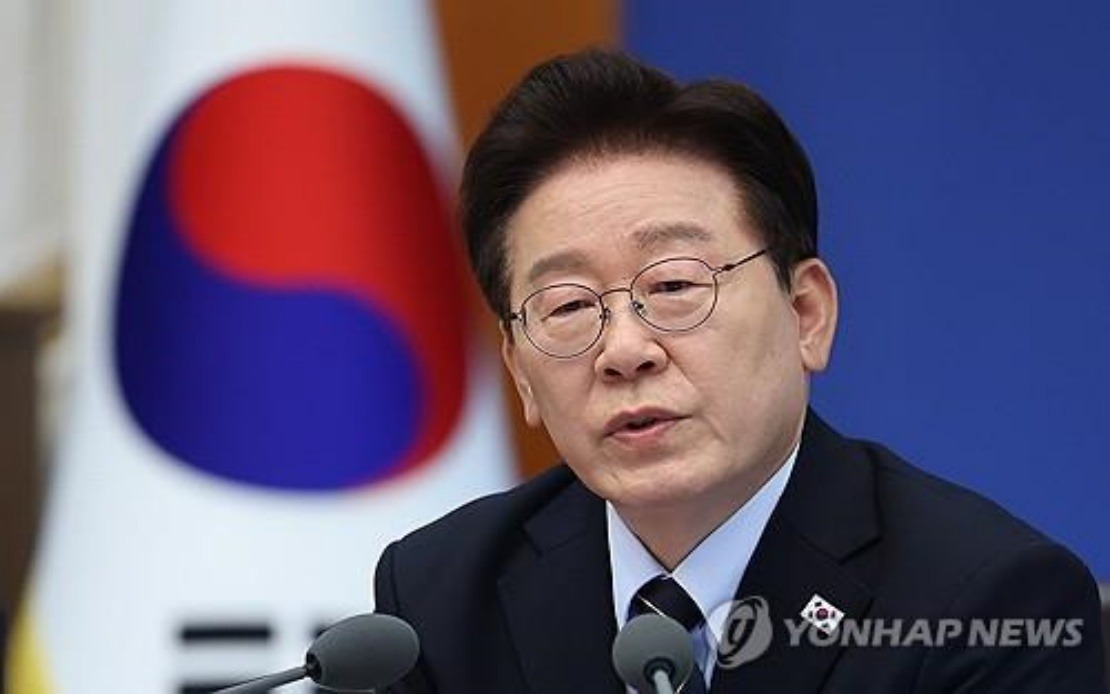
South Korea is embarking on a fundamental reimagining of its defence posture, with President Lee Jae Myung directing senior officials on Thursday to accelerate reforms that would transform the country's military into what officials describe as a technology-driven, elite force. The directive comes as Seoul grapples with one of the world's lowest birth rates, a demographic reality that defence planners say renders traditional mass-conscription models economically untenable and strategically obsolete. The shift marks a significant departure from decades of reliance on large-scale infantry forces, signalling instead a pivot toward quality over quantity in military personnel deployment.
The proposed reforms centre on two interconnected pillars: the introduction of selective conscription and the accelerated adoption of advanced military technologies. Rather than maintaining the existing universal service requirement of at least 18 months for all able-bodied men, Seoul envisions a system where conscription becomes more targeted and merit-based. This approach would allow the military to concentrate personnel in critical operational areas while reducing overall manpower needs through technological substitution and automation. Lee emphasised that the transition must be pursued "quickly and thoroughly," suggesting officials view the demographic window for implementing such changes as narrow and time-sensitive.
The president articulated a compelling rationale for restructuring, noting that South Korea's persistently low birth rate makes it impossible to sustain what he characterised as an "inefficient military structure" dependent primarily on infantry strength. This acknowledgment reflects broader anxieties within Seoul's strategic community about the long-term viability of current defence architecture. With South Korea's total fertility rate among the lowest globally, the pool of conscription-age males has been shrinking measurably year-on-year, creating structural pressures that conventional responses cannot adequately address. Military planners increasingly view technological sophistication and force multiplication as the only viable compensatory strategies.
Critically, Lee linked the defence reforms to broader social policy concerns, recognising that mandatory military service represents a significant life disruption for young South Koreans at formative career-building stages. He instructed officials to redesign the conscription framework to ensure that service actually enhances rather than impairs future life prospects. This represents an important psychological reframing: rather than viewing military duty as an unfortunate national obligation, the government aims to position it as an investment in personal development. Lee stated explicitly that government must "make sure people do not think their time in the military is a waste of their lives or a loss," acknowledging deep public frustration with conscription's perceived opportunity costs.
The government intends to tie military service to tangible individual benefits including employment pathways, educational advancement, and wealth accumulation opportunities. Officials have indicated that service records should translate into preferential hiring consideration, advanced training credentials, and potentially subsidised financial products. This incentive-based approach reflects recognition that younger South Koreans increasingly question the fairness of mandatory service in an era of diverging life outcomes and uncertain economic prospects. By economically valorising conscription, policymakers hope to restore social legitimacy to a system facing mounting evasion attempts and public scepticism.
The defence reforms exist within a broader policy context addressing South Korea's acute housing shortage, which Lee devoted considerable attention to during Thursday's meeting. The government has announced plans to construct more than 230,000 additional residential units in the Seoul metropolitan area through accelerated public land development, selective greenbelt deregulation, and private-sector partnership arrangements. Lee traced current supply constraints to 2022, when permitting systems were tightened and new construction projects declined sharply. He characterised the resulting situation as a "supply cliff," arguing that "extraordinary efforts" are necessary to reverse the trajectory and meet accumulated demand.
For regional observers, South Korea's defence transformation carries implications extending well beyond national borders. The Northeast Asian security environment remains volatile, with North Korean military capabilities advancing steadily and broader great-power competition reshaping regional dynamics. Any structural shift in South Korean military organisation will inevitably influence inter-Korean deterrence calculations and could trigger corresponding adjustments in allied force posture arrangements with the United States. Japan and other regional partners also monitor Seoul's military decisions closely, particularly regarding technological development trajectories and strategic doctrine evolution.
Malaysian defence analysts and policymakers should note that Seoul's willingness to fundamentally restructure its conscription system despite geopolitical pressures reflects confidence in technological solutions to traditional manpower challenges. The South Korean model, should it prove effective, could offer instructive lessons for other Southeast Asian nations confronting demographic headwinds and rising defence expenditure pressures. The proposition that advanced military technology can partially compensate for smaller conscript pools potentially reshapes assumptions about future conflict character and force sizing requirements across the region.
Implementing Lee's directives will require legislative amendments and bureaucratic restructuring across multiple government agencies. Officials must coordinate defence ministry planning with education, employment, and financial regulators to create coherent incentive structures linking service to demonstrable life benefits. The government must also ensure that selective conscription mechanisms operate transparently and fairly, avoiding perception of arbitrary discrimination or elite exemption patterns that historically generated social resentment. Success depends on building public confidence that the reformed system serves national security interests while genuinely advancing individual welfare, a delicate balance requiring sustained policy refinement and public communication.

