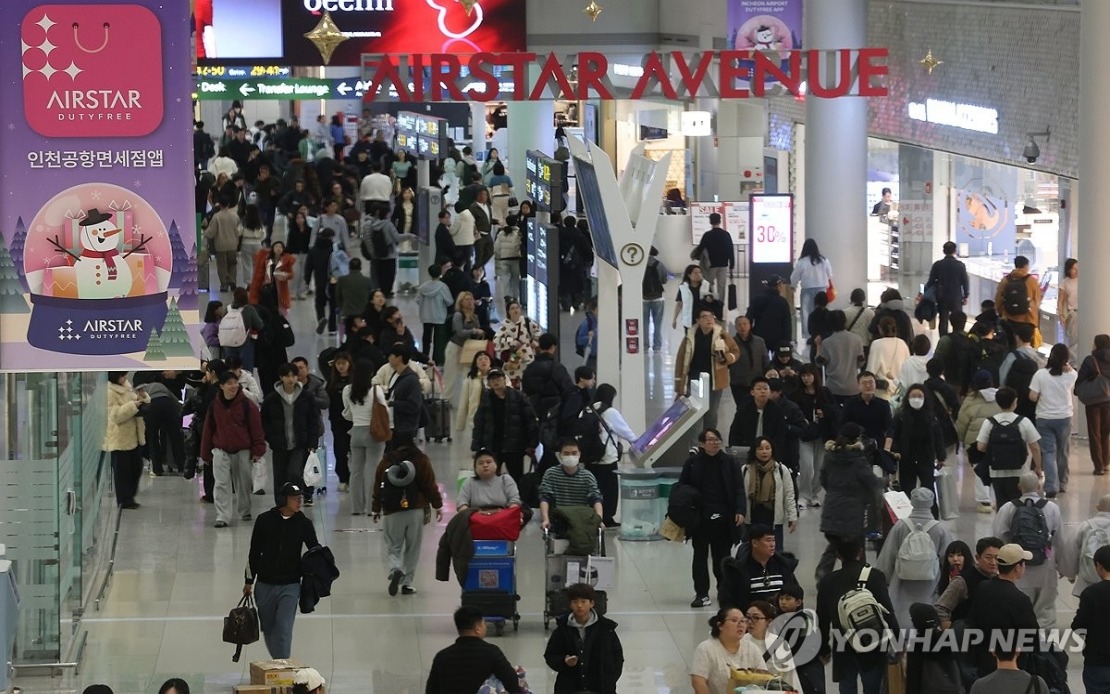
South Korea is on track to set a new annual record for foreign visitor arrivals after crossing the 10 million mark in the third week of June, significantly outpacing the equivalent period last year. The Ministry of Culture, Sports and Tourism confirmed the milestone was reached roughly one month earlier than in 2023, when the country did not surpass 10 million arrivals until mid-July. This acceleration underscores the resilience of South Korea's tourism sector and suggests robust momentum that could culminate in a historic year for inbound travel.
The achievement represents a watershed moment for the nation's tourism industry, which has been working to recover from pandemic-related disruptions and competition from other regional destinations. By reaching 10 million visitors before the halfway point of the calendar year, South Korea has established what officials describe as a first—never before has the figure been attained so early in any year since records began. The timing carries strategic importance for the Ministry and private tourism operators, as it provides confidence that annual totals could meaningfully exceed previous highs.
May alone delivered 1.95 million arrivals, reflecting a robust 19.4 per cent year-on-year increase that demonstrates sustained appetite for Korean tourism experiences. This monthly performance is particularly noteworthy given external headwinds, including elevated fuel surcharges stemming from instability in the Middle East. Despite these cost pressures on airlines, visitor numbers have continued to climb, suggesting that demand for Korean destinations remains resilient and less price-sensitive than anticipated by some analysts.
The geographic composition of visitors reveals important patterns for South Korea's tourism strategy and broader regional dynamics. Chinese nationals dominated arrivals in May with 560,000 visitors, reinforcing the critical importance of the Chinese market despite historical fluctuations in bilateral relations. Japanese tourists represented the second-largest cohort at 360,000, while Americans accounted for 210,000 arrivals. This hierarchy reflects both geographic proximity to China and Japan as well as cultural resonance with Korean entertainment, technology, and consumer goods globally.
Distribution of tourist flows beyond Seoul and the capital region signals a maturing tourism ecosystem that extends economic benefits across provinces. Regional airport arrivals climbed steadily from 230,000 in January to 360,000 by May, indicating a deliberate shift away from concentration in the metropolitan area. This geographic diversification benefits secondary cities such as Busan, Incheon, and Jeju, which have invested heavily in tourism infrastructure and attractions. For Malaysia and other Southeast Asian nations developing regional tourism, South Korea's experience demonstrates the value of investing in provincial hubs to reduce congestion in major centres while boosting broader economic inclusion.
Foreign visitor spending data provides an additional dimension to the tourism recovery narrative. Card expenditures in May, including online transactions, totalled 2.12 trillion won (US$1.38 billion)—marking the first time monthly spending has exceeded the 2 trillion won threshold since the Ministry began systematic tracking in 2018. This metric suggests not only increased visitor volume but also elevated per-capita spending, likely reflecting a mix of higher spending power among international tourists and increased consumption of premium experiences and products. The achievement is particularly striking given the cost pressures visitors face from fuel surcharges and currency fluctuations.
Kang Jung-won, head of the Ministry of Culture, Sports and Tourism's tourism policy office, framed the results as validation of strategic initiatives targeting both growth and quality improvement in the visitor experience. Officials emphasised that despite external economic challenges linked to Middle East instability, year-to-date arrivals through May surged 21 per cent compared to the same period in 2023. This double-digit growth rate demonstrates that South Korea's tourism appeal transcends temporary geopolitical or economic disruptions, positioning the country as a stable, attractive destination in a region increasingly important to global tourism flows.
The Ministry's stated approach to sustaining momentum combines public-sector coordination with private-sector partnerships, particularly leveraging cultural ambassadors and export-oriented industries. Officials indicated plans to deepen collaboration with K-pop artists and export companies to reinforce South Korea's global brand positioning. This strategy recognises that contemporary tourism demand is driven increasingly by entertainment, digital culture, and consumer goods rather than traditional attractions alone. For Malaysia, the implications are instructive: regional destinations competing for the same visitor demographic must similarly engage entertainment industries, social media influencers, and commercial brands to amplify their appeal.
South Korea's tourism acceleration also reflects broader shifts in regional travel patterns post-pandemic, with Asian destinations rebounding faster than many Western counterparts. The pace of South Korea's recovery exceeds that of many comparable economies, suggesting effective promotional efforts and competitive advantages in marketing to regional source markets. Chinese visitors especially, who comprise the largest demographic, indicate strong regional purchasing power and willingness to travel internationally—a pattern that benefits all Northeast and Southeast Asian destinations competing for this demographic.
The road to a record annual total remains contingent on sustained visitor flows through the remainder of 2024. Summer months typically see elevated tourism activity, while autumn traditionally brings additional visitors seeking cultural experiences and natural scenery. However, South Korea's early achievement of 10 million arrivals provides substantial buffer, meaning even moderate growth in the second half of the year would likely result in a new annual record. For the tourism industry, supporting sectors including hospitality, transportation, and retail commerce, this trajectory promises sustained economic benefit extending into 2025.
Looking ahead, South Korea's tourism recovery offers valuable benchmarks for regional competitors. The convergence of strong demand from neighbouring Asian markets, premium spending patterns, geographic distribution of visitors beyond capital regions, and deliberate cultural marketing suggests a replicable model. For Malaysian policymakers and tourism operators, the Korean experience underscores the importance of coordinated public-private strategies, investment in provincial infrastructure, and leveraging cultural exports—from entertainment to cuisine—as primary drivers of visitor attraction and spending.