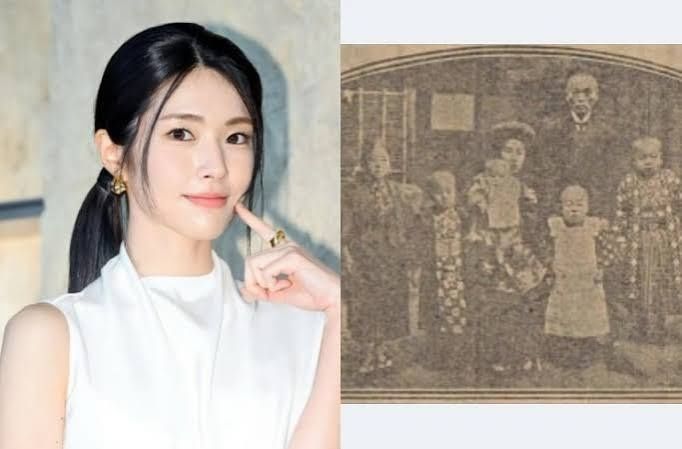
The unexpected server overload of a major South Korean genealogy portal this week underscores how deeply historical divisions shaped by Japanese colonial rule continue to reverberate through contemporary Korean society. The website, which serves as a central repository for tracing family origins and understanding ancestral connections, experienced significant technical difficulties after actress Ahn Ha-young's public acknowledgement of her great-grandfather's alleged collaborationist past. The platform's inability to handle surging demand—crashing for extended periods on the evening of August 12 and repeatedly throughout August 13—highlights both the technical challenges of serving millions of simultaneously engaged users and the emotional intensity surrounding historical accountability in South Korea.
Ahn Ha-young initially found herself at the centre of national controversy when online users raised questions about her great-grandfather, Ahn Sang-ho, whom she had previously described on television as a pioneering physician who established Seoul's first Western-style medical clinic and treated Emperor Gojong. The actress had spoken openly and with apparent pride about this ancestor's historical significance and medical innovations, treating the family connection as a matter of genuine accomplishment. However, when internet researchers began cross-referencing historical records and investigating Ahn Sang-ho's activities during Korea's turbulent colonial period from 1910 to 1945, a more complicated narrative emerged. Allegations surfaced suggesting the family patriarch had maintained ties to pro-Japanese collaborators—individuals who had actively supported or benefited from Japanese imperial governance during the occupation.
The initial institutional response from Ahn Ha-young's agency proved counterproductive, as representatives attempted to deny or minimise the allegations. Rather than defusing public concern, the defensive stance appeared to invite even more intensive scrutiny. South Korean internet culture, characterised by rapid information-sharing and collective investigative journalism, transformed the dispute into a broader conversation about historical reckoning and family responsibility. Citizens increasingly turned to genealogical resources to examine their own family trees, apparently motivated by curiosity about whether their own ancestors might carry similar historical liabilities. This grassroots investigation contributed significantly to the genealogy portal's unprecedented traffic surge.
The website experiencing the cascading server failures provides comprehensive access to information spanning 287 distinct family lineages across South Korea, each with documented origins, historical trajectories, and current population demographics. Such genealogical databases carry particular weight in Korean society, where family lineage and ancestral honour traditionally hold considerable cultural significance. The ability to trace one's family history connects individuals to broader narratives of national experience, regional identity, and social standing. When historical accusations threaten to taint family reputation, access to authoritative genealogical records becomes simultaneously more valuable and more fraught.
Ahn Ha-young's subsequent public apology on August 12 acknowledged her previous ignorance regarding her family's colonial-era history and expressed regret over having spoken approvingly of her ancestor without fuller historical understanding. The actress's contrition appeared genuine and reflected broader social expectations that public figures should demonstrate awareness of how their family narratives intersect with Korea's traumatic historical experience. Her statement represented a capitulation to public pressure and historical accountability, suggesting that even prominent entertainers cannot insulate themselves or their families from the moral scrutiny applied to collaborationist legacies.
The timing of this controversy carried particular resonance within Korea's national calendar. The scandal erupted merely days before August 15, when South Korea annually observes Liberation Day—a major national holiday commemorating the country's independence from Japanese colonial rule in 1945. This calendar proximity meant the controversy unfolded against a backdrop of intensified national reflection on colonialism, resistance, and historical justice. For many South Koreans, the confluence of personal family investigation and national historical commemoration created a moment of heightened consciousness about how individual family stories connect to collective national trauma.
The genealogy website's crash illuminates how digital infrastructure becomes strained during moments of collective national interest. Beyond the immediate technical failure, the surge reveals important patterns about how modern South Koreans access and interrogate historical information. Rather than relying solely on official historical narratives or academic sources, citizens increasingly conduct independent research using available digital tools. This democratisation of historical investigation represents both a strength—enabling widespread engagement with the past—and a potential vulnerability, as unverified claims can circulate rapidly before institutional verification occurs.
For Malaysia and other Southeast Asian nations with their own colonial histories and contemporary societies shaped by inherited legacies of foreign rule, the South Korean episode offers instructive parallels. Many Malaysian families similarly carry family histories intertwined with colonial governance, whether through collaboration, resistance, or simply surviving under foreign administration. The question of how individuals and nations should reckon with ancestors who navigated complex moral terrain during foreign occupation remains unresolved across the region. South Korea's public grappling with these issues—imperfect though it may be—reflects broader regional challenges about historical responsibility and intergenerational accountability.
The controversy also illustrates how social media and internet culture have fundamentally altered the dynamics of public accountability. Historical allegations that might once have remained confined to academic circles or family conversations now trigger immediate public investigation and collective judgment. Public figures can no longer credibly claim ignorance about their family backgrounds, as internet researchers equipped with genealogical databases and historical records can rapidly reconstruct ancestral narratives. This represents a genuine shift in how historical responsibility operates in contemporary society, placing new pressures on families to reckon with uncomfortable truths.
Moving forward, the incident appears likely to strengthen broader conversations about how educational institutions in South Korea address colonial history and how that history intersects with contemporary family identity. The genealogy website's technical troubles also suggest a need for better digital infrastructure to support historically engaged citizens during periods of intense national interest. Beyond these practical considerations, Ahn Ha-young's experience demonstrates that unacknowledged historical legacies can resurface unexpectedly, demanding that even prominent individuals confront uncomfortable family narratives and the moral ambiguities their ancestors navigated during occupation.

