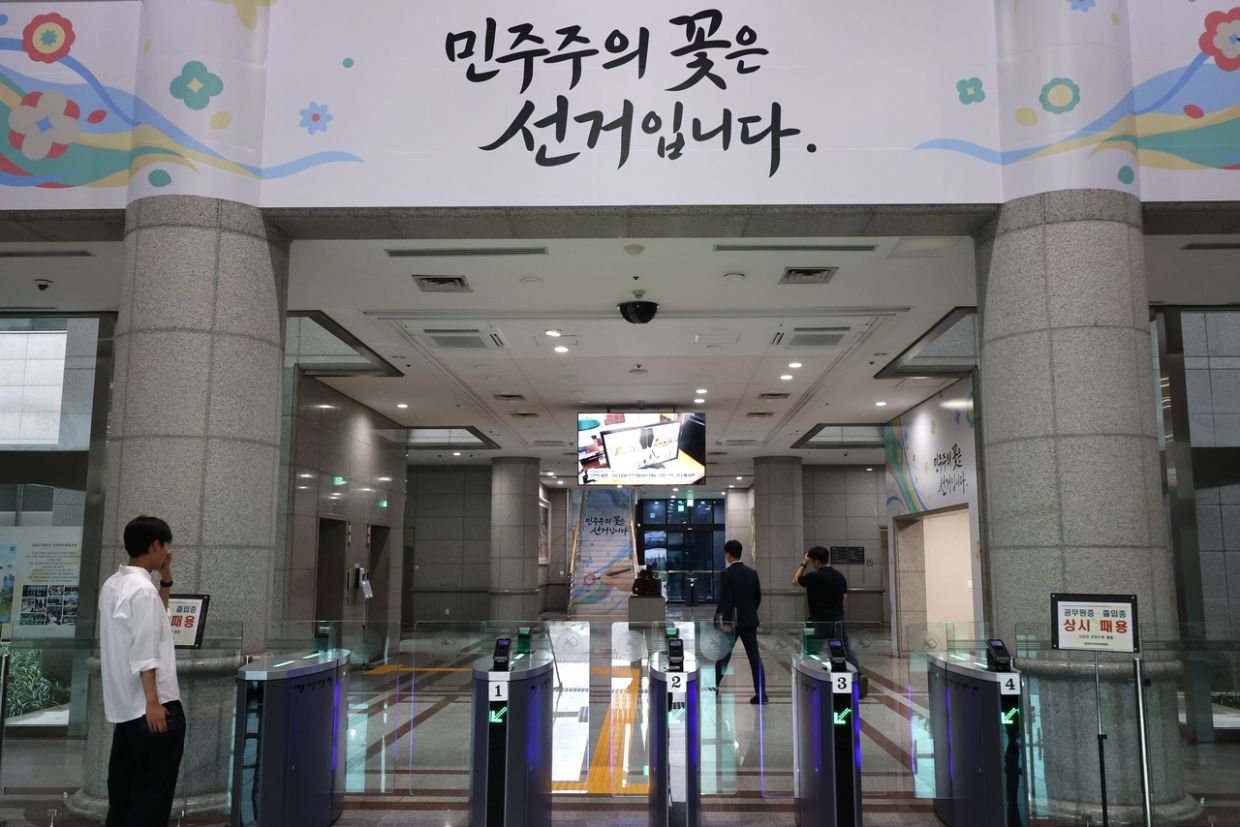
South Korea's prosecutorial and police authorities executed a coordinated search operation at the National Election Commission headquarters in Gwacheon, a municipality south of Seoul, following mounting evidence that commission personnel deliberately falsified statistical records. The raid, conducted on Thursday, represents a significant escalation in official scrutiny of the nation's primary electoral oversight body and marks the first time such direct enforcement action has targeted the institution itself during an active investigation.
The probe centres on widespread ballot shortages that affected multiple voting locations during the June 3 local elections, an event that delivered unexpected electoral gains for President Yoon Suk-yeol's conservative party but was marred by procedural failures. On that day, numerous polling stations exhausted their ballot supplies before all registered voters could exercise their franchise, forcing many citizens to abandon their voting attempts. Such occurrences strike at the heart of democratic legitimacy and prompted immediate calls for accountability across the political spectrum.
Legal sources indicate that investigators discovered evidence suggesting election commission staff members systematically altered data stored within the agency's computer infrastructure. These alleged manipulations targeted voter registration records and related numerical documentation, apparently designed to obscure the commission's administrative failures and internal miscalculations that precipitated the shortage crisis. The deliberate nature of these alterations, if substantiated, would constitute a serious breach of public trust and potentially violate multiple statutes governing electoral administration and public records management.
The formation of a joint task force combining prosecutors and police investigators underscores the gravity with which authorities are treating this matter. Such coordinated approaches typically signal concern that the misconduct extends beyond simple administrative negligence into territory requiring criminal prosecution. The warrants securing access to the commission's physical offices and digital systems suggest investigators possess reasonable belief that direct evidence of culpability remains preserved within the institution's holdings.
For regional observers, South Korea's electoral vulnerabilities carry broader implications for democratic stability in Northeast Asia. Malaysia and other Southeast Asian democracies frequently reference South Korean institutional development when debating governance reform and electoral system improvements. This scandal, should it confirm deliberate manipulation at the oversight level, raises uncomfortable questions about whether electoral commissions can genuinely self-regulate or whether independent external accountability mechanisms must be strengthened across comparable democracies.
The June 3 elections themselves had already proven contentious within South Korean politics, as outcomes delivered significant gains to President Yoon's Democratic Party and its allies, bucking historical midterm trends that typically punish governing parties. Opposition figures suggested structural advantages may have contributed to these results, and the ballot shortage revelations provided apparent evidence supporting suspicions of electoral irregularities. Whether alleged data manipulation was intentionally designed to obscure patterns favouring the government or represented mere cover-up of incompetence remains a central investigative question.
The National Election Commission ordinarily functions as an independent body charged with administering electoral processes, managing voter registration systems, and certifying results. Its personnel typically enjoy civil service protections and operate within established regulatory frameworks. Direct criminal investigation of commission staff, particularly regarding deliberate data falsification, represents unprecedented institutional pressure and suggests investigators believe the misconduct was neither marginal nor unintentional.
Ballot shortages at multiple sites during a national election represent a systemic failure rather than isolated incident. When voters cannot access ballots, their fundamental democratic right faces practical negation regardless of formal legal protections. South Korean election officials initially attributed shortages to miscalculation of turnout expectations and distribution logistics, but suggestions of deliberate data manipulation imply the commission possessed accurate information about supply requirements yet failed to ensure adequate ballots reached all polling locations. Such negligence, if combined with subsequent falsification, transforms administrative failure into potential fraud.
The investigation's progression will likely influence electoral reform discussions in South Korea throughout the next political cycle. Possible reforms might include independent audit mechanisms for electoral administration, enhanced digital security protocols preventing unauthorised record modification, clearer criminal penalties for election officials who falsify data, and potentially restructured oversight arrangements reducing concentration of authority within a single institution.
Malaysian policymakers monitoring this situation should recognise that electoral commission integrity remains foundational to democratic credibility. While Malaysia's Election Commission operates under distinct constitutional and statutory frameworks, comparable risks of administrative failure or records manipulation exist in any large bureaucratic system. The South Korean case illustrates why independent verification mechanisms, transparent audit trails for electoral data, and robust whistleblower protections deserve priority attention in countries seeking to strengthen democratic institutions.
The broader trajectory of this investigation will reveal whether South Korean democratic institutions possess sufficient resilience to investigate potential self-dealing by public bodies, or whether political considerations might constrain accountability. International observers, including those in Southeast Asia, will watch closely to assess whether findings support criminal charges, administrative reforms, or both. The National Election Commission's credibility, essential for citizen confidence in future electoral contests, now depends substantially on the transparency and rigour of this enforcement action.

