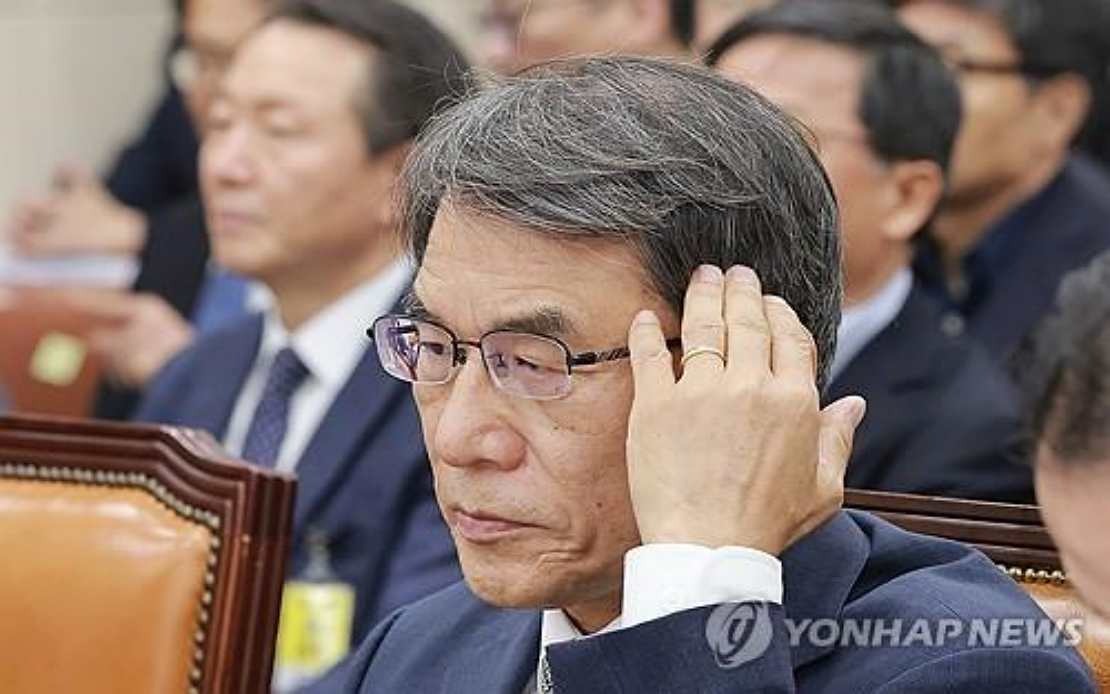
South Korean law enforcement officials conducted a comprehensive search of the National Election Commission headquarters on Monday as authorities intensified their investigation into suspected financial misconduct by the agency's former leader Roh Tae-ak. The joint police-prosecution task force presented warrants naming Roh and several other unnamed NEC officials as criminal suspects before beginning their search of the commission chairperson's office that morning, marking a significant escalation in what has become a major political embarrassment for Seoul's electoral administration.
The investigation centres on allegations that Roh improperly used public funds during his tenure, with particular scrutiny focused on how overseas government delegations were documented and reported. The former chief conducted three international business missions visiting Australia and New Zealand, followed by trips to Germany and Estonia, and subsequently to Denmark and Sweden, with his spouse present throughout all three journeys. However, according to investigators' findings, the official reports released by the NEC to the public systematically excluded any mention of his spouse's participation, a discrepancy that authorities argue suggests deliberate concealment to mask potential misuse of commission resources.
This line of investigation reflects growing concerns in South Korea about government accountability and the proper use of taxpayer funds by state institutions. The National Election Commission, tasked with ensuring the integrity and fairness of electoral processes, has instead become the subject of a criminal inquiry that undermines public confidence in its management. The contradiction between what actually occurred during these missions and what was disclosed in official records suggests a pattern of intentional obfuscation, a serious concern for any electoral body that claims to uphold transparency and democratic values.
The broader scope of the inquiry extends far beyond Roh's personal conduct. The NEC faces separate investigation into systematic patterns of questionable spending across the entire organisation. Documents reviewed by authorities reveal that 461 employees participated in 107 overseas business trips between 2022 and June of this year alone. Notably, these journeys frequently took staff to resort destinations and established tourist hotspots rather than locations typically associated with electoral administration work. The list of destinations included the Maldives, Bangkok, Kota Kinabalu in Malaysian Borneo, and Florence in Italy—locations that raise legitimate questions about whether such trips served genuine government purposes or primarily provided leisure opportunities at public expense.
The extent of these overseas missions suggests a systemic culture within the NEC that may have normalised or actively encouraged the use of government resources for trips to pleasure destinations. When an electoral commission sends hundreds of employees on dozens of international journeys annually to resort areas, it indicates either severe mismanagement at the institutional level or a deliberate circumvention of proper budgetary oversight. Either scenario represents a fundamental breakdown in administrative responsibility that warrants thorough investigation and potential restructuring of internal controls.
Roh's resignation in June followed public outrage over a separate incident involving the June 3 local elections, when the NEC's inadequate preparation resulted in severe ballot shortages that disrupted voting procedures at multiple polling stations throughout southern Seoul. That fiasco demonstrated incompetence in the commission's core responsibility—administering elections—and triggered immediate political consequences. The main opposition People Power Party capitalised on public anger by filing a formal complaint against Roh on June 19, specifically alleging occupational embezzlement and initiating the criminal investigation that has now escalated to the full-scale raids and document seizures currently underway.
For Malaysian observers, this situation underscores the importance of robust institutional oversight mechanisms and transparent governance in electoral bodies. Malaysia's own Election Commission operates under different legal frameworks and accountability structures, but the South Korean case demonstrates how rapidly public trust can erode when government agencies fail to maintain proper spending discipline and transparent reporting. The pattern of unreported expenses and dubious overseas missions reflects a troubling disconnect between stated institutional missions and actual resource allocation practices.
The investigation's progression also highlights the critical role that political opposition parties can play in exposing government misconduct. The People Power Party's willingness to lodge formal complaints and pursue legal remedies through proper channels, combined with law enforcement's responsiveness to such allegations, demonstrates functioning institutional checks that, despite the embarrassment, ultimately work to restore accountability. This contrasts sharply with political systems where such investigations might be suppressed or ignored.
Authorities are likely to examine financial records, travel documentation, and internal communications to establish whether Roh and other officials made conscious decisions to misrepresent official reports, or whether systemic problems within the NEC's administrative structure enabled such discrepancies to occur unchecked. The distinction matters for determining appropriate consequences and implementing meaningful reforms. If the behaviour was intentional and systematic, it suggests criminal intent across the organisation's leadership. If it reflects systemic dysfunction, the focus should shift to institutional restructuring and improved oversight mechanisms.
The timing of these raids coincides with broader public concern about government spending efficiency and accountability in South Korea. As citizens increasingly scrutinise how their tax contributions are deployed, electoral institutions face heightened expectations to demonstrate fiscal responsibility. The NEC's failure to meet these expectations has already damaged its credibility and raised questions about whether similar problems might exist in other government agencies operating with less public visibility.
Moving forward, the investigation's outcomes will likely influence how South Korea restructures its electoral administration and implements enhanced oversight of government overseas missions. Authorities may introduce stricter documentation requirements, enhanced pre-approval processes for international travel, and regular public reporting on such expenditures. These reforms, if implemented comprehensively, could serve as a model for other government bodies seeking to demonstrate financial transparency and rebuild public trust in institutional management.

