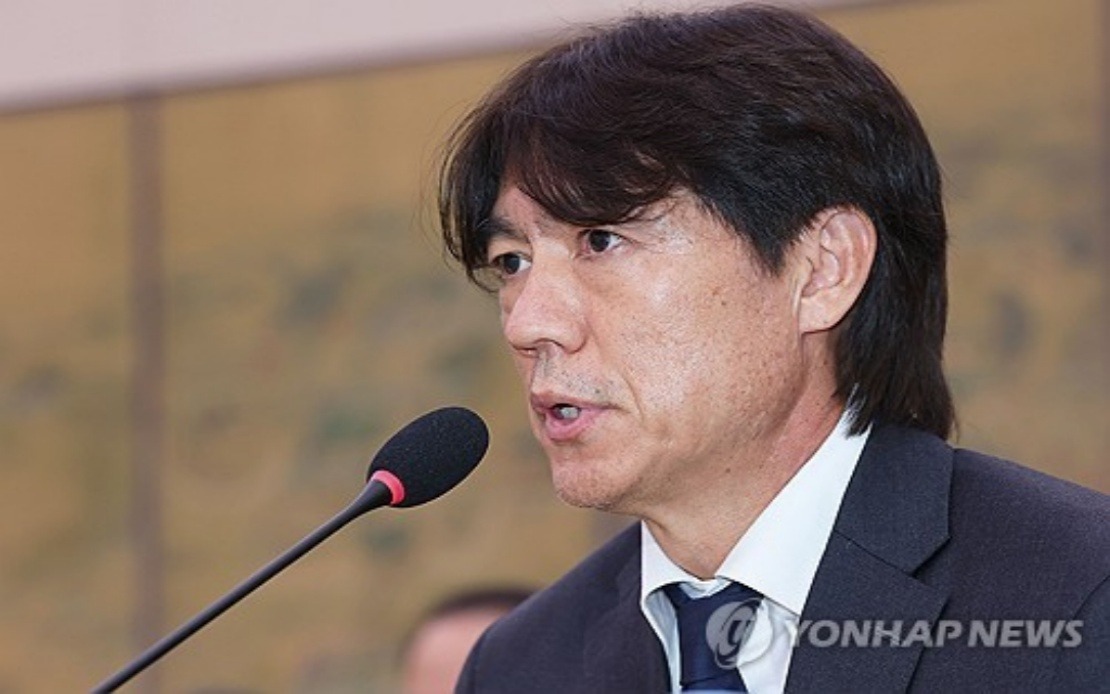
South Korea's law enforcement authorities descended on the Korea Football Association's offices on Thursday as part of a widening investigation into what critics characterise as an improper appointment process for former national men's team coach Hong Myung-bo. The operation saw police conduct simultaneous searches at the KFA's main headquarters in Cheonan, located roughly 90 kilometres south of Seoul, and at its secondary office in the capital's central district, securing documents and records related to the controversial July 2024 hiring decision.
The investigation centres on allegations that high-ranking federation officials circumvented standard procedures when bringing Hong into the role. Former KFA president Chung Mong-kyu and ex-technical director Lee Lim-saeng are among the senior figures now under scrutiny for their suspected involvement in steering the appointment through irregular channels. Observers have highlighted the peculiarity that Lee, whose formal responsibilities did not extend to coaching staff recruitment, allegedly first presented the position to Hong at an informal meeting near the coach's residence.
Hong's tenure as national coach lasted just over a year, ending in late June following South Korea's disappointing group-stage elimination from the FIFA World Cup. The team's exit from the tournament reignited public anger over the circumstances surrounding his appointment, transforming what had been a dormant investigation into a matter of renewed national significance. The timing of the raid suggests that football authorities are now using the heightened public attention as an opportunity to advance their legal inquiry.
A citizens' advocacy group had previously lodged formal complaints against both Hong and Chung, alleging multiple offences including obstruction of governmental duties, breach of fiduciary trust, coercion and intimidation. These charges encapsulate concerns that the appointment process involved manipulation of normal procedures and potentially improper pressure applied to relevant parties. The complaint filing represented an attempt to ensure that the matter would not be quietly shelved despite initial investigative inertia.
The trajectory of this investigation underscores a pattern sometimes observed in Korean institutional accountability, wherein law enforcement action accelerates only after public scandal surfaces. The fact that police launched their initial probe approximately two years ago yet allowed it to languish until the World Cup crisis erupted highlights the challenge that oversight bodies face when political will is absent. The renewed momentum now evident in the enforcement action suggests that the scale of public disappointment has finally created sufficient political pressure to move the case forward.
Police have already intensified their questioning of the parties involved, with Hong being interrogated in his capacity as a suspect earlier this week. The questioning represents a significant escalation from preliminary information-gathering stages, signalling that investigators believe they have sufficient grounds to treat Hong as potentially culpable rather than merely a cooperative witness. This development may prove consequential for his future standing within Korean football and potentially his career prospects.
Parallel to the police investigation, South Korea's National Assembly has also engaged with this matter through parliamentary mechanisms. Lawmakers summoned both Hong and Chung to a hearing where they faced intensive questioning regarding multiple dimensions of KFA governance and the specific circumstances of the coaching appointment. These legislative inquiries complement the criminal investigation, creating a dual accountability mechanism through which the public interest may be protected and institutional reforms potentially mandated.
The case carries significance extending beyond Korea's domestic football sphere, resonating with broader questions about institutional transparency and procedural integrity within major sports organisations. The KFA's governance challenges highlight vulnerabilities that may exist in other Asian football federations, where centralised decision-making structures and informal networks can sometimes override formal procedures. For Malaysian readers, the Korean experience offers instructive lessons regarding the importance of robust governance frameworks in preventing the kind of organisational capture that can undermine sporting institutions.
From a regional perspective, South Korea's relatively active intervention in investigating such matters contrasts with approaches taken in some other Asian nations where institutional governance concerns might be addressed through quieter administrative channels rather than criminal proceedings. The visibility and rigour of the Korean enforcement action may set precedents that influence how other football associations throughout Asia approach internal accountability. The transparency inherent in public investigations also satisfies constituency demands for accountability that could otherwise manifest as loss of public confidence in national sporting bodies.
The investigation's focus on procedural propriety reflects an understanding that institutional legitimacy depends not merely on outcomes but on the integrity of processes through which officials are selected. By scrutinising whether proper selection mechanisms were followed, Korean authorities are essentially affirming that how decisions are made matters as much as who makes them. This principle has applications far beyond football, touching on governance standards across government and quasi-governmental institutions that significantly influence national priorities and resource allocation.

