A teenager in South Korea has escalated concerns about child protection in the air by filing a formal petition with the government, urging aviation authorities to implement stricter controls over in-flight entertainment. The complaint, lodged through Petition 24, an official government platform administered by the Ministry of the Interior and Safety, highlights growing anxiety among parents and young passengers about the accessibility of age-inappropriate content aboard commercial aircraft, where viewing options are often unavoidable.
According to the petitioner, a middle-school student, the experience of encountering violent and sexually suggestive material was deeply unsettling and inescapable. The teenager described how, despite attempting to avoid watching the content, the graphic and lewd nature of the film captured their attention involuntarily, forcing exposure to scenes that would typically be restricted for their age group. The distressing aspect of this incident extends beyond the individual petitioner—the student also noted that a younger sibling, in elementary school, was similarly exposed to the same material during the flight.
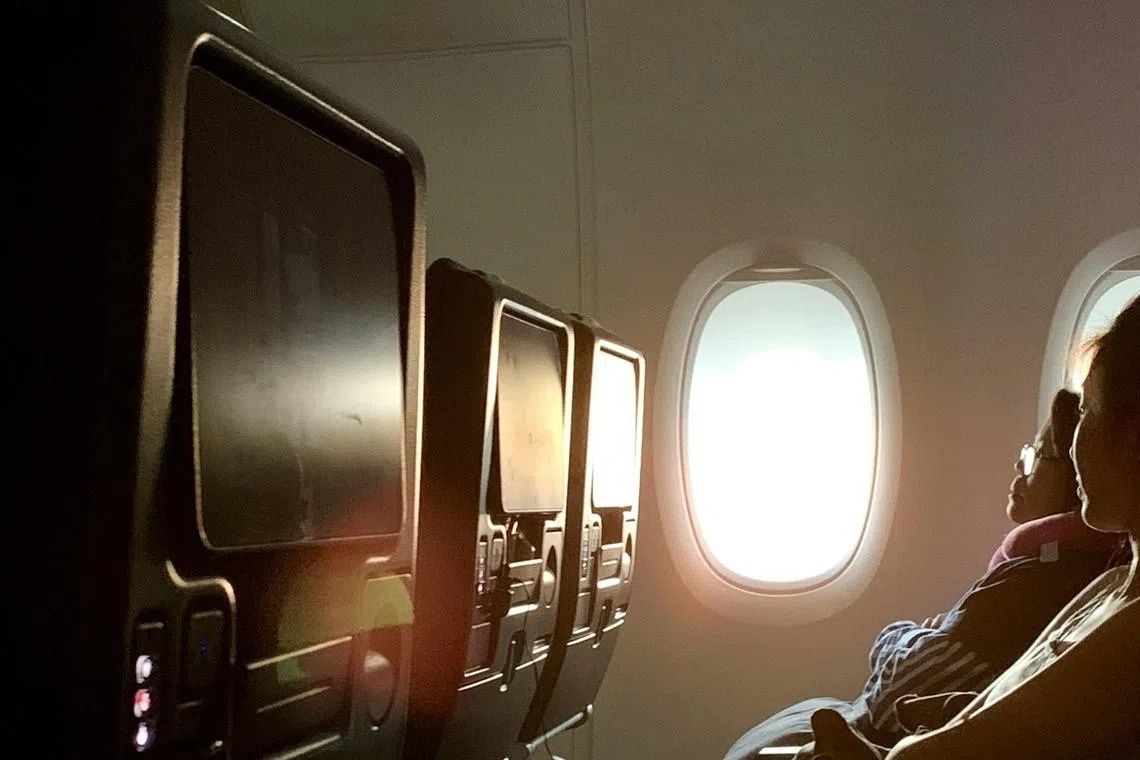
The petitioner's proposal centres on introducing mandatory protective measures designed to shield younger passengers from content exceeding specified age ratings. The proposed solution involves installing privacy screens on individual seat-back monitors, a technology already employed in various consumer and institutional settings worldwide. This approach would effectively prevent unintended viewing while preserving adult passengers' freedom to access entertainment content of their choosing. The proposal represents a practical middle ground between unrestricted content availability and outright censorship, addressing the unique challenge posed by the confined, shared environment of a commercial aircraft.
The petition invokes existing South Korean legislation that explicitly mandates the protection of minors from harmful content. Both the Child Welfare Act and the Youth Protection Act establish legal frameworks requiring stakeholders—including businesses and service providers—to shield children and adolescents from materials deemed inappropriate for their developmental stage. The petitioner argues that airlines, as service providers with captive audiences including numerous young passengers, fall within the scope of these protective obligations and should therefore implement corresponding safeguards.
Currently, South Korea's two dominant carriers, Korean Air and Asiana Airlines, maintain policies prohibiting the broadcast of content rated for viewers aged 19 and above on their in-flight systems. Both airlines typically utilise edited versions of films where the most explicit scenes have been removed or substantially altered to reduce graphic violence and sexual content. These measures represent an attempt to create a family-friendly viewing environment, though they clearly remain insufficient in preventing exposure to unsuitable material through edited versions of adult-rated films.
The regulatory inconsistency became apparent in 2020 when both Korean Air and Asiana Airlines simultaneously removed the internationally acclaimed film Parasite from their entertainment libraries. Despite receiving a 15-plus age rating in South Korea—theoretically permitting viewing by teenagers—the film contains violent sequences and sexual content that the airlines deemed inappropriate for their in-flight context. This decision underscores the complexity of content curation for aviation environments, where airlines must balance commercial considerations with child welfare concerns and cultural standards.
The specific film referenced in the teenager's complaint remains unidentified, preventing direct analysis of whether it should have been included in in-flight libraries. However, the incident raises broader questions about current screening processes and their effectiveness. The fact that a minor encountered material sufficiently disturbing to warrant an official government petition suggests that existing airline protocols for content selection and classification may warrant reassessment.
For Malaysian and Southeast Asian readers, this development carries particular significance. The region's rapidly expanding aviation sector, with airlines serving increasingly diverse passenger demographics, faces similar challenges in balancing entertainment variety with child protection. Many regional carriers have adopted comparable policies to Korean Air and Asiana Airlines, yet questions persist about enforcement consistency and the adequacy of current technological solutions. The South Korean petition highlights that edited versions and age-based policies alone provide insufficient protection when content remains visible to viewers who did not explicitly choose to watch it.
The petition also reflects evolving expectations regarding corporate responsibility in the digital age. Airlines increasingly position themselves as lifestyle and entertainment providers, not merely transportation operators. This expanded role carries corresponding obligations to consider the welfare of all passengers, particularly the most vulnerable. The proposal for privacy screens acknowledges that technological solutions exist to address the problem—the question becomes whether regulatory and commercial pressures will compel their adoption.
For policymakers in the region considering similar child protection frameworks, the South Korean case demonstrates that multi-layered approaches prove more effective than reliance on any single mechanism. Content classification systems, edited versions, and technological barriers each address different aspects of the problem. Privacy screens would represent a particularly elegant solution, granting adults unfettered access to entertainment while preventing involuntary exposure by others sharing the cabin space.
The petition process itself merits attention as a governance tool. South Korea's Petition 24 platform allows citizens, including minors, to formally present grievances and policy suggestions directly to government, lending legitimacy to youth advocacy. This mechanism has occasionally produced policy changes, demonstrating that institutional channels exist for addressing consumer and public welfare concerns through democratic processes rather than merely through market forces or litigation.
As airlines throughout Southeast Asia continue expanding their digital entertainment offerings and upgrading cabin amenities, the conversation about content governance will likely intensify. The South Korean teenager's complaint represents not an isolated incident but rather a symptom of broader tension between commercial entertainment interests and child welfare priorities. Whether the petition results in regulatory changes, airline policy shifts, or industry-wide adoption of privacy screen technology will establish important precedents for aviation sectors across the region that serve millions of young passengers annually.

