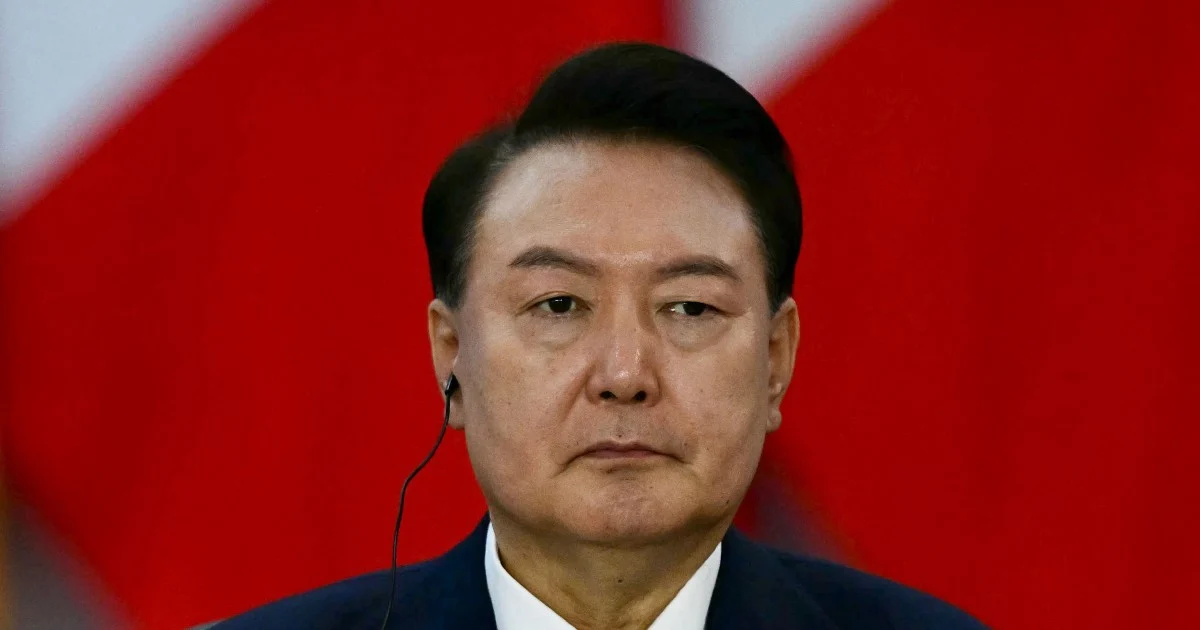
The Constitutional Court of South Korea will hand down its verdict on Thursday regarding former president Yoon Suk Yeol's unprecedented declaration of martial law and the criminal allegations that have engulfed him since the controversial measure collapsed. The decision comes as the nation grapples with fundamental questions about executive authority, constitutional constraints on presidential power, and the rule of law in one of Asia's leading democracies.
Yoon's December 2024 declaration of emergency martial law sent shockwaves through Seoul and neighbouring capitals, marking one of the most dramatic constitutional crises in modern South Korean history. The decree, which was quickly revoked within hours, triggered widespread speculation about the former president's motivations and mental state. Prosecutors have since launched formal investigations into whether Yoon's actions constituted sedition or abuse of presidential authority, charges that carry severe penalties under South Korean law. The case has polarized public opinion, with supporters viewing the action as a misguided effort to restore order and critics seeing it as an authoritarian overreach that threatened democratic institutions.
The incident unfolded against a backdrop of political deadlock that had consumed South Korea's government throughout 2024. Yoon's administration faced mounting difficulties implementing its legislative agenda, with opposition lawmakers blocking key presidential initiatives in parliament. The mounting tensions and apparent frustration with legislative obstructions preceded the martial law declaration, though the exact sequence of events and deliberations that led to such an extreme measure remain contested. The chaotic nature of the implementation—characterized by confusion among military and security forces about the scope and duration of the order—suggested possible coordination problems or miscommunication at the highest levels of government.
For Malaysia and other Southeast Asian nations monitoring the case, the Constitutional Court's ruling carries significant implications. South Korea has long served as a democratic model in the region, demonstrating how emerging economies can balance development with institutional maturity. The court's handling of this case will send important signals about whether constitutional safeguards can effectively restrain executive overreach even in established democracies. In an era when presidential powers have expanded across Asia, particularly regarding emergency declarations and security measures, the South Korean precedent may influence how courts in neighbouring countries evaluate similar claims of executive necessity.
The legal framework governing South Korea's martial law provisions has remained largely untested since the nation's transition to democracy in the 1980s. Constitutional scholars have debated whether the charter adequately constrains presidential emergency powers or leaves dangerous ambiguities that determined leaders might exploit. Yoon's action has forced the court to definitively interpret these provisions, establishing jurisprudence that will govern future presidents and set boundaries for legitimate emergency declarations. The court must balance acknowledging the president's legitimate security concerns with ensuring that constitutional safeguards against unilateral power-grabs remain meaningful.
The prosecution's case rests on establishing that Yoon's declaration lacked a genuine emergency justification and instead represented a power grab motivated by political calculation. Investigators have focused on communications among top administration officials and military leaders in the days preceding the announcement, seeking evidence of premeditation or awareness that the action violated constitutional limits. If prosecutors succeed in proving intentional misconduct, the court might issue guilty verdicts on serious charges including sedition, which would have profound consequences for Yoon's political future and personal liberty. Conversely, should the court find reasonable justification for the emergency measures or insufficient evidence of criminal intent, it would effectively endorse a broader interpretation of presidential emergency powers.
Yoon's defence team has argued that the former president acted within constitutional authority to address genuine threats to national stability, pointing to labour strikes, opposition-led parliamentary obstruction, and alleged security concerns. This interpretation treats the martial law provision as a legitimate tool for presidents facing legislative paralysis or civil unrest, rather than as a last resort constrained by strict necessity tests. The philosophical divide between prosecution and defence reflects fundamentally different visions of how presidential power should operate in constitutional democracies. Whether courts should defer to executive judgment during claimed emergencies or apply rigorous scrutiny to verify actual necessity remains contested globally.
The timing of Thursday's ruling is significant, coming as South Korea navigates the political aftermath of Yoon's declaration and contemplates his potential impeachment proceedings. Public opinion has shifted considerably since December, with growing segments of the electorate questioning whether the former president's judgment remains sound. Yet substantial constituencies continue supporting Yoon, viewing the legal proceedings as politically motivated persecution by opposition forces. This polarization underscores how constitutional crises in democracies become reflexively partisan, complicating the court's efforts to reach verdicts perceived as principled rather than factional.
For Malaysian observers tracking developments in Seoul, the Constitutional Court's reasoning will matter as much as its verdict. The court's articulation of limits on emergency presidential powers, its interpretation of martial law provisions, and its standards for evaluating executive necessity claims will establish reference points for how constitutional courts should approach presidential overreach. As Southeast Asian nations continue developing more sophisticated constitutional jurisprudence, precedents from established democracies like South Korea increasingly inform regional judicial thinking. The Constitutional Court's decision will thus ripple beyond Seoul, offering guidance on how institutional checks can constrain even powerful executives.
The broader context matters too—South Korea's case occurs amid global democratic backsliding and rising executive adventurism in Asia. Whether the Constitutional Court proves capable of credibly constraining a former president and reaffirming constitutional limits will demonstrate whether judicial independence and constitutional governance can survive political storms. The verdict will be scrutinized not just in Seoul but across the region by democrats, autocrats, and everyone between, seeking evidence about whether constitutional safeguards remain robust or increasingly porous.

