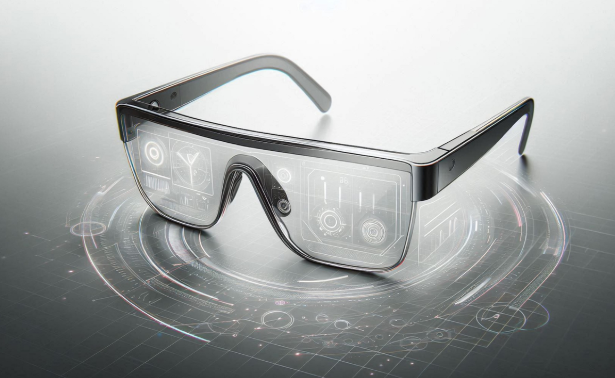
South Korea has taken unprecedented legal action against a man in his 40s who allegedly used artificial intelligence-powered glasses to gain an unfair advantage during a national qualification examination, representing the country's first prosecution involving such technology. The Gwangju District Prosecutors' Office filed summary charges against the individual last month under violations of the National Technical Qualification Act, according to reports that emerged on Monday. The case underscores a troubling intersection of rapidly advancing consumer technology and examination integrity in a nation where academic and professional credentials carry significant social and economic weight.
The suspect was apprehended in May while attempting to sit for a fire protection facilities engineer certification exam administered in Gwangju. Vigilance from examination personnel proved crucial to detection: an invigilator observed unusual light reflections emanating from the suspect's eyeglasses, triggering closer scrutiny that ultimately unravelled the scheme. Upon questioning, the defendant acknowledged his actions but claimed his motivation was experimental rather than purely self-serving, asserting he had personally developed the linked AI application and was simply testing whether answers would display accurately through the device. Regardless of intent, the case demonstrates how consumer-grade technological sophistication has begun outpacing the security measures governing high-stakes testing environments.
The Gwangju prosecution did not emerge in isolation. Two additional men, both in their 20s, faced charges after attempting identical cheating methods at separate national technical qualification exam venues in Seoul and Mokpo during the same month. The pattern suggested either independent discovery of the technique or possible coordination among test-takers seeking competitive advantage. Beyond these qualification examinations, AI glasses have surfaced in multiple international English language proficiency tests administered in South Korea. At least two individuals were caught deploying the technology during TOEIC examinations in May, with a third incident recorded the following month, indicating the problem extends across various high-stakes testing domains that thousands of South Koreans annually undertake for career advancement and educational opportunities.
The cumulative effect of these discoveries triggered official alarm among the agencies responsible for administering South Korea's most consequential national examinations. On July 10, representatives convened in an emergency session specifically to formulate defensive strategies against this emerging threat vector. The agenda centred on two principal reforms: formally updating the comprehensive lists of items banned from examination halls to explicitly name AI glasses and similar smart eyewear devices, thereby closing any ambiguity that might shelter offenders claiming ignorance of restrictions. Simultaneously, regulatory bodies deliberated substantially strengthening the consequences for examinees discovered employing prohibited technology, aiming to create sufficient deterrent effect to discourage would-be cheaters.
For Malaysian and Southeast Asian observers, the South Korean experience carries immediate relevance. The region hosts a substantial population of ambitious young professionals and students who regularly undertake international qualification examinations and professional certifications tied to career progression and overseas opportunities. Singapore, Malaysia, and Thailand administer thousands of TOEIC, IELTS, and professional engineering examinations annually. As AI-integrated consumer devices proliferate across Southeast Asian markets at competitive prices, examination boards throughout the region should anticipate similar vulnerabilities emerging in their testing ecosystems. The technological capability enabling this form of cheating is already commercially available and geographically widespread, making proactive institutional adaptation more prudent than reactive crisis management.
The sophistication of this cheating method reveals how artificial intelligence has matured from theoretical concept to practical tool accessible to ordinary individuals with moderate technical competence. The defendant's claim of developing his own application and testing its functionality suggests the barrier to entry remains surprisingly low. Unlike traditional cheating methods requiring complex logistics or substantial financial investment, deploying AI glasses requires only modest technical knowledge and readily available components. This democratisation of cheating technology poses particular challenges for examination authorities operating under budget constraints or lacking specialised technical expertise to detect emerging deception methods. South Korean regulators' swift institutional response—convening emergency meetings and considering explicit prohibitions—represents the type of forward-looking approach other examination bodies should emulate.
The broader institutional implications extend beyond simple detection and prohibition. Testing agencies must grapple with uncomfortable realities about the pace of technological change relative to institutional adaptation. By the time South Korean authorities formally banned AI glasses from examination halls, the devices had already facilitated cheating across multiple testing domains over several months. This lag suggests reactive regulatory cycles may prove increasingly inadequate as innovation accelerates. Examination bodies operating throughout Southeast Asia should consider whether current security frameworks possess sufficient flexibility and future-proofing to accommodate emerging technologies whose full applications remain unpredictable. Professional development organisations administering certifications that determine career trajectories bear particular responsibility to maintain examination integrity.
The response from South Korean authorities also illuminates the tension between proportionate enforcement and effective deterrence. Summary prosecution and potential sentencing represent serious consequences, yet the relative ease of executing this form of cheating might still appear attractive to individuals facing high-stakes examinations with significant career implications. The region's competitive examination cultures, particularly pronounced across East and Southeast Asia, create environments where ambitious individuals might undertake extraordinary measures for perceived advantages. Strengthening sanctions alone may prove insufficient without accompanying public education campaigns explaining detection methods and consequences, thereby shifting social and cultural perceptions around examination cheating beyond purely legal frameworks.
Looking forward, South Korea's experience suggests the cat-and-mouse dynamic between examination security and cheating technology will intensify rather than stabilise. As AI technology becomes more sophisticated and integrated into mainstream consumer devices, detection becomes more difficult and prevention more complex. Facial recognition systems, neural implants, and other emerging technologies may eventually pose examination integrity challenges that current regulatory thinking has not yet addressed. Examination boards across Malaysia and the broader region should view South Korean prosecutions not as isolated incidents but as harbingers of systemic challenges requiring sustained institutional attention, technological investment, and potential collaboration to establish examination security standards suited to the AI era.

