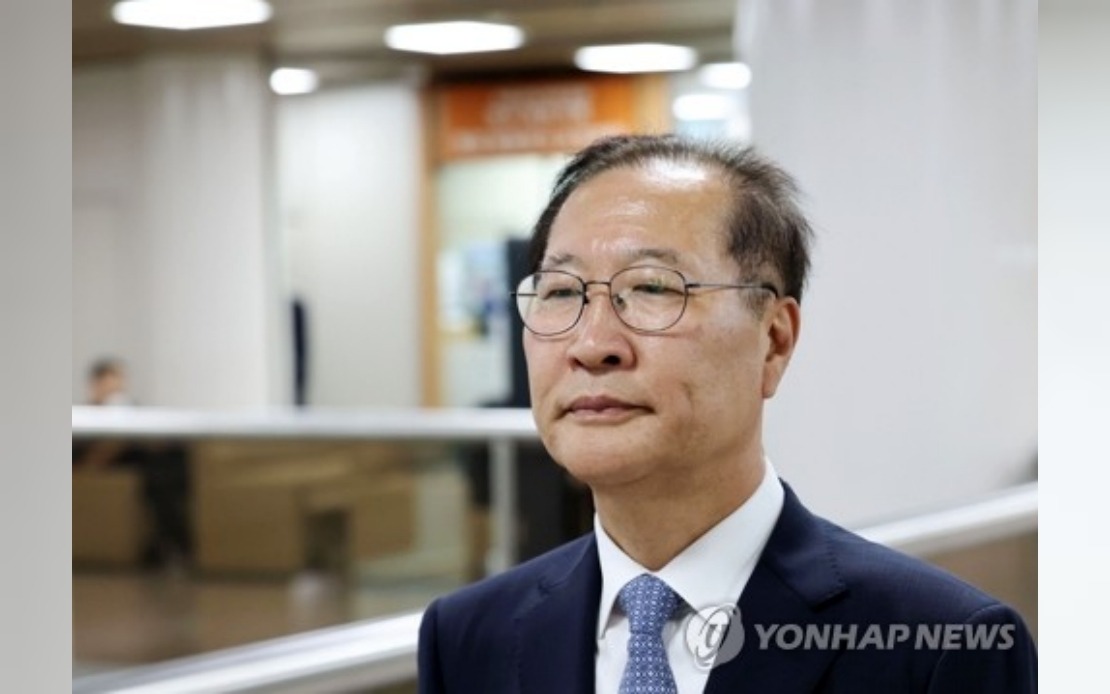
South Korea's judicial system has delivered a significant verdict in the ongoing scandal surrounding President Yoon Suk Yeol's attempted martial law declaration, with the Seoul Central District Court sentencing former Justice Minister Park Sung-jae to 25 years imprisonment on charges of insurrection. The conviction marks another major development in what has become the most serious constitutional crisis in South Korea's recent political history, extending consequences well beyond the president himself to include members of his inner circle who facilitated the extraordinary action.
The court's decision to impose a 25-year term exceeded the 20-year recommendation made by special counsel Cho Eun-suk's investigative team, indicating judicial determination to treat the former minister's conduct with considerable severity. Park was taken into immediate custody following the pronouncement, with judges expressing concerns about potential evidence tampering given the gravity of the charges and Park's former position of authority within the justice system. The severity of the sentence underscores how South Korean courts view complicity in an attempt to overturn constitutional governance through emergency powers.
Park's central role involved convening senior officials within the justice ministry in the hours following Yoon's declaration of martial law on December 3, 2024. According to the court's findings, this meeting served multiple purposes aligned with the insurrection strategy: assessing the viability of deploying prosecutors to bodies supporting the martial law decree, evaluating whether correctional facilities could accommodate anticipated political detainees, and mobilising ministry personnel responsible for enforcing travel restrictions on targeted individuals. The specificity of these preparations revealed a calculated effort to use state institutions to enforce the constitutional breach rather than resist it.
The conviction rested on two principal counts of criminal behaviour. The first charge involved playing an instrumental role in insurrection, with the court accepting that Park's administrative actions materially supported the broader conspiracy to overturn constitutional order. The second conviction pertained to abuse of authority through his deployment of ministry resources and personnel toward these unconstitutional ends. The Seoul court concluded that Park fundamentally abandoned his constitutional obligation to preserve the rule of law, instead choosing to advance what he apparently believed would be a successful overthrow of legitimate governance structures.
Park becomes part of an expanding group of high-ranking officials ensnared in the scandal. Former Prime Minister Han Duck-soo and former Defence Minister Kim Yong-hyun have similarly been convicted of insurrection charges, indicating that the conspiracy reached across multiple ministerial portfolios. In February, President Yoon himself received a life sentence for orchestrating the martial law declaration, though he has initiated an appeal process that will likely occupy South Korean courts for years. The breadth of convictions suggests systematic coordination rather than isolated decisions, raising questions about institutional safeguards that should have prevented such constitutional overreach.
Interestingly, the court dismissed additional charges against Park for violating anti-corruption statutes, determining these fell outside the investigative jurisdiction of the special counsel's mandate. Those charges had stemmed from allegations that Park issued improper directives to subordinates following a request from Yoon's wife, Kim Keon Hee, to scrutinise details of a prosecution investigation into corruption allegations affecting her in May 2024. While this narrower misconduct finding disappeared from his conviction record, it added context to broader questions about accountability mechanisms within the presidential office and justice ministry.
Park's legal representatives have signalled their intention to challenge the verdict through the appellate process, characterising the judgment as divorced from evidentiary reality and legal reasoning. This posture typifies responses from convicted officials who maintain their innocence or argue procedural irregularities. However, the special counsel's office indicated reluctance to pursue further appeals, suggesting satisfaction with the court's articulation of a justice minister's fundamental duty to oppose unlawful martial law declarations and defend constitutional frameworks. This institutional stance reflects confidence in the verdict's legal foundations.
The ramifications of this case extend beyond South Korea's borders, offering sobering lessons for other democracies grappling with institutional resilience and the risks posed by executive overreach. In Southeast Asia, where several nations operate under constitutional frameworks that accommodate emergency powers, the South Korean precedent demonstrates how quickly such mechanisms can be weaponised against democratic institutions when executive actors lack restraint. Malaysia, with its own constitutional provisions regarding emergency governance, may find instructive parallels in how thoroughly South Korean institutions responded to block and subsequently prosecute such constitutional violations.
The sentencing also illuminates the particular vulnerability of justice and law enforcement institutions during constitutional crises. As chief justice administrator, Park occupied a position theoretically positioned to resist illegal orders yet instead became complicit in enforcement mechanisms. This reversal of institutional purpose—where the very agencies designed to uphold law became instruments of constitutional breach—constitutes perhaps the most troubling dimension of the entire affair. Courts worldwide recognise that when senior legal officials abandon their constitutional safeguarding functions, the ordinary citizen possesses virtually no institutional recourse against unlawful state power.
Moving forward, South Korea faces extended litigation as appeal processes work through higher courts, potentially reaching the constitutional court itself on questions of presidential authority and emergency powers. The outcomes of these subsequent proceedings will shape how future administrations understand boundaries on executive discretion. For neighbouring democracies observing from abroad, the South Korean case provides vital evidence regarding institutional capacity to resist and ultimately punish constitutional transgressions, though it simultaneously reveals how fragile that resistance can prove when top officials prove willing to subordinate constitutional duty to political loyalty.