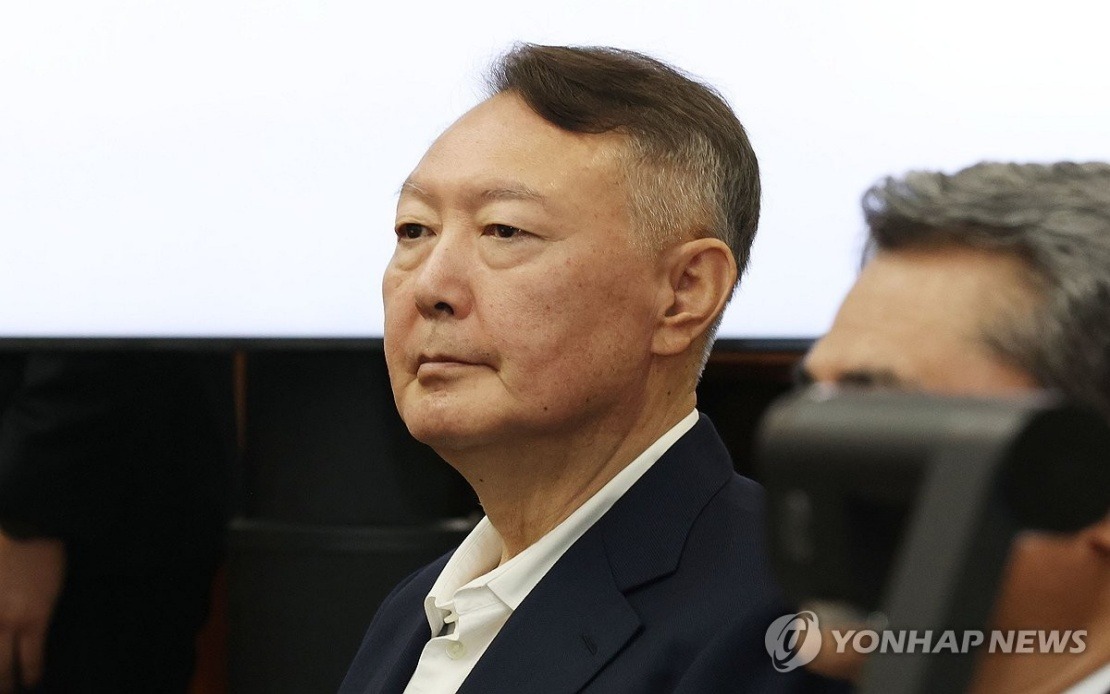
A Seoul district court has delivered a guilty verdict against South Korea's former President Yoon Suk Yeol, imposing a two-year prison sentence for unlawfully accepting political contributions hidden within free opinion polling services. The Seoul Central District Court determined on Monday that the ex-leader had violated the country's Political Funds Act by receiving valuable campaign assistance from Myung Tae-kyun, a self-styled political operative who provided the services at no cost. This conviction carries particular significance as it represents yet another legal setback for the already embattled former president, who currently faces multiple separate judicial proceedings stemming from his controversial attempt to impose martial law in late 2024.
The court established that Yoon received at least fourteen opinion polls without charge from Myung during the period spanning April 2021 through March 2022, with the combined value of these services estimated at approximately 270 million won, equivalent to roughly US$180,100. Rather than viewing these polls as innocuous campaign research tools, the court concluded they constituted improper in-kind political contributions that should have been properly declared and regulated under South Korean election law. The prosecution team, headed by special counsel Min Joong-ki, had originally presented evidence suggesting a more expansive pattern of wrongdoing, indicating that Yoon and his wife, former first lady Kim Keon Hee, had collaborated in receiving fifty-eight opinion polls collectively from the same source.
Crucial to the court's reasoning was evidence that Yoon had effectively bartered his political influence in exchange for these services. Specifically, the judges found that the former president had promised to use his then-considerable sway within the conservative People Power Party to secure the parliamentary nomination of former Representative Kim Young-sun as a candidate in national by-elections scheduled for June 2022. This arrangement transformed what might otherwise appear as routine campaign research into a quid pro quo exchange, fundamentally altering the legal character of the transaction. The court ordered Yoon to forfeit 13.96 million won in connection with the illegal transaction, further cementing the financial consequences of his conduct.
Myung Tae-kyun himself received an eighteen-month prison sentence for his role in facilitating these unlawful transfers of political resources. The special counsel's office had sought significantly harsher penalties, requesting a four-year sentence for Yoon and a three-year term for Myung, suggesting that prosecutors viewed the violations as particularly egregious. However, the court's more lenient determination may reflect judicial assessment that mitigating factors existed or that the proven conduct, while clearly illegal, fell short of the most severe category of campaign finance violations under Korean law.
This conviction becomes even more complicated when considered alongside a parallel case involving Yoon's wife. In April, the Seoul High Court issued a stunning acquittal of Kim Keon Hee on identical charges of receiving free opinion polls from Myung. The appellate judges reasoned that the former first lady could not have improperly profited from these services since Myung had distributed similar polling data to numerous other individuals and political figures. This logic suggests that the services lacked the exclusivity and personal benefit that would typically characterize illegal campaign contributions. The starkly different outcomes in the two cases—one guilty, one acquitted—based on ostensibly the same underlying conduct has created an apparent judicial inconsistency that may fuel debates about the coherence of South Korea's campaign finance enforcement.
The special counsel team has already filed an appeal challenging Kim's acquittal, indicating that prosecutors believe the appellate court's reasoning was flawed and that both the former president and his wife should have been held equally accountable. This avenue for continued legal struggle underscores how contested these findings remain within South Korea's prosecutorial and judicial establishment. For Malaysian observers of South Korean politics, this competing legal outcomes illustrate how complex and contested campaign finance cases can become, particularly when conducted at the highest levels of government where multiple family members and political allies may be implicated.
The conviction adds to an already extraordinary litany of legal troubles facing Yoon since the conclusion of his presidency. In February, he received a life sentence for his role in orchestrating the failed martial law declaration of December 2024, making him not only a former head of state but also a convicted felon serving multiple simultaneous sentences. That earlier judgment related to charges of insurrection—historically among the gravest crimes in any political system—dwarfs the present campaign finance conviction in its severity, yet the accumulation of guilty verdicts progressively erodes any remaining reputation the former leader might have retained.
South Korea's handling of post-presidential accountability represents a distinctive pattern within East Asia. Unlike some neighbouring democracies, South Korea has developed robust institutional mechanisms for prosecuting former chief executives after they leave office, reflecting deep-seated concerns about executive overreach and the principle that no political figure stands above the law. Yet the intensity and scope of Yoon's legal persecution also raises questions about whether prosecutorial zeal may occasionally outpace judicial restraint. For regional observers, the South Korean experience demonstrates both the strengths of accountability mechanisms and the risks of politically-motivated legal action.
The wider implications for South Korea's political culture are substantial. These convictions will likely reverberate through coming elections and policy debates, potentially influencing how future candidates approach campaign finance practices and their relationships with wealthy benefactors or political operatives. The differentiation between Yoon's conviction and his wife's acquittal may also prompt legislative reforms clarifying which individuals qualify as proper recipients of campaign services and under what circumstances such arrangements violate the law. Additionally, the power wielded by figures like Myung Tae-kyun—individuals who operate in the shadows of Korean politics, ostensibly lacking official position yet exercising substantial influence over candidate selection—has become a focal point for public concern about the integrity of the political process.
For Malaysia and other Southeast Asian nations observing South Korean developments, these cases offer cautionary lessons about the potential for campaign finance violations to proliferate, particularly in systems where formal restrictions exist but enforcement mechanisms remain unevenly applied. The divergent outcomes in the Yoon and Kim cases also underscore how judicial interpretation and prosecutorial strategy can significantly shape whether particular conduct results in conviction or acquittal, a reality that complicates efforts to establish consistent, predictable application of campaign finance law across different defendants and circumstances.

