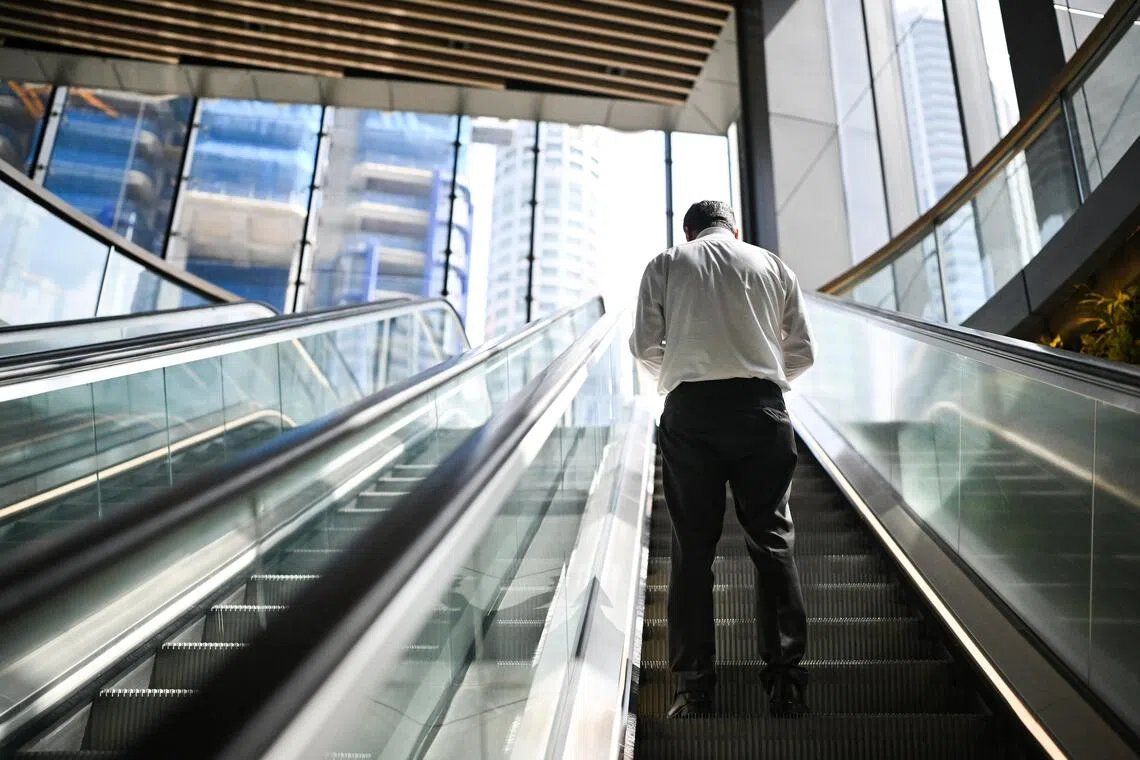
The question of how to properly use an escalator has become an unexpectedly polarising issue in South Korea, where a government survey of 1,000 adults across seven major cities revealed an almost perfect stalemate among the population. Exactly 50.1 per cent of respondents believe commuters should stand on one side while leaving the other free for those who wish to walk, whilst 49.9 per cent argue that passengers should remain stationary in two full lines. This razor-thin division has resurrected what amounts to a generational commuter dispute in the country, simultaneously challenging the long-held assumption that keeping one side open for walkers represents the fastest and most efficient use of escalators.
The intensity of this disagreement became apparent when the government convened a public forum in Seoul on August 29, bringing together roughly 200 citizens and transportation experts to formally debate whether escalators operate with greater safety and efficiency when all passengers stand still, or when one lane remains reserved for those choosing to walk. Rather than reaching consensus, the forum underscored how the issue extends far beyond simple commuter preference, touching on fundamental questions about urban infrastructure, public health, and collective responsibility. The very framing of the question, as noted by Jang Gye-ryeon, a public administration researcher at the Korea Institute of Industrial Relations, reveals the complexity: determining not simply which practice is correct, but rather which efficiency metrics matter most and in which contexts they should be applied.
The efficiency argument presents itself as deceptively straightforward yet deeply nuanced upon closer examination. For an individual rushed to catch a train or meet an appointment, the ability to walk up an escalator obviously saves valuable seconds. However, when viewed through a systems-wide lens, the mathematics shift considerably. Research cited by transportation experts pointed to a British study conducted at a crowded station, which demonstrated that passenger capacity increased by approximately 25 to 30 per cent when commuters occupied both sides of the escalator rather than leaving one side open. A limited trial conducted at Guri Station near Seoul produced comparable results, with some 190 people successfully using the escalator during a testing period when both sides were utilised, compared with only 164 people when the one-side-standing protocol was followed. These findings suggest that what benefits the individual in a hurry may actually reduce overall throughput for the broader commuting population, though researchers have cautiously noted that the Guri Station experiment remains too restricted in scope to support definitive conclusions.
Beyond the efficiency question lies a more pressing safety dimension that has increasingly influenced official policy. Detailed testing using sensors embedded beneath escalator steps revealed significant differences in the physical stress generated by different usage patterns. Walking downward on an escalator produces impacts equivalent to approximately 2.01 times a person's body weight, whilst walking upward generates roughly 1.54 times body weight. According to Heo Yun-seop, a professor at Korea Lift College, these repeated impacts from constant walking, combined with uneven load distribution from one-sided standing, can accumulate stress on specific components of the escalator mechanism. Though insufficient evidence exists to definitively prove that one-sided standing directly causes equipment failures, the potential implications for both operational lifespan and maintenance expenses represent legitimate concerns for transit authorities managing ageing infrastructure across rapidly urbanised areas.
South Korea's relationship with escalator etiquette reflects broader shifts in public policy and safety thinking. In 1998, government authorities began actively promoting the practice of standing on one side whilst leaving the other open, a campaign that gained nationwide momentum around the 2002 FIFA World Cup as the country sought to accommodate hurried passengers. However, as accidents accumulated and maintenance concerns mounted, officials reversed course between 2009 and 2014, instead promoting two-line standing throughout the nation. This policy whiplash reflects evolving understandings of urban transport safety, yet since 2015 the government has largely stepped back from prescriptive guidance, instead focusing its messaging on three fundamental safety principles: holding the handrail at all times, refraining from walking or running, and remaining within designated safety zones on the steps.
Accident data provides a sobering backdrop to this policy confusion. Between 1993 and 2025, records show that 72.3 per cent of all escalator incidents were directly attributable to user behaviour rather than equipment malfunction, with older residents bearing disproportionate risk. People aged 60 and older accounted for 53.3 per cent of those involved in accidents, a demographic consideration that carries particular weight in an increasingly ageing South Korean society. These figures suggest that the choice between one-line and two-line standing carries genuine public health implications, especially for vulnerable populations who may lack the agility or balance to maintain footing on a moving platform, whether standing or walking.
The August 29 forum itself demonstrated how public deliberation can shift perspectives even without producing a clear winner. Before the structured discussion, 45.9 per cent of participants favoured the two-line standing approach, with merely 13.4 per cent supporting the one-side-open arrangement favoured by those in a hurry. Following hours of expert presentations and citizen debate, support for one-side standing rose to 29.9 per cent, whilst two-line standing support declined to 31.4 per cent. Significantly, the largest bloc that emerged from the forum—encompassing 38.1 per cent of participants—advocated for context-dependent rules, suggesting that the escalator question might not admit a universal answer but rather requires flexibility based on location-specific conditions and real-time crowd densities.
This preference for location-based flexibility reflects growing recognition that different settings demand different approaches. Rush-hour conditions at central Seoul subway stations present vastly different challenges than those at suburban terminals or airport installations. Similarly, the physical layout of specific escalator installations, the architectural constraints of station design, and the demographic characteristics of regular users all affect which protocol serves the broader public interest most effectively. The emergence of this nuanced position represents intellectual progress on a question that initially appeared amenable to simple yes-or-no resolution.
For Malaysian and Southeast Asian observers, South Korea's escalator debate offers instructive insights into how rapidly urbanising regions can address infrastructure challenges and public behaviour simultaneously. As Malaysian cities expand their rapid transit networks, similar questions about user etiquette and safety protocols will inevitably arise. The South Korean experience suggests that imposing uniform national standards often proves less effective than permitting regional variation based on specific conditions, passenger demographics, and infrastructure characteristics. Seoul's decision to step back from prescriptive guidance whilst emphasising core safety principles represents a pragmatic acknowledgment that different contexts may require different solutions, a lesson particularly relevant for diverse, multi-modal transport ecosystems across Southeast Asia.
Interior Minister Yun Ho-jung indicated that the government intends to incorporate insights from the August 29 forum into future escalator safety initiatives, suggesting that policy may yet crystallise around the context-dependent approach that emerged as most popular among participants. Rather than resuming top-down mandates about standing positions, the government appears positioned to develop location-specific guidelines that respond to architectural realities, passenger flow patterns, and safety data from individual stations. This approach acknowledges that an escalator in a crowded central business district station operates within fundamentally different parameters than one in a less-travelled suburban location, and that rigid adherence to a single rule system across all environments serves neither efficiency nor safety optimally. South Korea's willingness to grapple publicly with this seemingly mundane infrastructure question ultimately reflects a sophisticated understanding that even routine urban experiences warrant evidence-based policy development and continued reassessment.

