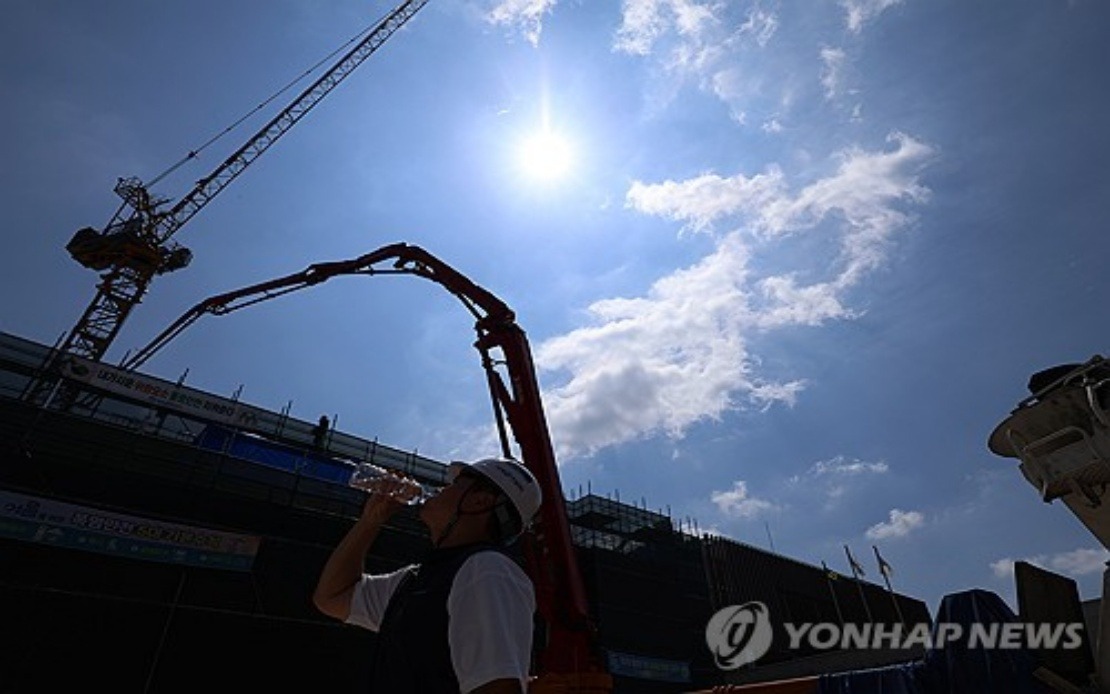
South Korea is grappling with an unprecedented heat emergency that has forced authorities to deploy the nation's most severe weather warning system across swathes of the densely populated Greater Seoul region. The Korea Meteorological Administration expanded its top-tier heat alerts on Wednesday morning, bringing the total number of affected districts to 20 out of 46 designated weather advisory zones in the capital region—roughly 43 per cent of the greater metropolitan area. This escalation underscores the severity of conditions gripping the country's most economically vital region, where tens of millions of people reside and work.
The agency activated serious heat wave warnings at 11 am across southern Incheon and nine municipalities and districts in neighbouring Gyeonggi Province, including Gwangmyeong, Yeoncheon, and Hwaseong. These additions came just one day after an extraordinary milestone: Seoul itself was placed under the highest alert level for the first time since the heat wave warning system was formally introduced on June 1. The rapid expansion of these alerts reflects an intensification of conditions that meteorological officials are monitoring with growing alarm, as the heat dome settled over the Korean peninsula shows little sign of dissipating.
Particularly notable is that the serious heat wave warning system has now reached into central South Chungcheong Province for the first time, with Cheongyang receiving the top-tier designation. This geographical expansion demonstrates that the extreme weather event is no longer confined to traditionally vulnerable areas but is spreading across broader swaths of the nation, affecting regions that may have less experience managing such intense conditions or fewer established cooling infrastructure programmes.
The Korea Meteorological Administration triggers a serious heat wave warning under specific criteria designed to capture conditions of genuine danger to public health. The alert is activated when apparent temperatures—which account for humidity and wind chill factors—are forecast to reach 38 degrees Celsius or higher, or when daily maximum temperatures hit 39 degrees Celsius or higher, provided that the highest apparent temperature in that area has already exceeded 35 degrees Celsius for two or more consecutive days. These technical thresholds represent the agency's attempt to identify moments when human physiology and infrastructure face genuine strain.
The human cost of this heat emergency is becoming increasingly apparent through official health statistics. The Korea Disease Control and Prevention Agency has documented 2,221 heat-related hospitalizations across the country between May 15 and the Monday before this reporting period, with 19 deaths attributed to the extreme weather. These figures represent a significant public health emergency that extends well beyond simple discomfort, encompassing serious medical complications ranging from heat exhaustion to heat stroke and related organ failure. The mortality toll, while sobering in absolute terms, suggests that vulnerable populations—the elderly, the chronically ill, and those with limited access to cooling—are bearing disproportionate risk.
The meteorological records themselves paint a picture of historically extraordinary conditions. The southeastern city of Yangsan recorded a temperature of 42.5 degrees Celsius, establishing the highest temperature in South Korea since systematic modern weather observations began in 1904. This figure carries profound significance: it represents more than 120 years of temperature records surpassed in a single day. Such records are not merely numerical curiosities but indicators of climate patterns potentially shifted by long-term warming trends, with implications extending far beyond South Korea's borders into the broader East Asian region.
For Malaysian and Southeast Asian observers, South Korea's heat emergency offers important cautionary lessons about the trajectory of regional climate patterns. While Southeast Asia has long experience with tropical heat, the intensity and persistence of heat waves in East Asia demonstrate that even temperate regions are experiencing climate stress previously thought unlikely. The rapid expansion of heat wave warnings in a highly developed nation with sophisticated meteorological infrastructure and significant resources for public adaptation underscores that extreme heat is becoming a defining challenge across the Asia-Pacific region.
The expansion of heat warnings in Greater Seoul reflects not merely temporary weather variations but potentially enduring shifts in seasonal patterns. Infrastructure designed for historical climate norms—public transportation systems, building ventilation standards, outdoor work protocols—may require fundamental reassessment if such extreme conditions become regular occurrences rather than exceptional events. South Korea's response, including the deployment of increasingly sensitive alert systems, suggests recognition that traditional approaches to summer heat management are proving inadequate.
The public health implications extend beyond direct heat casualties to encompass cascading effects across healthcare systems. Hospital capacity strain from heat-related admissions diverts resources from routine care, while the concentration of cases within vulnerable populations creates demand surges that regional medical infrastructure may struggle to accommodate. These systemic pressures, multiplied across a nation of over 50 million people, represent challenges that transcend individual tragedy to constitute national-scale strain.
South Korea's experience also highlights the particular vulnerability of metropolitan areas during extreme heat events. The Greater Seoul region's high population density, extensive built environment, and concentration of essential infrastructure mean that even brief disruptions to cooling systems or electrical supply can rapidly create mass casualty situations. The alert system itself, while valuable, represents a reactive rather than preventative approach—it warns of danger but cannot eliminate the underlying risk.
Looking ahead, South Korean authorities face mounting pressure to strengthen both immediate emergency response capacity and longer-term climate adaptation strategies. The succession of record-breaking temperatures suggests that official meteorological baselines and warning thresholds may require periodic recalibration as climate patterns shift. For a nation dependent on sustained industrial productivity and complex just-in-time supply chains, summer heat waves threaten not only human welfare but economic continuity.
The broader regional implications merit attention from policymakers across Asia. South Korea's wealth, technological sophistication, and institutional capacity have proven insufficient to insulate the nation from extreme heat consequences. Southeast Asian nations, generally with less developed heat emergency infrastructure and more limited economic capacity for large-scale adaptation measures, should view Seoul's current crisis as a stark indicator of the climate challenges accumulating across the continent. The window for preventative adaptation—reducing carbon emissions and building resilience—continues to narrow.

