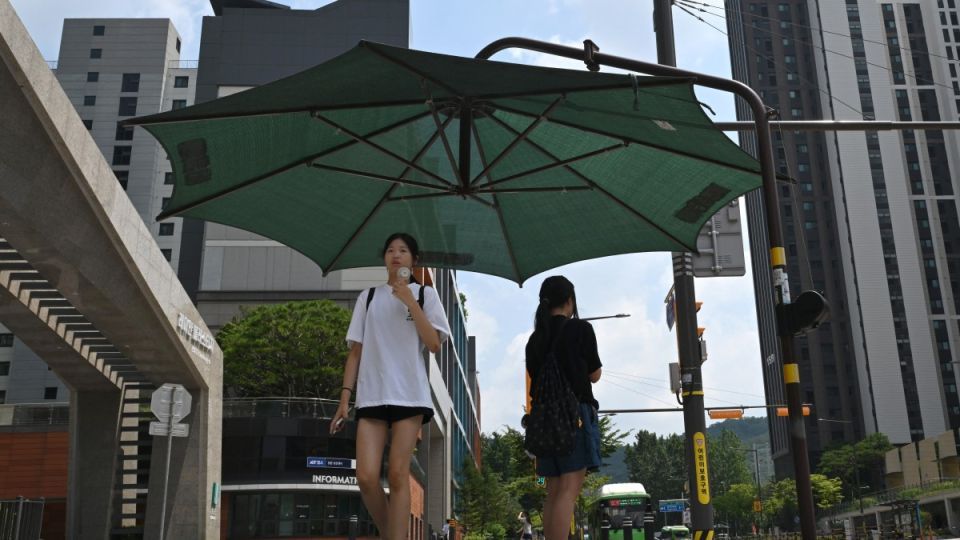
South Korea's battle against unprecedented temperatures is reshaping how the country's workforce operates, with major corporations implementing extended breaks, expanded cooling facilities, and restructured schedules to combat workplace heat injuries. However, the measures reveal a troubling inequality: while large conglomerates invest heavily in worker protection, employees at smaller firms and outdoor worksites remain dangerously exposed to extreme conditions that have already claimed lives.
The scale of the challenge has become impossible to ignore. Temperatures across the nation have shattered records, with Yangsan in South Gyeongsang Province reaching 42.5 degrees Celsius, while Seoul endured multiple days under the highest-level heatwave warning. The Korea Workers' Compensation and Welfare Service documented 195 heat-related workplace accidents between 2022 and June 2024, including 20 deaths. Most alarmingly, thirteen cases had already been officially recognised by the end of June alone—before the typically deadlier July and August months—with four proving fatal. These figures suggest the crisis is accelerating rather than stabilising.
Legal accountability has begun to reshape corporate behavior. A pivotal moment came when a district court last year convicted a construction company under the Serious Accidents Punishment Act following the heatstroke death of a subcontractor's employee—marking the first judicial conviction for a heat-related workplace fatality under this sweeping legislation. This ruling fundamentally changed the cost-benefit calculation for large employers, transforming heat protection from a welfare consideration into a legal imperative with potential criminal consequences for executives and companies.
Construction firms, which shoulder disproportionate responsibility for industrial fatalities, have emerged as frontrunners in implementing comprehensive heat-response protocols. Hyundai Engineering & Construction now incentivises workers to use designated rest areas through reward systems, while Lotte E&C deployed Internet of Things-based monitoring across approximately 80 construction sites to measure perceived temperatures every five minutes and classify heat risk into five distinct levels. Daewoo E&C has adopted a more flexible approach, allowing workers experiencing physical discomfort to cease work without penalty—a significant shift in an industry traditionally defined by rigid productivity demands. These measures acknowledge that construction workers face uniquely hazardous conditions: they labour in direct sunlight, often at height, wearing heavy protective equipment that traps body heat.
Migrant worker vulnerability has prompted some employers to develop culturally sensitive interventions. Hyundai E&C distributed emergency reporting guides in 22 languages and provided cooling vests equipped with integrated fans and oral rehydration solutions specifically designed for vulnerable populations. Kumho E&C partnered with Lotte Chilsung Beverage to supply bottled water, sports drinks, cooling towels and portable shelters at construction sites through September. These initiatives recognise that migrant workers often lack sufficient knowledge of Korean workplace rights, face language barriers to reporting problems, and may depend entirely on their employer for basic necessities.
Heavy industry operations that cannot suspend activity during heatwaves have implemented granular work-rest ratios calibrated to temperature thresholds. Posco, which operates blast furnaces continuously, mandates 15-minute rest periods after every 45 minutes of work when perceived temperature exceeds 35 degrees Celsius, dropping to 10-minute breaks after 50 minutes when temperatures reach 31 degrees. Hyundai Steel maintains similarly structured schedules, requiring minimum 10-minute hourly rests at 31 degrees and 15-minute breaks at 35 degrees. These precision-engineered schedules reflect sophisticated understanding of heat physiology and occupational risk—knowledge typically accessible only to large organisations with dedicated safety teams.
Shipbuilders have responded with extended break systems that operate independently of actual temperatures. Hanwha Ocean doubled morning and afternoon breaks from ten to twenty minutes through August, while extending lunch by thirty minutes when temperatures exceed 28 degrees and one full hour when they rise above 31.5 degrees. HD Hyundai Heavy Industries extended lunch breaks from one to ninety minutes through summer's end and operates more than 270 cooling facilities across its shipyards, while also distributing cooling vests, ice water and electrolyte supplements. Samsung Heavy Industries formed a dedicated task force to coordinate responses and deploy additional portable cooling equipment. These measures represent substantial operational reorganisation that only companies with enormous resources can sustain without compromising production targets.
The protective capacity of these major employers starkly contrasts with conditions at smaller workplaces. Of the 195 recognised heat-related accidents since 2022, more than half occurred at establishments employing fewer than fifty workers, while forty-two happened at businesses with fewer than five employees. Smaller firms typically lack dedicated safety personnel, cannot justify investment in cooling infrastructure, and struggle to reorganise work schedules without crippling productivity. Workers at these enterprises frequently operate without adequate rest facilities, shade structures, or access to hydration—conditions increasingly recognised as indefensible during extreme heat events.
Migrant workers employed in agriculture and outdoor labour face particular peril. Last month alone, a Thai seasonal worker died while working in Haenam, South Jeolla Province, and a Vietnamese national died on a farm in Goesan, North Chungcheong Province. These deaths underscore how seasonal workers, often unfamiliar with local heat risks, lacking comprehensive employment protections, and desperate to maintain income, continue performing demanding outdoor work when wealthier citizens shelter in air-conditioned offices. They typically earn minimal wages, lack union representation, and work under informal arrangements that leave them invisible in official safety statistics.
Representative Kim Wi-sang of the ruling People Power Party has called for fundamental policy shifts, urging the government to move beyond its apparent focus on large workplaces and substantially strengthen inspections and practical protections for seasonal migrant workers and small business employees. His intervention reflects growing recognition that current voluntary corporate measures, while admirable, address only a portion of the workforce. The divide between protected and vulnerable workers risks becoming institutionalised—with heat protection becoming another benefit that flows primarily to those already privileged by employment at large, multinational corporations.
The South Korean experience carries particular relevance for Southeast Asian nations facing intensifying heat waves and vulnerable migrant workforces. Malaysia, Thailand, Vietnam and other regional countries employing significant numbers of migrant workers should observe how inequality in heat protection emerges when policy relies primarily on corporate voluntarism rather than mandatory, enforceable standards applicable across all enterprise sizes. The Korean model demonstrates that legal accountability mechanisms—such as the Serious Accidents Punishment Act—can mobilise corporate investment, but that smaller employers and vulnerable workers require direct government intervention rather than hoping market pressures will naturally protect them.

