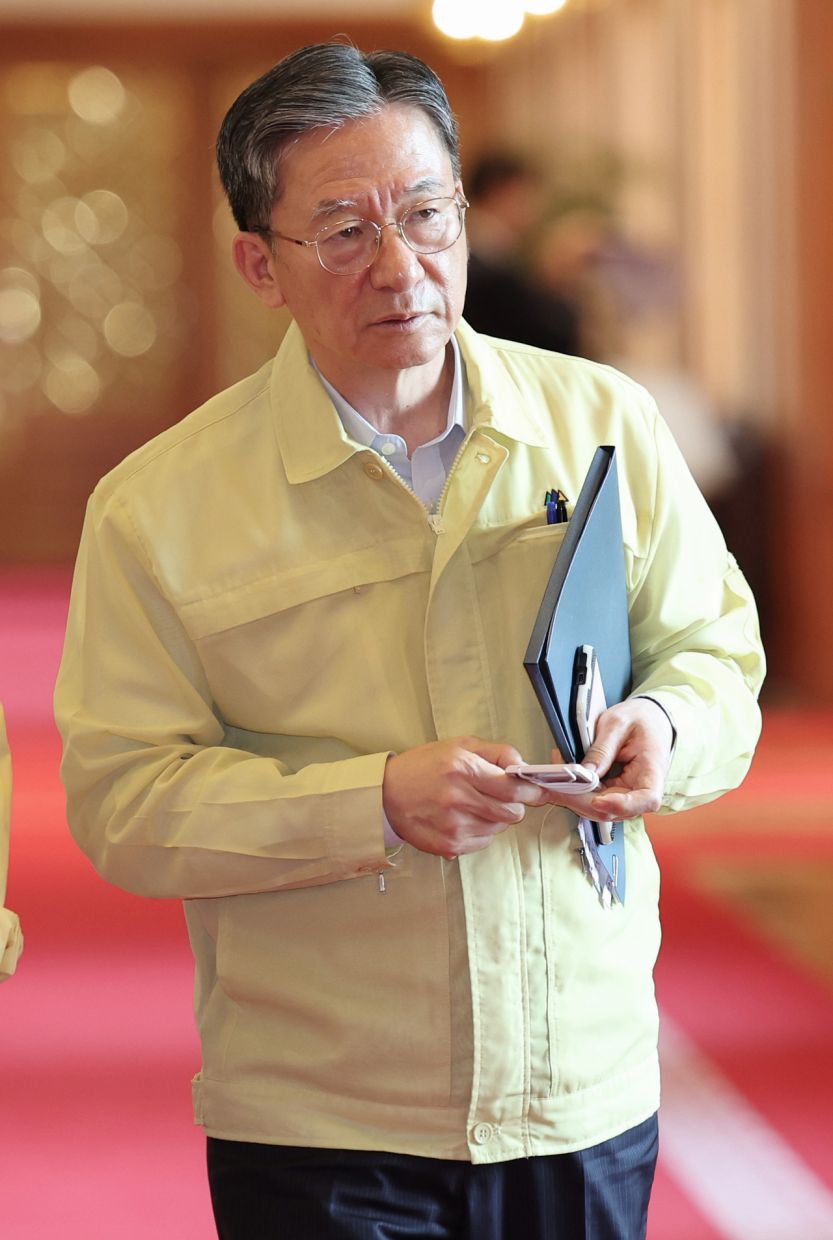
South Korea's Justice Minister Jung Sung-ho resigned on Tuesday afternoon, marking the latest casualty in a high-stakes political clash over the scope of prosecutorial authority. His departure follows sustained tensions between his office and the ruling Democratic Party regarding fundamental changes to how the nation's legal system will operate, with particular friction centring on whether prosecutors should retain the power to conduct supplementary investigations into cases they deem insufficiently investigated by police.
The resignation reflects deeper ideological divisions within South Korea's government about the proper balance of power within the criminal justice apparatus. Jung had voiced substantial reservations about the Democratic Party's push to completely segregate investigative and prosecutorial functions, a structural reform designed to prevent the prosecution from accumulating excessive institutional power. The minister believed that stripping prosecutors of supplementary investigation authority would undermine the integrity of the criminal justice process, creating gaps in investigative capability that could compromise case outcomes.
Under the current system, prosecutors possess the discretion to launch supplementary investigations whenever they determine that the police have not adequately pursued a matter. This authority has traditionally served as a safeguard mechanism, allowing legal professionals trained in prosecution to identify investigative shortcomings and direct additional work before deciding whether to bring formal charges. The practice reflects a particular model of criminal procedure that emphasises prosecutorial oversight in maintaining investigative quality and coherence.
The Democratic Party's position, however, reflects a competing governance philosophy that has gained considerable traction in recent years across democratic societies. Party leadership has championed a fundamental restructuring that would fully separate investigation from prosecution, essentially preventing prosecutors from conducting their own inquiries. This approach stems from concerns that concentrated prosecutorial power creates opportunities for institutional overreach and politicisation of the justice system—anxieties that have particular resonance in South Korea given historical controversies surrounding prosecutorial independence and influence.
Beginning October 2, when the revised Criminal Procedure Act officially takes effect, South Korea will implement this structural transformation. Prosecutors will no longer possess the capacity to initiate supplementary investigations themselves. Instead, their role will narrow to evaluating police investigation files, making determinations about whether charges should proceed, and managing litigation once cases enter the court system. Police will retain primary investigative responsibility and ownership of cases, with prosecutors functioning in a more supervisory and decision-making capacity rather than an operational one.
This represents a significant philosophical shift in South Korea's criminal justice framework, moving closer to investigative models employed in certain Western democracies. The change will necessarily alter how prosecutors approach casework, requiring them to make charging decisions based on police submissions rather than conducting their own follow-up investigations to address perceived evidentiary gaps. Critics worry this could create situations where inadequate police investigations proceed to trial, while defenders argue it will prevent prosecutorial overreach and enhance police accountability.
In announcing his resignation, Jung cited personal health considerations as his stated reason for stepping down. However, his resignation statement carried additional significance beyond medical concerns. He indicated that stepping aside would prove beneficial for implementing the new criminal justice system under different leadership, a formulation that observers interpreted as acknowledging the fundamental disconnect between his vision and that of the ruling party. The timing of his departure—occurring in advance of the October implementation date—suggests the government sought continuity in leadership that could champion rather than resist the impending changes.
Should the government formally accept Jung's resignation, Vice Justice Minister Lee Jin-soo will assume control of the justice portfolio in an acting capacity. This transition may signal the Democratic Party's intention to install leadership more aligned with the prosecutorial reform agenda. The change in ministers could potentially smooth the implementation of the revised Criminal Procedure Act by removing a prominent internal critic and positioning the justice ministry under someone more supportive of structural transformation.
For Malaysian observers and legal professionals, South Korea's prosecutorial reforms offer instructive lessons regarding ongoing debates about institutional separation of powers and prosecutorial independence. Malaysia's own legal framework has witnessed periodic tensions between investigative and prosecutorial functions, with ongoing discussions about optimising criminal procedure efficiency and preventing institutional overconcentration. South Korea's willingness to undertake comprehensive structural reform, despite the political friction generated, demonstrates how democracies periodically reassess fundamental assumptions about criminal justice organisation in pursuit of what they identify as improved accountability and equity.
The broader Southeast Asian context similarly features ongoing discussions about prosecutorial reform, accountability mechanisms, and the appropriate balance between different law enforcement institutions. South Korea's experience suggests these restructuring efforts generate substantial internal political divisions precisely because they fundamentally alter institutional relationships and power distributions that various stakeholders have grown accustomed to defending. The minister's departure illustrates how even disagreements about abstract institutional principles can produce concrete political consequences and require resignations when fundamental differences prove irreconcilable within a cabinet structure.

