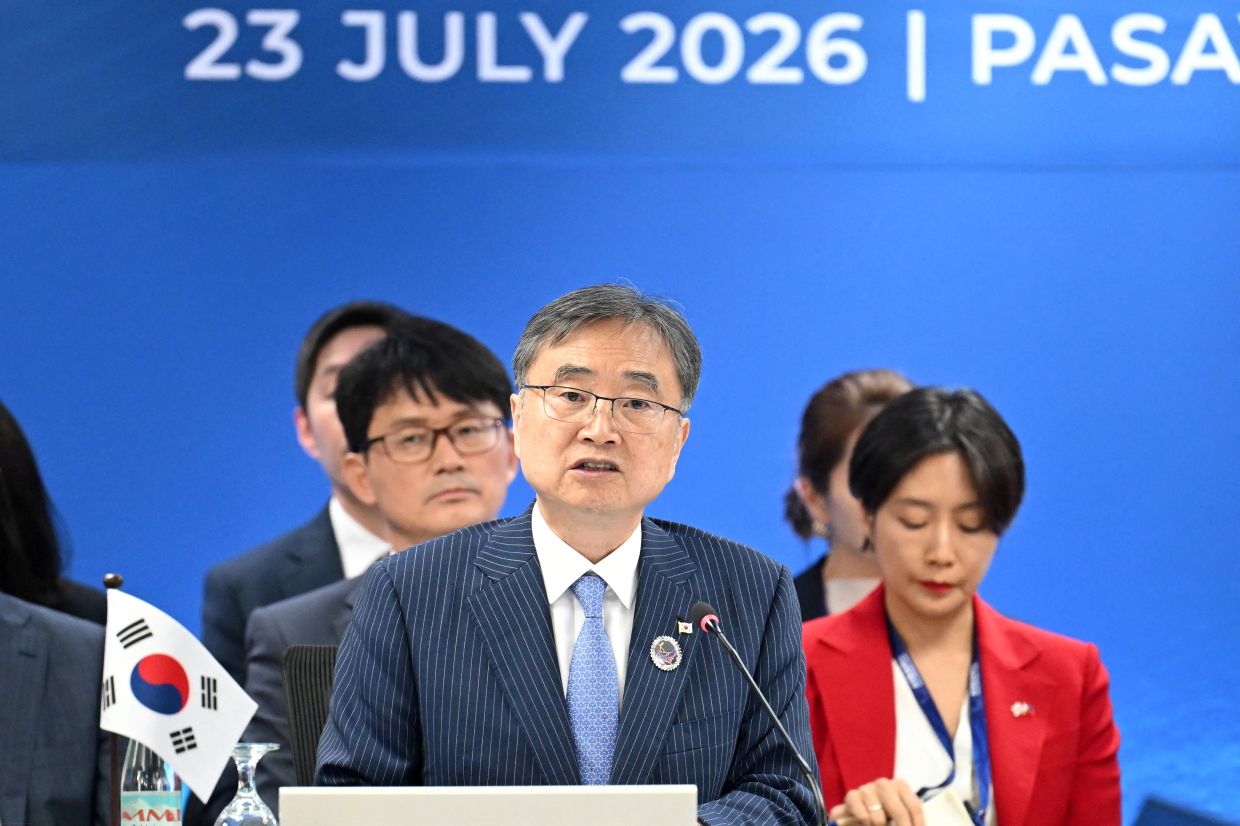
A significant policy rift has emerged within South Korea's government over how to approach North Korea, with senior ministers publicly contradicting one another this week in a way that threatens President Lee Jae Myung's reconciliation efforts. Foreign Minister Cho Hyun and Unification Minister Chung Dong-young offered competing visions for re-engaging Pyongyang at a Wednesday policy meeting, with Cho subsequently dismissing Chung's proposals as overly optimistic and lacking broader government consensus.
The disagreement centred on a comprehensive engagement package that Chung had unveiled, which proposed launching four-party negotiations involving both Korean governments alongside the United States and China. Cho characterised these proposals as "idealistic" when addressing reporters, implying they were disconnected from political reality and had not secured support from other ministries. Chung responded defiantly the following day, asserting that idealism was precisely what was needed "to change reality"—a pointed rebuke suggesting his colleague was locked in outdated thinking.
The public nature of this ministerial dispute carries particular significance for Seoul's regional and international standing. When cabinet members openly contradict one another on matters of fundamental foreign policy, especially regarding a hostile neighbour, it signals weakness to both adversaries and allies. Observers and analysts have immediately flagged the incident as potentially damaging to Lee's strategy, since any appearance of internal division could encourage Pyongyang to wait out policy shifts rather than commit to dialogue.
Lee's administration has fundamentally reframed South Korea's approach to the North since taking office. The government has abandoned what it characterised as a "denuclearisation-first" posture in favour of a "peace-first" framework, signalling willingness to negotiate without preconditions regarding Pyongyang's weapons programmes. Simultaneously, Seoul has pressed the Trump administration to facilitate direct talks between Washington and North Korea's Kim Jong Un, betting that American engagement could unlock the dialogue channel that Seoul alone has been unable to open.
To create conditions for such engagement, the Lee administration has made several conciliatory gestures aimed at reducing tensions. These include scrapping anti-North Korean loudspeaker broadcasts that had been maintained at the border and eliminating other measures that Pyongyang might characterise as hostile provocations. The government has also deprioritised human rights advocacy regarding North Korea, suspending certain reports and broadcasts on abuses within the North to avoid antagonising leadership in Pyongyang.
The reversal on human rights promotion has drawn criticism from advocacy organisations working on North Korean issues. Kim Tae-Hoon, former head of the human rights group PSCORE, told Reuters that this downgrade has created severe financial pressures for organisations fighting for fundamental freedoms in North Korea. The calculus appears to be that raising such issues would damage fragile diplomatic openings, though critics contend this abandons moral obligations and undermines the credibility of the South Korean government's long-term commitment to humanitarian concerns.
Interkor-Korean relations have deteriorated markedly since the Covid-19 pandemic disrupted contact. In 2024, Kim Jong Un announced that North Korea no longer pursues reunification, marking a significant rhetorical and policy shift. Pyongyang subsequently demolished joint industrial projects on its territory that had represented decades of accumulated inter-Korean cooperation. These actions symbolised the closing of diplomatic doors rather than their opening.
The collapse of formal dialogue has had cascading humanitarian consequences. The number of North Koreans successfully defecting to the South has plummeted from 1,047 in 2019 to just 63 in the first half of 2026, reflecting tighter border controls and reduced desperation to flee as economic conditions have stabilised somewhat. This dramatic decline underscores the isolation that Pyongyang has created and the difficulty of maintaining people-to-people contacts across the border.
Pyongyang has demonstrated little reciprocal interest in Seoul's outreach initiatives. Despite South Korea's withdrawal of measures that the North criticised as hostile, Pyongyang has largely ignored these gestures, suggesting that Chung's idealistic vision for renewed engagement confronts fundamental strategic calculations in North Korea that may be immovable through goodwill alone. The question remains whether Kim Jong Un's government views reconciliation as strategically beneficial or whether it prefers the current frozen status quo.
Analysts studying the ministerial split have sounded alarm bells about its likely strategic consequences. Lim Eul-chul, a professor at Kyungnam University, argues that the public exposure of internal differences weakens Seoul's negotiating position significantly. Should meaningful agreements eventually emerge from talks, North Korea could exploit knowledge of South Korean internal disagreements to suggest that any accord could easily be reversed through domestic political change. This vulnerability has plagued Korean diplomacy historically, with successive governments reversing predecessors' policies regarding the North.
The two ministries attempted to contain the damage on Friday by issuing coordinated statements pledging continued policy coordination, but the statements acknowledged no substantive resolution of their underlying disagreement. Neither ministry expanded on these bland assurances, and the presidential Blue House declined to provide guidance, suggesting confusion at the highest levels about how to proceed. For Korean watchers across Asia and beyond, the episode demonstrates how fragile and contested the North Korea engagement strategy remains within Seoul's government.
For Malaysia and other Southeast Asian nations, South Korea's halting efforts to revive dialogue with the North carry broader implications. North Korea's weapons programmes, particularly its advancing missile capabilities, represent security concerns for the entire region. Additionally, Seoul's diplomatic struggles illustrate the difficulties any country faces when attempting to balance security imperatives, humanitarian concerns, and strategic engagement with authoritarian regimes—dilemmas that resonate across Southeast Asia's own foreign policy challenges.

