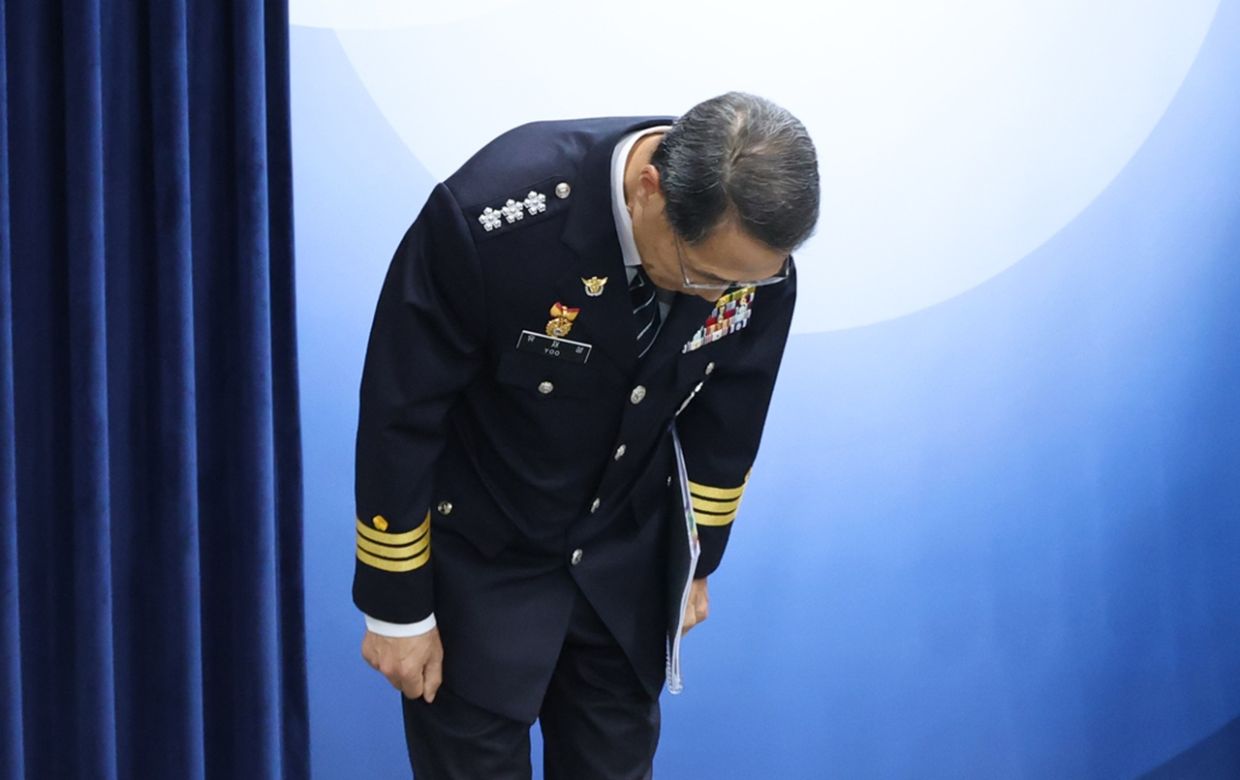
South Korea's police establishment faces mounting pressure to rehabilitate its public image after Acting National Police Agency Commissioner General Yoo Jae-sung announced a far-reaching reform initiative on Monday following escalating revelations of institutional dysfunction. The pledge came amid intensifying scrutiny of how officers allegedly mishandled the investigation into Jang Yoon-gi, who stands accused of murdering a teenage girl in the southwestern city of Gwangju in May, with particular focus on claims that sensitive case information was leaked to Jang's father, a serving police officer, while crucial evidence went unsecured.
The deepening scandal has ignited broader questions about police culture and accountability mechanisms across the South Korean law enforcement system. Yoo's commitments extend beyond damage control, encompassing structural changes intended to prevent future instances of the internal protection networks and investigative negligence that characterised the Jang case. At a Government Complex Seoul briefing, Yoo declared that the police would embrace the current controversy as a catalyst for fundamental reform, emphasizing the department's resolve to restore eroded public confidence through demonstrable action rather than rhetorical promises alone.
Central to the reform agenda is the establishment of an investigative reform task force scheduled for deployment by month's end, comprising seven to ten members with external expertise comprising more than half the panel composition. This structural choice deliberately insulates deliberations from institutional insularity, bringing perspectives from outside the police hierarchy to scrutinize and redesign investigative protocols. The task force will examine personnel systems designed to weaken improper relationships between officers and local communities—an endemic issue within Japanese, Korean, and other regional policing traditions—and overhaul procedures governing cases involving society's most vulnerable populations, categories historically subject to investigative shortcuts and procedural irregularities.
Paralleling these civilian-led discussions, the National Office of Investigation will imminently launch an internal affairs unit with jurisdiction over serious duty-related crimes across all police ranks, removing traditional hierarchical protections that have historically shielded senior officers from accountability. This represents a departure from conventional practice wherein rank often conferred investigative immunity or ameliorated consequences for substantive misconduct. The expansion of oversight capacity signals recognition that systemic change requires simultaneous alterations to enforcement mechanisms, not merely procedural redesign.
The reform architecture incorporates an additional layer: a new civilian-staffed oversight body positioned within the Korean National Police Commission, comprising approximately one hundred civilian investigators empowered to examine alleged human rights violations and investigative misconduct. Yoo underscored that this body's effectiveness hinges upon legislative amendments currently submitted to the National Assembly, enabling commission findings to generate concrete personnel and disciplinary recommendations rather than serving as symbolic gestures. The administration's commitment to strengthening the police commission's authority reflects a strategic realignment favouring external accountability over internal self-regulation.
Beyond investigative protocols, Yoo addressed prospective changes to personnel rotation systems, indicating the Interior Ministry intends to expand geographical movement requirements beyond the superintendent tier where they currently apply. However, he demonstrated pragmatic caution regarding implementation, acknowledging that blanket expansion to lower ranks presents logistical complications and fairness concerns. Official residences currently provided to transferred officers at superintendent level and above would require substantial budgetary expansion if extended to junior officers, raising resource allocation dilemmas typical of institution-wide enforcement initiatives.
Yoo's acknowledgement that field officers bear considerable burden from rotation policies reflects sensitivity to internal police morale, already fragile given the widespread perception of leadership culpability in the Jang investigation. Rather than imposing reforms unilaterally, Yoo committed to soliciting rank-and-file perspectives before finalizing rotation protocols, suggesting a collaborative rather than autocratic reform posture. This consultative approach may facilitate eventual acceptance among officers who might otherwise perceive reforms as punishment imposed from above, though it potentially creates space for resistance from entrenched interests.
The reforms arrive at a critical institutional moment for South Korean policing, where public tolerance for investigative failures involving violent crimes against vulnerable victims has reached critical thresholds. The Jang case exemplifies systemic vulnerabilities extending beyond individual malfeasance: the apparent willingness of officers to obstruct investigations on behalf of a colleague's family member suggests normalization of institutional loyalty superseding public interest. For Malaysian and Southeast Asian observers, the Korean reform initiative illustrates how democracies attempt course correction when law enforcement credibility faces existential challenges, offering cautionary lessons regarding police culture and the structural conditions enabling misconduct.
Pending the National Assembly's legislative action on Police Act amendments, the timeline for comprehensive implementation remains uncertain. Yoo indicated that readily implementable measures would advance immediately while the task force deliberated more complex architectural questions, suggesting a phased approach balancing immediate credibility-restoration with longer-term institutional transformation. The reforms' success will depend substantially upon whether the Jang case investigation—still under ongoing special investigation scrutiny—results in meaningful consequences for implicated officers, demonstrating that accountability extends to internal affairs beyond public-facing procedural changes.
The scandal illustrates enduring challenges within police systems where hierarchical structures, geographic insularity, and professional solidarity can subordinate investigative impartiality to institutional self-preservation. South Korea's response—combining civilian oversight, external expertise, expanded investigative jurisdiction for duty crimes, and commission-based accountability—represents a deliberate institutional reorganization designed to introduce friction into networks facilitating misconduct. Whether these reforms generate substantive cultural change or remain symbolic gestures will substantially influence public perception of whether the police establishment has genuinely confronted systemic dysfunction or merely performed institutional reformation without addressing underlying pathologies that enabled officers to shield a suspect connected through family kinship.

