South Korea's President Lee Jae Myung has attempted to walk a delicate political tightrope in the aftermath of the country's June 3 local elections, simultaneously validating public anger over voting irregularities while drawing a sharp distinction between legitimate criticism of electoral mismanagement and what he characterises as baseless conspiracy theories about rigging. In a series of statements culminating in a June 15 social media post, Lee acknowledged the gravity of the situation while cautioning protesters against tactics that obstruct others' daily activities and rights.
The underlying controversy centres on documented ballot paper shortages and other procedural failures that disrupted voting across multiple polling stations during the June 3 elections. These disruptions forced temporary suspensions and delays in voting at certain locations, directly preventing some citizens from exercising their constitutional right to vote on election day. The incident has struck a particular nerve in South Korea, where electoral integrity remains a foundational concern within the broader framework of democratic governance. Lee described the National Election Commission's (NEC) mishandling of these logistics as "a serious failure that infringed on voters' rights," language indicating his recognition of the legitimate grievance underlying the public's anger.
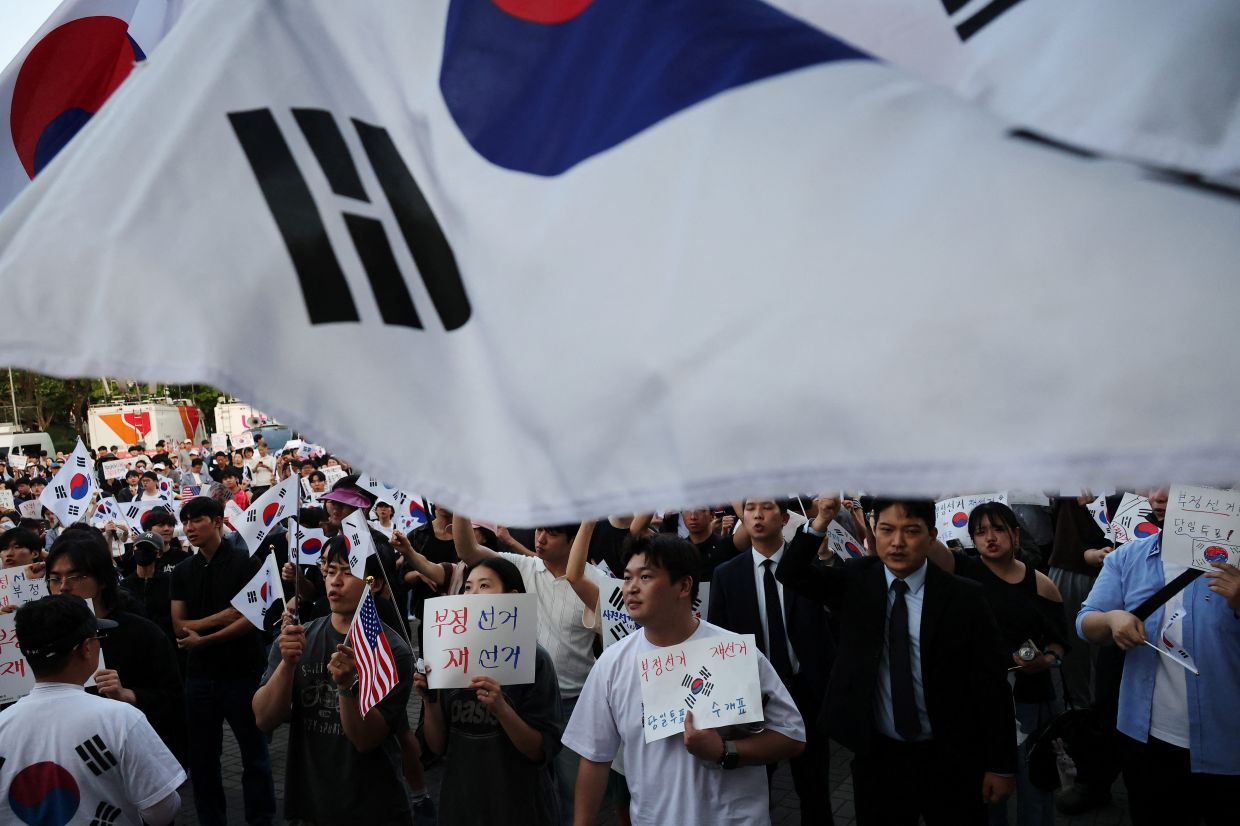
Protests have coalesced around Seoul's Olympic Park, particularly in and around the handball arena that served as the vote-counting centre for the June 3 local elections and subsequently housed ballot boxes. The physical occupation of this facility by demonstrators has created unintended consequences that extend beyond the immediate election debate. Sports organisations with offices inside Olympic Park have reported significant work disruptions as protesters blocked access to facilities, hampering administrative functions that directly support South Korean athletes' participation in international sporting competitions. This collision between legitimate protest activity and collateral damage to unrelated stakeholders has become the focal point of Lee's appeals for measured conduct.
Making remarks while presiding over a video conference with senior aides from the Vatican, Lee emphasised that protesters must exercise caution to ensure their expressions of dissent do not encroach upon the rights of third parties. He instructed law enforcement to undertake rigorous investigations into individuals who forcibly obstructed others from accessing facilities, as well as those who coordinated such actions. This police directive represents an attempt to distinguish between protected forms of protest and actions that cross into unlawful obstruction of civic and commercial operations.
However, Lee's statement also reveals deep concern about the political weaponisation of the electoral failures. He drew explicit lines between acceptable criticism of the NEC's administrative performance and what he termed "absurd conspiracy theories" alleging deliberate election manipulation. Lee asserted that certain political forces were exploiting legitimate public concern about voting irregularities to advance unfounded claims of systematic rigging, a distinction that carries significant implications for South Korean political discourse. In his view, the existence of operational failures does not automatically validate theories of intentional fraud.
The president further alleged that some individuals promoting election fraud claims had engaged in activities he characterised as excessive and damaging to public order. These included threatening police officers and citizens, conducting what he described as "incomprehensible searches and inspections," blocking facility access, and obstructing official duties. Lee's itemisation of these alleged behaviours suggests an escalation in protest tactics that has moved beyond traditional demonstrations into territory that raises law enforcement concerns about public safety and institutional functioning.
Despite his criticism of protest methods and fraud theories, Lee did not attempt to minimise the underlying problem. He explicitly stated his full recognition and acceptance of public concerns regarding the infringement of voting rights, framing the election irregularities as a matter touching the very foundation of democratic practice. This acknowledgment appears calculated to prevent the perception that he is dismissing or trivialising citizen grievances, while simultaneously rejecting the more radical interpretations some protesters have placed upon the electoral failures.
Lee called for accountability mechanisms across multiple governmental bodies. He urged the National Election Commission to fully cooperate with parliamentary investigations, which he indicated could commence as early as the week following his statement. He also pressed a joint task force comprising prosecutors and police to accelerate their investigation into responsibility for the failures, explicitly rejecting the notion that any institution or individual should enjoy "sanctuary" from scrutiny. This rhetorical emphasis on transparency and accountability appears designed to demonstrate responsiveness to public demand for answers without conceding the fraud allegations that remain politically contentious.
The president's framing of the situation as an opportunity to "strengthen democracy and popular sovereignty" suggests an attempt to redirect the national conversation toward constructive reform of electoral procedures rather than prolonged confrontation over fraud claims. He advocated for "healthy criticism and constructive alternatives," terminology that implicitly distinguishes between what he considers productive democratic engagement and destructive protest tactics. Lee emphasised the necessity of expediting a thorough fact-finding process, appealing to both institutional actors and civil society to respond with "responsible action" to what he acknowledged as the justified anger of young people and citizens.
For Malaysian and Southeast Asian observers, the South Korean situation illuminates the fraught intersection between electoral integrity concerns and political polarisation in advanced democracies. While South Korea possesses sophisticated electoral institutions and established democratic processes, the June 3 incident and its aftermath demonstrate how administrative failures, even when unintentional, can fuel broader narratives of systemic illegitimacy if not addressed transparently and comprehensively. The challenge Lee faces mirrors dilemmas confronted across the region: how to simultaneously validate public concerns about electoral performance, maintain faith in democratic institutions, and prevent the politicisation of legitimate grievances from destabilising the broader system of governance.
The distinction Lee draws between procedural criticism and fraud allegations carries particular relevance for emerging democracies seeking to navigate between the Scylla of complacency about electoral quality and the Charybdis of conspiratorial thinking that erodes institutional legitimacy entirely. South Korea's response to this dilemma—through multi-level investigations, parliamentary involvement, police enforcement of public order, and presidential acknowledgment of both institutional failure and fraudulence concerns—reflects the complex institutional architecture required to manage electoral crises in societies where democratic norms remain contested territory for political actors.
The ultimate resolution will depend substantially on whether parliamentary and prosecutorial investigations produce findings that the public perceives as thorough and credible, and whether electoral system reforms emerge that demonstrably prevent recurrence of similar failures. Until such institutional responses materialise and gain public confidence, South Korea's political environment will likely remain charged with tension between those seeking systemic reform and those concerned about democratic stability.