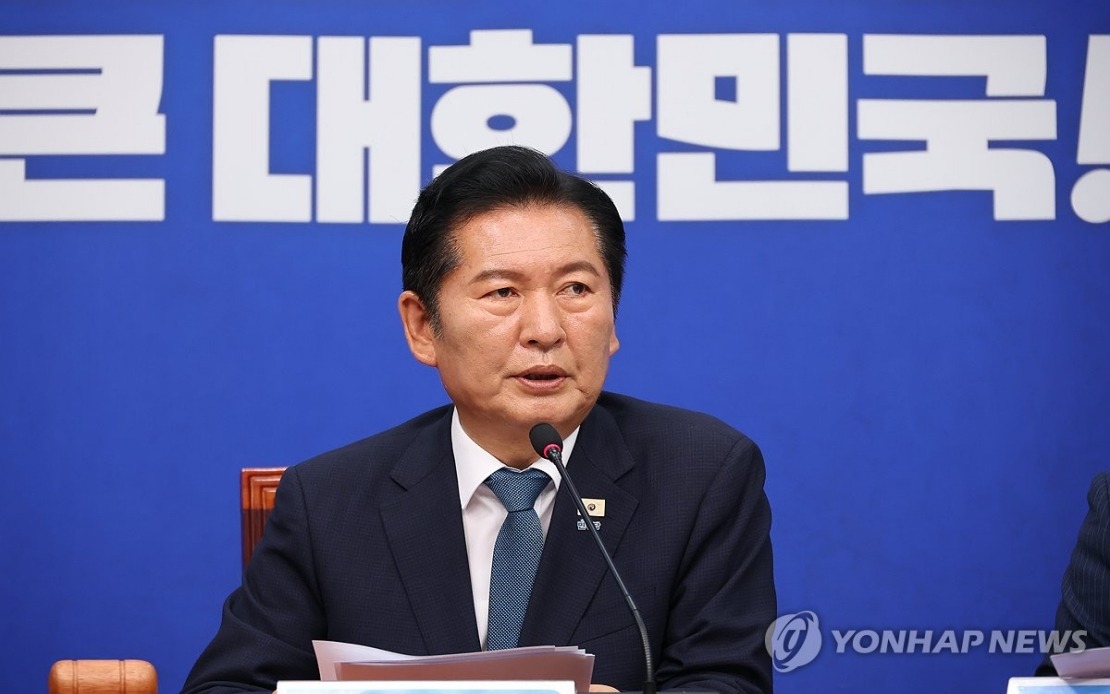
Jung Chung-rae, a lawmaker from South Korea's ruling Democratic Party, relinquished his position as party chairman on Wednesday, a tactical move widely interpreted as preparation for a leadership campaign at the party's forthcoming national convention scheduled for August 17. The resignation marks a significant development in the party's internal political dynamics, coming at a time when factional tensions within the Democratic Party have intensified over strategic direction and the party's relationship with the presidential administration.
During remarks made at a plenary session of the party's supreme council at the National Assembly, Jung characterised his tenure as marked by personal sacrifice and unwavering dedication to advancing the Democratic Party's interests and supporting President Lee Jae Myung's government. He emphasised the emotional and physical toll of navigating internal party resistance whilst simultaneously managing external political challenges, portraying his leadership as one defined by commitment despite considerable obstacles.
Jung's narrative of steadfast loyalty carries particular significance given the emergence of criticism from pro-Lee faction members who contend that his stewardship has deviated from the president's agenda. Detractors within the ruling coalition have suggested that Jung has prioritised the concerns of his core supporters—characterised as the hard-line wing of the party—at the expense of organisational alignment with Lee's policy priorities and governmental objectives. This characterisation hints at deeper fractures within the Democratic Party between different leadership camps and ideological orientations.
The forthcoming convention is positioned to become a competitive three-way contest involving Jung and two other major political figures. Prime Minister Kim Min-seok, who maintains close ties with President Lee and represents continuity with the current administration's preferred direction, is expected to enter the race. Additionally, Song Young-gil, who previously served as Democratic Party leader, has signalled his intention to participate in the leadership contest, potentially complicated by his reported discussion with the president regarding a possible strategic alliance with Kim's candidacy.
Song's potential consolidation with Kim represents a significant variable in the upcoming contest dynamics. According to Democratic Party lawmaker Park Jie-won, who disclosed information during a CBS radio interview, Song has already conveyed to President Lee his plans to seek the party leadership whilst simultaneously exploring the possibility of presenting a unified candidacy framework with Prime Minister Kim. Such a configuration would substantially alter the competitive landscape, potentially positioning Jung as the outsider candidate against a combined establishment and presidential-backed ticket.
The timing of Jung's resignation demonstrates political astuteness, as stepping down from the chairmanship allows him to enter the convention race without the complications of managing day-to-day party operations and navigating accusations of bias or institutional advantage. This strategic withdrawal follows established patterns in South Korean party politics, where leadership transitions often involve interim arrangements designed to provide organisational stability during contested succession moments.
Until the convention's conclusion, the role of interim party leadership falls to Han Byung-do, the floor leader of the Democratic Party's parliamentary delegation. Han's stewardship during this transitional period carries implications for the party's legislative agenda and internal management, as the acting leadership must maintain institutional functionality whilst remaining sufficiently neutral to avoid appearing to favour any particular candidate in the ongoing race.
The Democratic Party's internal contest reflects broader tensions within South Korea's political system regarding presidential authority, party autonomy, and factional competition. Jung's campaign, irrespective of its success, will test whether the party can accommodate diverse viewpoints and leadership philosophies or whether institutional power will consolidate around the presidential establishment. The convention outcome will significantly influence the Democratic Party's trajectory, its relationship with the Lee administration, and the balance of forces within South Korean politics leading into subsequent electoral cycles.
For regional observers, the Democratic Party's internal dynamics reveal the persistent challenges confronting ruling coalitions in maintaining unity whilst managing divergent leadership aspirations. The contest between Jung and his rivals underscores how personality-driven politics and factional rivalries continue to shape institutional development within major political organisations across East Asia, with implications for legislative effectiveness and governmental coherence.