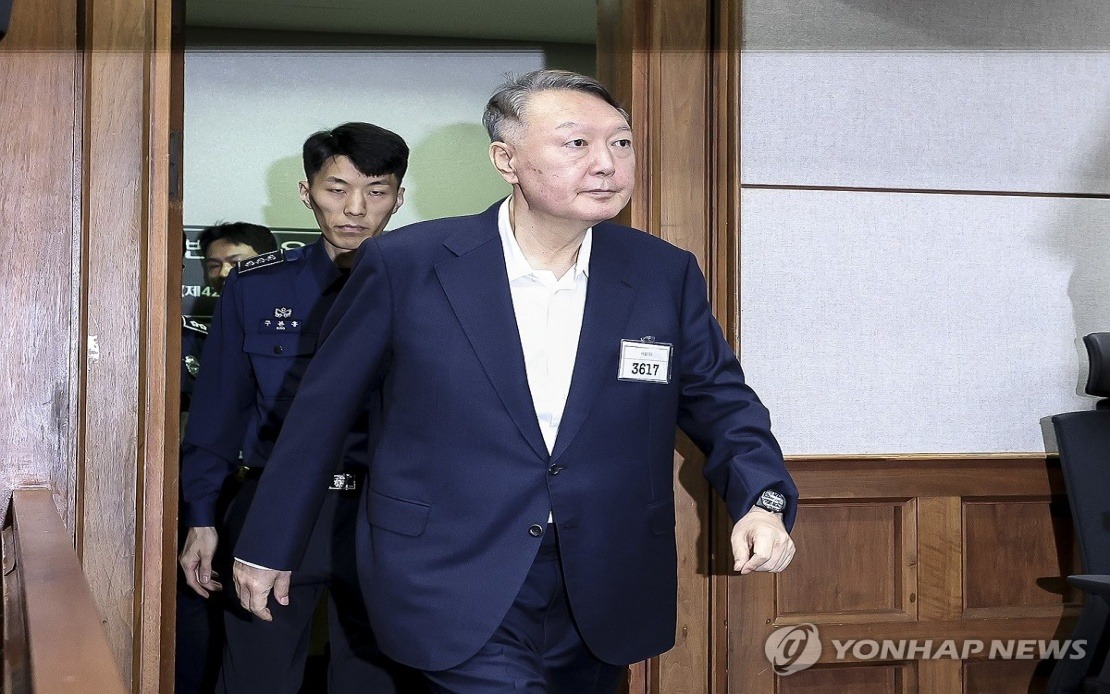
South Korea's Supreme Court has greenlit a live televised broadcast of its verdict in the obstruction of justice case against former President Yoon Suk Yeol, marking an unprecedented moment of judicial transparency in the country's high-profile political proceedings. The ruling, set to be delivered Thursday at 2 pm, represents the nation's highest court first adjudication on charges stemming from Yoon's December 2024 martial law declaration that triggered constitutional turmoil and his subsequent arrest.
The decision underscores a significant shift in how South Korea's judicial system handles proceedings involving former heads of state. Special counsel Cho Eun-suk's office petitioned for the broadcast last week, seeking to ensure public access to what many observers view as a watershed moment in the country's democratic governance. The approval signals the court's commitment to transparency despite sensitivity surrounding the case, which has dominated South Korean political discourse since Yoon's shock martial law decree just months earlier.
Yoon's defence team had vigorously opposed the broadcast proposal, contending that live coverage could prejudice his case by exposing him to reputational damage and potentially compromising his fundamental right to a fair trial. Legal representatives argued that televising such high-stakes proceedings risks inflaming public opinion and interfering with the administration of justice. However, the Supreme Court ultimately determined that the public interest in witnessing the verdict outweighed these concerns, a position consistent with recent global trends toward judicial openness in cases of national significance.
The broadcast arrangement reflects careful procedural planning. Rather than allowing unrestricted media access, the court will control all camera feeds using its own equipment, maintaining security and decorum within the courtroom while still permitting broadcasters to transmit the proceedings live. This measured approach attempts to balance transparency with the dignity and security requirements of high court proceedings, a model that other Asian democracies may scrutinise as they grapple with similar questions about public access to sensitive judicial proceedings.
Yoon faces multiple serious charges in this particular case, each revealing different dimensions of the controversy surrounding his martial law initiative. The former president stands accused of ordering his personal security detail to physically obstruct state investigators attempting to execute a lawful detention warrant against him in January 2025, just weeks after his ill-fated decree. This obstruction charge carries particular gravity because it demonstrates alleged attempts to evade the criminal justice system after his extraordinary executive action had already collapsed.
Beyond the obstruction allegations, Yoon is also charged with violating the constitutional rights of nine Cabinet members by excluding them from advance consultation on his martial law plan. This accusation touches upon governance norms and suggests the decision was made unilaterally without ministerial input, a departure from established protocols for extraordinary executive measures. Additionally, prosecutors allege Yoon falsified government documents by modifying the martial law proclamation after it had already been rescinded, ostensibly to conceal procedural irregularities and legalise what many observers regarded as an unconstitutional act from its inception.
The legal trajectory of Yoon's cases reveals the severity with which Korean courts are treating his actions. An appellate court previously imposed a seven-year prison sentence for the obstruction charges in April, increasing the initial sentence by two years but still falling substantially short of the ten-year term prosecutors had recommended. This intermediate penalty suggested judicial caution about the exact culpability boundaries, though the conviction itself was unambiguous. Meanwhile, his separate trial on insurrection charges—related directly to the martial law declaration—resulted in a life sentence at the lower court level, indicating judges consider the core act extraordinarily grave.
The obstruction case differs from the insurrection proceedings in important ways. While the martial law bid itself represents the most dramatic constitutional crisis South Korea has faced in recent years, the obstruction conviction focuses specifically on alleged efforts to evade lawful arrest. From a Malaysian perspective, this distinction matters considerably. Southeast Asian observers monitoring South Korea's handling of former executive misconduct will note how courts are parsing individual criminal acts within the broader narrative of governmental breakdown, rather than treating everything as a monolithic charge.
The Supreme Court's decision to broadcast Thursday's verdict reflects confidence that the judicial system can withstand public scrutiny and that transparency serves democratic interests even when addressing former heads of state. This approach contrasts sharply with historical patterns where such sensitive proceedings occurred behind closed judicial doors. The live broadcast will allow South Korean citizens and international observers to witness how the nation's apex court resolves these contentious matters, setting potential precedent for future cases involving high-ranking officials.
For regional observers, including those in Malaysia and other Southeast Asian nations managing their own transitions toward stronger judicial independence and rule of law, the South Korean proceedings offer instructive lessons about accountability mechanisms. The case demonstrates that stable democracies can pursue comprehensive legal accountability against former leaders without descending into either authoritarian persecution or enabling impunity. The obstruction charges, specifically, highlight how courts can address not merely substantive governmental abuses but also the cover-up mechanisms deployed afterward.
Thursday's broadcast will inevitably shape public and political discourse throughout South Korea during a period when the nation's institutional stability remains under strain. The live transmission carries symbolic weight beyond the individual case, serving as tangible evidence that constitutional government and judicial review function even when examining the most sensitive and politically fraught scenarios. How the Supreme Court frames its reasoning—whether emphasising separation of powers doctrine, presidential accountability, or institutional hierarchy—will reverberate beyond Seoul's courtrooms into regional conversations about democratic governance.
As the Supreme Court prepares to deliver its verdict, all eyes focus on whether the justices will uphold, modify, or reduce the seven-year sentence previously imposed. The decision will carry implications not only for Yoon's personal circumstances but also for how South Korea's legal system treats executive overreach and subsequent attempts to frustrate investigations. The broadcast itself represents a quiet affirmation that democracy's machinery can function transparently even under extraordinary pressure, a message that carries particular resonance across Asia as nations wrestle with balancing executive authority against accountability.
The case also illuminates ongoing tensions between judicial independence and public opinion in systems where high-profile political trials generate intense coverage. South Korea's decision to permit live broadcasting suggests confidence that courtroom procedures can survive public attention, though international legal scholars will certainly debate whether such visibility enhances or compromises the legitimacy of decisions rendered.

