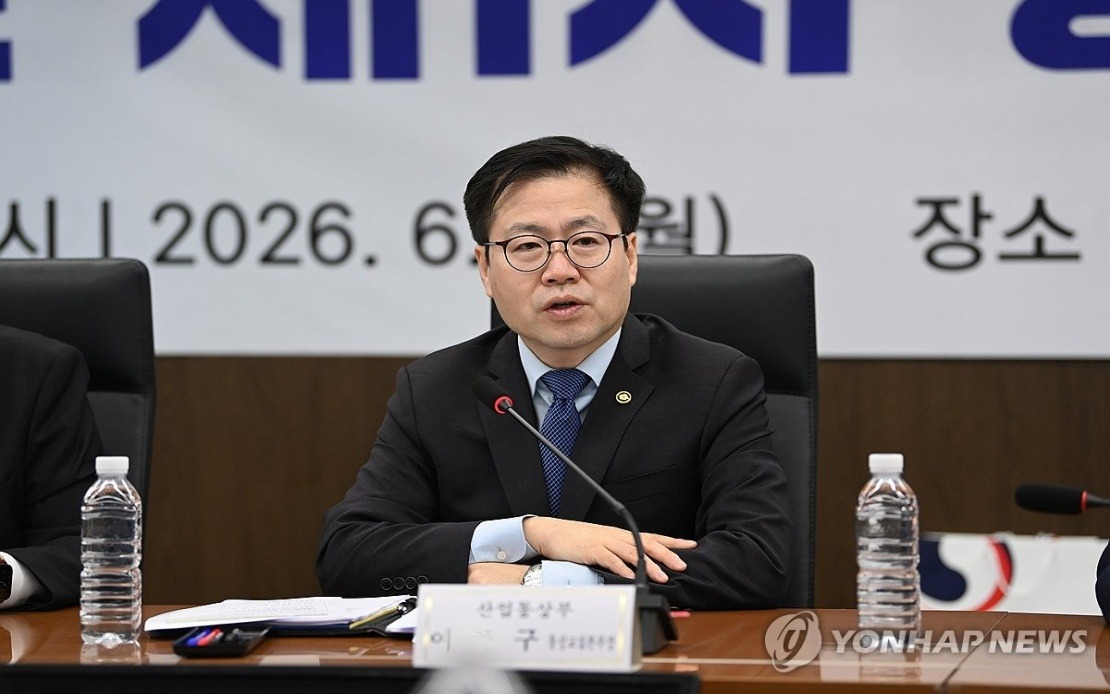
South Korea has removed its chief trade negotiator from office, creating fresh uncertainty in Seoul's increasingly fraught commercial relationship with Washington. The Ministry of Personnel Management notified Yeo Han-koo of his dismissal on Friday, according to officials at the Ministry of Trade, Industry and Energy, though no formal explanation was provided at the time of the announcement on Saturday. The decision arrives during a particularly delicate phase for bilateral trade negotiations, with the United States ramping up pressure on Seoul to honour previous investment commitments while simultaneously imposing new tariffs on critical sectors.
The government swiftly moved to contain speculation about the reasons behind Yeo's departure, with an official stating to news agencies that the dismissal held no connection to the ongoing tariff negotiations between Seoul and Washington. However, this denial itself underscores the sensitive political context surrounding the removal, given the timing and the mounting commercial pressures facing the two countries. Initial theories pointed toward possible personal misconduct, prompting Yeo to issue a statement firmly rejecting such claims and signalling his intention to pursue legal remedies against what he characterised as false reporting. The vague official language coupled with Yeo's defensive posture suggests internal political complications beyond simple administrative reshuffling.
The timing of this leadership change coincides with a sharp deterioration in trade relations. Just days earlier, on Thursday, US President Donald Trump signed a proclamation introducing fresh tariffs on drone technology and related components, with South Korea facing a 15 per cent levy on these exports. This move represents a broader hardening of American trade policy that has placed Seoul in an increasingly difficult negotiating position. The new tariffs target sectors where South Korean manufacturers have developed considerable competitive advantages, threatening both immediate export revenues and long-term strategic positioning in emerging technologies.
Beyond the drone sector, Seoul confronts a multifaceted pressure campaign from Washington. The United States is demanding that South Korea accelerate its implementation of investment commitments made under an existing bilateral trade agreement—commitments that have proven slower to materialise than American negotiators expected. Simultaneously, a separate dispute has emerged regarding penalties imposed on Coupang, the major US-listed South Korean e-commerce platform, over data protection failures. The convergence of these multiple friction points suggests Washington is adopting a more assertive stance across the full spectrum of trade relations, creating an environment where traditional diplomatic niceties are giving way to transactional pressure.
Yeo's professional trajectory offers perspective on his role in this deteriorating environment. He previously served as trade minister during the Moon Jae-in administration, bringing institutional knowledge and established relationships with American counterparts. Following the Lee Jae Myung administration's assumption of power in May 2025, Yeo was reappointed to his trade negotiating post, suggesting confidence in his ability to manage bilateral relations during an anticipated challenging period. Since his reappointment, he has been instrumental in navigating discussions with Washington regarding both the tariff framework and the investment acceleration demands, effectively becoming the public face of South Korea's trade defence.
The removal of Yeo at this juncture raises questions about Seoul's negotiating strategy moving forward. Whether his dismissal reflects internal policy disagreement about how aggressively to push back against American demands, or whether it represents a broader recalibration of South Korea's trade team composition, remains unclear. His replacement will inherit a portfolio of unresolved disputes at a moment when the margin for diplomatic error has narrowed considerably. The incoming negotiator will need to rapidly establish credibility with American counterparts while managing domestic political expectations in Seoul.
For Malaysia and other Southeast Asian economies, South Korea's travails offer instructive lessons about trade vulnerabilities in the current geopolitical climate. Seoul's experience demonstrates how quickly bilateral trade relationships can deteriorate when one party—particularly a much larger economy like the United States—decides to weaponise tariffs across multiple sectors simultaneously. The combination of drone tariffs, investment acceleration demands, and unrelated regulatory disputes suggests American negotiators are pursuing a comprehensive pressure strategy rather than compartmentalised discussions. This approach creates compounding difficulties for any trade team attempting to manage relationships through traditional negotiation.
The broader context includes rising American protectionism that extends well beyond South Korea. The Trump administration's tariff proclamations on drones reflect strategic concerns about technological competition and supply chain resilience, not merely commercial considerations. For countries throughout the region dependent on export-led growth and US market access, including Malaysia, this shifting American posture carries significant implications. The removal of experienced trade negotiators like Yeo, potentially replaced by personnel less familiar with American negotiating patterns, risks further miscommunication and escalation during an already volatile period.
South Korea's position as a technologically advanced manufacturing economy has traditionally insulated it somewhat from the harshest protectionist pressures, yet the current environment is testing those assumptions. Seoul cannot simply absorb higher tariffs through reduced margins; pressure will flow downstream to suppliers, workers, and ultimately to government coffers as export revenues decline. The urgency surrounding investment commitments reflects American concerns that Seoul has not sufficiently opened its markets or accelerated technology transfers as rapidly as promised. These disputes rarely resolve quickly, particularly when multiple grievances accumulate on both sides.
The coming weeks will reveal whether Yeo's replacement brings fresh negotiating approaches or continues established positions. Either way, South Korea now faces the operational challenge of managing trade discussions during a leadership transition. American negotiators may interpret the dismissal as weakness or instability, potentially emboldening further demands. Alternatively, if Seoul signals through its new negotiator that it intends to take a tougher stance, tensions could escalate further. The delicate balance required during trade negotiations becomes exponentially more complicated when the negotiating team itself faces domestic instability.
Regional observers will closely monitor how Seoul navigates this period, as the outcomes could establish precedents affecting other bilateral trade relationships in Asia. If the United States successfully implements comprehensive tariff strategies alongside investment acceleration demands and regulatory pressure, other countries may face similar multi-front pressure. South Korea's response, particularly through its new trade leadership, will signal whether such American strategies can overcome coordinated resistance or whether trading partners possess sufficient leverage to negotiate more balanced outcomes. The dismissed negotiator's replacement thus carries significance extending well beyond Seoul's immediate commercial interests.

