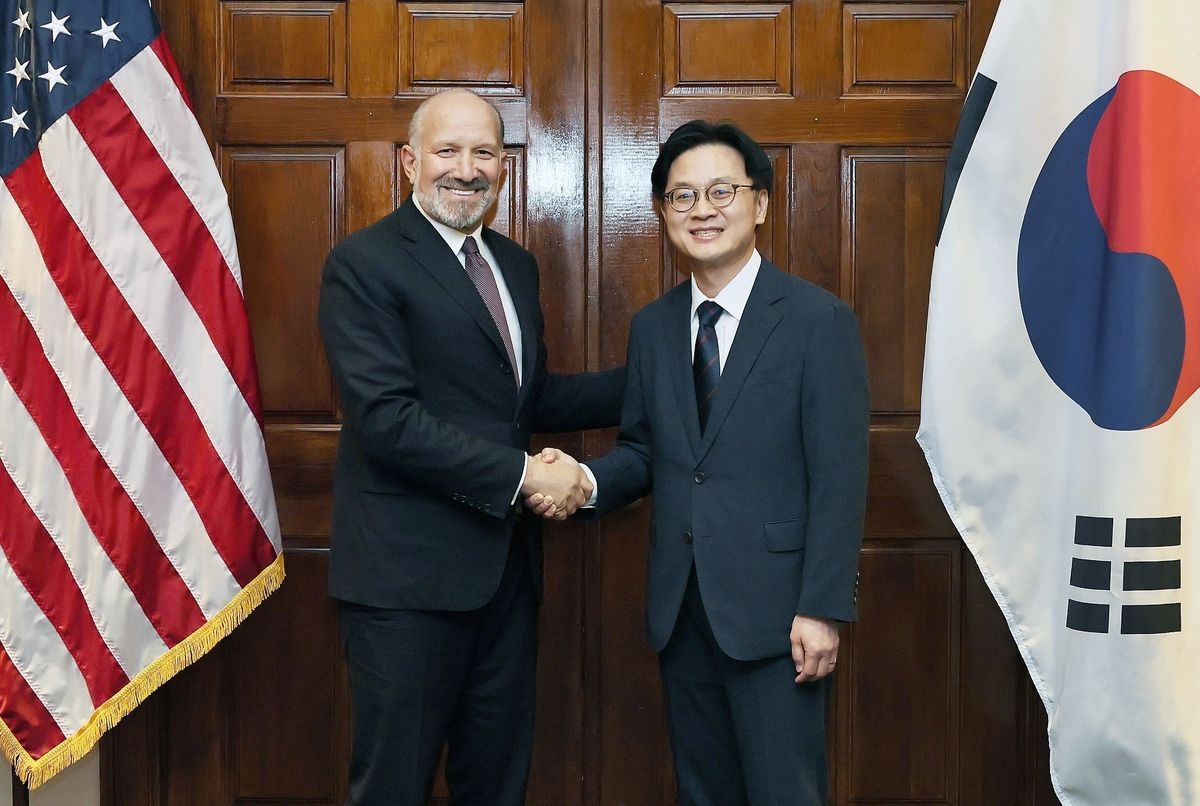
South Korea is stepping up diplomatic efforts in Washington as tensions loom over potential new American tariffs. Industry Minister Kim Jung-kwan departed for the United States on Wednesday for a four-day mission to engage senior officials and members of Congress on trade and investment matters, arriving at a critical moment when Seoul faces the prospect of additional tariffs under Section 301 of the US Trade Act. The timing of the visit underscores how seriously Seoul is treating mounting trade headwinds from Washington, where a new administration has signalled a more protectionist stance across multiple sectors.
The primary trigger for Seoul's heightened concern is a pending US investigation into trade practices allegedly linked to forced labour. South Korean media reports suggest this inquiry could result in fresh tariff measures targeting Korean exports, adding another layer of uncertainty for manufacturers already navigating a complex global trade landscape. The Section 301 mechanism, which allows the US president to unilaterally impose tariffs in response to unfair trade practices, has become a flashpoint in US-Korea relations and represents a significant risk to Seoul's export-dependent economy.
Kim's itinerary reflects a comprehensive engagement strategy designed to address both immediate trade concerns and longer-term strategic partnership opportunities. During his July 22-25 visit, he will meet with Commerce Secretary Howard Lutnick to discuss bilateral investment cooperation and the broader trade relationship. These discussions will focus on attracting additional South Korean capital into the United States, a key initiative that Seoul believes could strengthen economic ties and reduce trade friction by demonstrating mutual commitment to deepening commercial integration.
Energy and resource cooperation will also feature prominently in Kim's Washington agenda. Scheduled meetings with Energy Secretary Chris Wright signal Seoul's interest in expanding collaboration beyond traditional manufacturing sectors. This expansion reflects South Korea's broader economic diversification strategy and its need to secure reliable energy supplies amid global geopolitical instability. The discussions are likely to touch on critical minerals, liquified natural gas, and other commodities that are vital to South Korea's industrial base and energy security.
The formal centrepiece of Kim's visit is the opening ceremony of a South Korea-US Shipbuilding Partnership Center in Washington on Thursday. This facility represents a tangible outcome of a May agreement negotiated between Seoul's Ministry of Trade, Industry and Resources and the US Commerce Department. The centre will serve as an institutional hub for facilitating collaboration between Korean and American shipyard operators, enabling technology transfer, joint project development, and coordinated responses to global market opportunities. For South Korea, whose shipbuilding industry is globally competitive, such partnerships provide pathways to deepen technological cooperation and secure access to American markets and defence contracts.
Underlying these diplomatic activities is a South Korean law that came into effect in June to encourage and support strategic investments by Korean companies in the United States. Kim's discussions in Washington will focus on identifying specific investment projects that qualify under this framework and clarifying the legal and regulatory pathways for Korean capital deployment. By channelling investment into American soil, Seoul hopes to create economic interdependencies that naturally discourage protectionist measures and foster a more stable bilateral relationship.
For Malaysian readers and the broader Southeast Asian region, these developments carry significant implications. South Korea's experience navigating American trade policy foreshadows similar pressures that regional economies may face. Seoul's diplomatic approach—combining high-level government engagement, sector-specific partnership initiatives, and strategic investment flows—offers a potential template for how mid-sized economies can engage with a more assertive United States. The emphasis on concrete cooperation mechanisms like the shipbuilding centre suggests that Seoul is betting on institutional frameworks to insulate key industries from tariff shocks.
The forced labour investigation that prompted Seoul's urgency reflects a broader trend in Washington towards linking trade policy with labour and environmental standards. This represents a shift from previous administrations and signals that Korean companies operating in global supply chains will need to undergo heightened scrutiny regarding their labour practices. The implications extend throughout East Asia, where manufacturing networks are deeply integrated and where similar vulnerabilities exist in supply chains serving American importers.
Kim's engagement with Congressional members during his visit is particularly significant, as Congress has increasingly influential roles in trade matters. Building relationships and explaining Seoul's perspective to American lawmakers can help mitigate the risk of unilateral executive action that might otherwise catch Korean industries off guard. The approach reflects recognition that trade policy in Washington is not monolithic and that coalition-building among diverse stakeholder groups remains essential for protecting commercial interests.
The stability of South Korea-US trade relations carries implications for regional supply chains and investment flows. Both nations are central to semiconductor, automotive, defence, and electronics manufacturing that reaches markets throughout Asia and globally. Disruption to bilateral trade would ripple through these networks, affecting companies in Malaysia, Vietnam, Thailand, and other ASEAN members that are integrated into Korean-led value chains. Seoul's proactive diplomacy, therefore, serves not only Korean interests but also the broader economic stability of East Asia.
Seoul's emphasis on bilateral agreements and formal partnership structures reflects lessons learned from previous trade disputes and represents an attempt to create durable frameworks that transcend political cycles. The shipbuilding partnership, the investment law, and the resource cooperation initiatives all aim to institutionalise cooperation in ways that make tariff escalation politically and economically costlier for both governments. Whether these mechanisms will prove sufficient to shield South Korea from the Section 301 investigation's potential outcome remains uncertain, but they demonstrate a determined effort to manage trade risk through strategic relationship-building and visible investment commitments.

