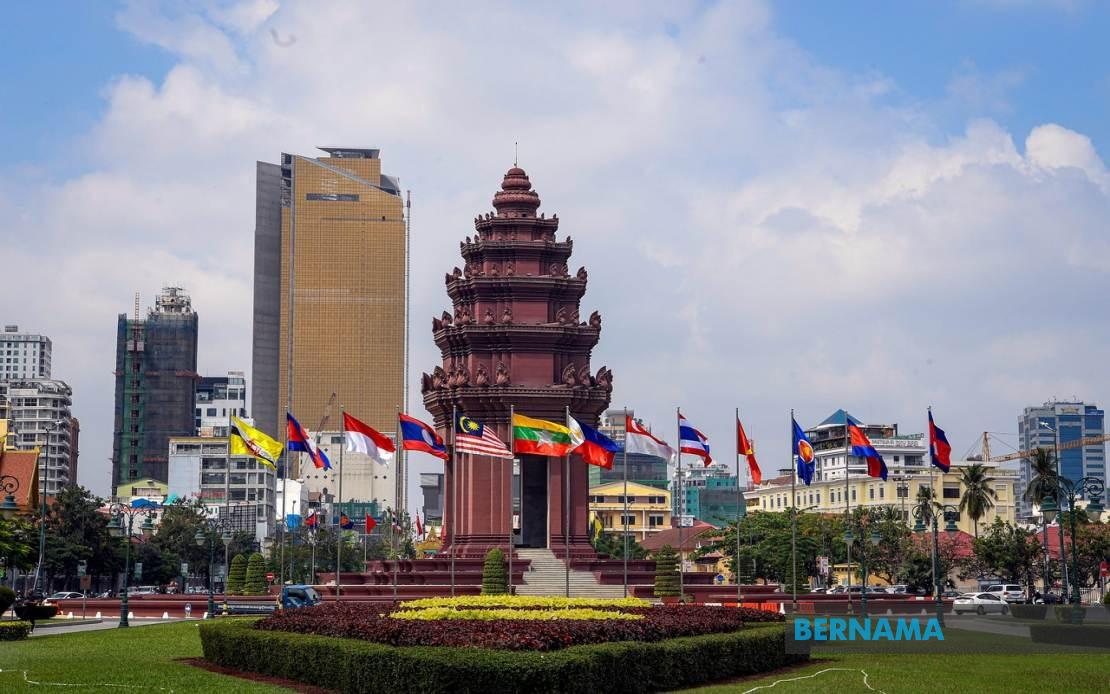
Regional development efforts across Southeast Asia are intensifying this month, with governments simultaneously tackling infrastructure modernisation and tackling corruption within their institutions. The week's headlines reveal how seven nations in the region are navigating competing priorities—investment in people and systems on one hand, and accountability within government on the other.
Cambodia has charted a two-pronged development path. New cooperation frameworks with India signal Phnom Penh's openness to foreign partnerships in rural uplift, particularly in provinces like Kratie where agricultural potential remains underutilised. Simultaneously, Cambodia's Civil Service Ministry is embarking on an ambitious internal transformation, recognising that public sector capacity and professionalism are prerequisites for service delivery. The digitisation agenda underway in Phnom Penh reflects a broader Southeast Asian pattern of government bureaucracies attempting to leapfrog legacy systems. For Malaysian observers, Cambodia's experience offers instructive lessons: rural development cannot succeed without credible, professional public administration behind it.
Indonesia's transport sector is experiencing a geographically-driven correction. The expansion of Lt. Col. Wisnu Airfield in Buleleng District, backed by Transportation Minister Dudy Purwagandhi, addresses a critical bottleneck in Bali's tourism and economic infrastructure. Northern Bali has historically suffered from limited direct air access, forcing passengers through the congested Ngurah Rai International Airport on the island's southern coast. This expansion will distribute traffic more evenly and reduce pressure on existing hubs, mirroring infrastructure solutions that regional planners across Malaysia and Thailand have long advocated. The project exemplifies how strategic secondary airport development can unlock economic potential in peripheral regions without requiring massive new capital investment.
Indonesia's simultaneous battle against institutional corruption remains unfinished business. The naming of Febrie Adriansyah, the former Junior Attorney General for Special Crimes, as a corruption suspect strikes at the heart of prosecutorial independence. When those entrusted with investigating white-collar crime themselves fall under suspicion, public confidence in the entire system fractures. For Malaysia's anti-corruption ecosystem, Indonesia's experience underscores why institutional insulation—separating investigative function from political pressure—remains essential. The case will likely reverberate across regional legal circles for months to come.
Myanmar's infrastructure developments signal optimism about economic normalisation despite broader political uncertainty. The opening of Anisakan Airport in Mandalay Region and the inauguration of the 15-megawatt Shwemyoh solar power plant reflect investment in both connectivity and renewable energy capacity. The government's phased approach to solar expansion—with planned Phase II and Phase III installations reaching 70 megawatts combined—suggests serious commitment to energy security. These projects carry implications for Malaysia, which also grapples with agricultural product distribution across dispersed regions and the imperative to expand renewable generation. Myanmar's reliance on solar expansion may put pressure on regional supply chains for photovoltaic equipment, particularly given Malaysia's role as a manufacturing hub for solar components.
The Philippines confronts multiple overlapping crises: severe weather and political upheaval. As Tropical Storm Inday exited Philippine waters, the southwest monsoon sustained rainfall across Luzon and the Visayas, extending weather hazards and humanitarian challenges. Meanwhile, the impeachment trial against Vice President Sara Z. Duterte proceeded into its second week, with prosecutors laying foundational elements of their case. The dual burden of responding to weather emergencies whilst managing high-stakes political proceedings strains presidential governance capacity. For neighbouring nations including Malaysia, the Philippines' institutional stress serves as a reminder of how multiple simultaneous crises can severely test democratic institutions.
Singapore's technology policy initiatives reveal growing attention to privacy-conscious digital infrastructure. WhatsApp's reservation of high-profile usernames ahead of its username rollout—specifically blocking names of government figures and public entities—reflects emerging norms around protecting official accounts from impersonation and misuse. This seemingly technical measure carries real implications for Southeast Asian governments as digital literacy and social-media-based disinformation campaigns intensify. Singapore's willingness to work with platforms on account security sets a template that Malaysia and other nations are beginning to adopt.
Singapore's executive condominium programme data offers a different lens on urban affordability challenges. Over five years, 845 income ceiling waivers were approved for EC applicants—representing about 16.9 per cent of appeals—suggesting that Singapore's property market still excludes significant portions of the aspirational middle class despite government intervention. This phenomenon directly parallels Malaysia's own affordable housing crisis, where even subsidised schemes struggle to match household income distributions. Both nations face the uncomfortable reality that targeted interventions cannot fully bridge gaps between housing costs and wage growth.
Thailand's transnational crime operations demand sustained regional coordination. Thai police hunting the alleged ringleader of a heroin-smuggling network that concealed drugs in elephant-print bags and recruited air hostesses illustrates how Southeast Asian trafficking networks exploit the region's porous borders and low-enforcement capacity at transportation hubs. The case underscores why Malaysia—positioned at critical junctures of regional air and maritime routes—must maintain vigilant border security protocols. Thailand's investigation into nominee property networks operating across multiple island locations (reportedly registering more than 100 companies at single addresses) reveals a parallel concern: foreign-linked shell entities exploiting regulatory gaps to launder proceeds or obscure beneficial ownership.
Collectively, this week's developments from the broader Southeast Asian region underscore a vital pattern: governments simultaneously pursuing modernisation whilst battling institutional degradation. Cambodia invests in civil service capacity even as corruption elsewhere persists. Myanmar expands renewable energy whilst confronting isolation. Indonesia pursues transport expansion whilst prosecuting former officials. The Philippines manages weather emergencies amid constitutional crises. These competing dynamics reflect the region's uneven development trajectory—pockets of genuine institutional improvement existing alongside persistent vulnerabilities. For Malaysia, tracking these developments matters because regional stability depends on no single nation becoming so compromised that it exports instability across borders.

