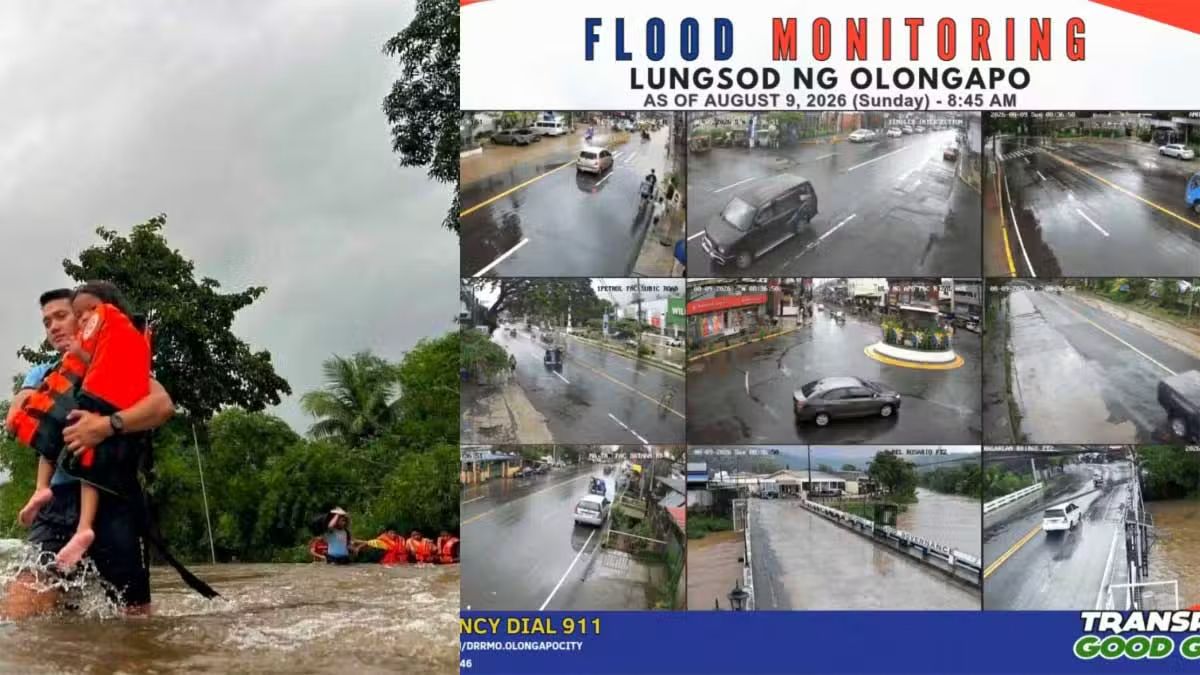
The Philippines is grappling with a severe natural disaster as the southwest monsoon, locally known as the habagat, combines with two tropical weather systems to unleash widespread flooding across vulnerable communities. Authorities have ramped up rescue and relief operations in multiple regions, with the National Disaster Risk Reduction and Management Council confirming on Sunday that at least 382,000 people—representing some 110,000 families—have been impacted by the deluge. The disaster has predominantly struck eight regions spanning both the island of Luzon and Mindanao, underscoring the scale of the meteorological challenge facing the nation.
The human toll of this weather catastrophe has already reached at least nine fatalities, with the deaths spanning multiple causes including drowning, electrocution, and landslides. Among the victims was a policeman from Negros Occidental who lost his life attempting to rescue two colleagues from a surging river, exemplifying the perilous conditions facing rescue personnel. A 28-year-old resident of Cuenca, Batangas, became another casualty on Saturday evening when he was electrocuted while traversing a flooded section of J.P. Laurel Highway in nearby Lipa City. Additional drowning victims were recorded in towns across Ilocos Sur, Pangasinan, Benguet, and Rizal, including a minor in Candon City, Ilocos Sur, whose death highlighted the vulnerability of children in flood-prone communities.
Meteorological forecasters project that the deluge will persist well into the week, with the Philippine Atmospheric, Geophysical and Astronomical Services Administration issuing a Sunday evening advisory predicting sustained heavy rainfall through Wednesday. The weather agency specifically warned that mountainous and elevated terrain will face the most severe precipitation, raising the risk of flash floods and secondary disasters such as debris flows and landslides. Regions that have already experienced significant rainfall face heightened danger of compounding effects, as saturated soil conditions and overflowing water channels amplify the potential for catastrophic flooding. This convergence of the seasonal monsoon with two distinct tropical disturbances—Tropical Depression Luis and Tropical Storm Maymay, internationally designated as Kujira—has created an unusually potent weather system that few areas in the affected regions were adequately prepared to withstand.
The infrastructure underpinning the nation's water management systems is showing signs of strain. The Angat Dam in Norzagaray, Bulacan, which serves as a critical water supply and flood control facility for Metro Manila and surrounding provinces, experienced a dramatic rise of nearly fifteen metres within just ten days. By Sunday afternoon, the dam's water level had climbed to 164.80 metres above sea level, representing a surge from its position of 161.30 metres only that morning. This ascent from a record-low of 150.61 metres recorded on July 30 illustrates how rapidly the monsoon has recharged the reservoir. Downstream, the Ipo Dam approached its operational spilling threshold of 101 metres above sea level while discharging 314.91 cubic metres of water per second, creating heightened flood risks in communities situated along the course of rivers fed by these reservoirs.
Central Luzon has emerged as particularly hard-hit, with ninety-eight villages submerged by floodwaters that have affected nearly 170,000 individuals across the region. Pre-emptive evacuation operations conducted in Nueva Ecija and Zambales relocated 781 families, totalling 2,544 people, to safer ground ahead of anticipated water level rises. In Zambales province, the situation deteriorated dramatically when a dike breached in San Marcelino, isolating entire communities and cutting off access via normal transportation routes. A bridge in Barangay Santa Fe was obliterated by powerful currents, further fragmenting regional connectivity. Destructive winds accompanying the monsoon claimed additional infrastructure in San Antonio, where at least eleven residential structures and a barangay multipurpose hall sustained damage.
Bulacan province, situated downstream from critical water reservoirs, faces compounding threats from both rainfall and tidal surge. Nearly 1,000 residents from multiple municipalities required emergency evacuation as floodwaters inundated low-lying areas, with some locations experiencing water depths reaching approximately four feet. The Bulusan Riverbank in Calumplit became impassable for light vehicles, severing critical transportation links. Similarly, flooding in mountain provinces has triggered extensive road closures and created dangerous conditions for drivers and communities. Two bridges spanning the Chico River in Cagayan province became impassable due to rising water levels, while Nueva Vizcaya, Abra, and Mountain Province all reported landslides and rockfalls blocking major thoroughfares and isolating villages.
The Calabarzon region, encompassing provinces south of Metro Manila, has absorbed impacts affecting more than 7,000 families. Evacuation centres established across twenty-nine different localities are now sheltering 3,134 families, placing severe strain on local government resources and humanitarian response capacity. In Iloilo City, located in the Visayas region, a suspected tornado spawned by the intense weather system caused additional devastation, damaging at least fifty-two houses and displacing more than 150 residents. Utility infrastructure proved vulnerable as well, with downed trees and electrical posts complicating rescue efforts and slowing restoration of essential services.
Maritime transportation has effectively halted across affected regions, with the Philippine Coast Guard reporting that 543 passengers, commercial truck drivers, and cargo handlers have become stranded at twenty-eight ports distributed across four separate regions. This disruption threatens supply chains and economic activity, extending the disaster's impact beyond communities directly experiencing flooding. Major urban thoroughfares throughout Luzon have become clogged with debris and water, forcing local government units to conduct ongoing emergency evacuations and prompting the Philippine National Police to mobilise substantial personnel and resources. The national police chief, Gen Jose Melencio Nartatez Jr, appealed to the public to remain vigilant while following official guidance, and specifically cautioned citizens against amplifying unverified online reports that could trigger unnecessary public alarm.
The disaster has reignited political debate surrounding infrastructure resilience and government spending priorities. The Makabayan coalition has criticised what it characterises as failures in flood control infrastructure projects overseen by the current Marcos Jr. administration, arguing that existing vulnerabilities have been repeatedly exposed by each monsoon season. As legislative deliberations commence on the 2027 national budget, opposition lawmakers are demanding heightened scrutiny of unprogrammed appropriations, claiming that these discretionary funds have historically facilitated pork barrel spending that enables corruption among elected officials. This political dimension adds another layer of complexity to the immediate humanitarian crisis, suggesting that discussions about disaster prevention and preparedness will likely intensify as recovery operations unfold across the affected regions.

