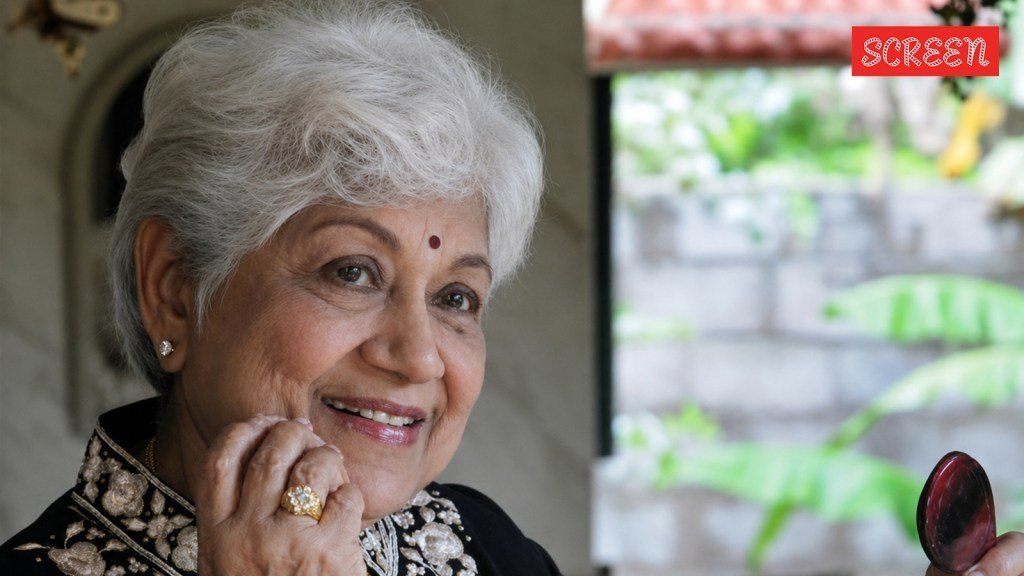
Sowcar Janaki, the towering figure of South Indian cinema who graced nearly 400 films across Tamil, Telugu, Kannada, and Malayalam industries, passed away on Friday in Chennai at the age of 94. The veteran actress, whose real name was Sankaramanchi Janaki, succumbed to age-related illness at a private hospital following a brief spell in the intensive care unit. Her death was confirmed by Nassar, president of the South Indian Artistes' Association, who stated that her mortal remains would be displayed at Cenotaph Road, Teynampet, from 5 pm on the day of her passing.
Janaki's career trajectory represents a defining chapter in the history of South Indian cinema. Beginning her film journey in 1950, she became one of the most recognisable faces across multiple film industries in the subcontinent, a feat that distinguished her from her contemporaries who often specialised in single-language cinema. Her filmography spans seven decades, during which she worked with virtually every leading hero of her generation and became particularly known for her portrayal of maternal figures—roles that became her signature and earned her the affection of audiences across cultural and linguistic boundaries. This cross-regional appeal made her a rare unifying figure in the otherwise compartmentalised South Indian film ecosystem.
The actress's contributions to cinema earned her substantial recognition throughout her lifetime. She received the Padma Shri, India's fourth-highest civilian honour, acknowledging her cultural impact beyond entertainment. Additionally, she was honoured with the Filmfare Lifetime Achievement Award, two National Film Awards (Nandi Awards), and the Kalaimamani Award, which recognises excellence in arts and culture in Tamil Nadu. These accolades collectively underscore the depth of respect she commanded not only from audiences but also from film industry bodies and cultural institutions across India.
Tamil Nadu's Chief Minister and actor C. Joseph Vijay expressed his shock at her passing, releasing a statement in Tamil that highlighted Janaki's artistic journey and her ability to portray memorable characters that remained etched in public memory across generations. He characterised her death as a profound loss to the film fraternity, emphasising her multilingual career and the numerous awards she had accumulated. His remarks reflected the sentimental connection that political figures and cultural personalities maintained with Janaki, viewing her as integral to the region's artistic heritage rather than merely an entertainer.
Colleagues and contemporaries from across the South Indian film industry paid elaborate tributes to the departed actress. Kamal Haasan, who worked with Janaki for over four decades beginning with the film Paarthaal Pasi Theerum, reflected on their professional relationship with evident emotion. He noted that she frequently played his on-screen mother while he portrayed the child, becoming an indispensable presence in South Indian cinema. Haasan also mentioned that director K. Balachander, a mentor figure in his career, frequently cast Janaki, suggesting her reputation as a reliable and accomplished performer who could elevate any production she was part of.
Actress Radhika Sarathkumar characterised Janaki as a strong-willed and independent trailblazer, noting their personal acquaintance and professional association. She highlighted Janaki's friendship with actor Radha, Sarathkumar's father, underscoring the interconnectedness of the South Indian film community across generations. Prabhudeva, Jr NTR, Chiranjeevi, and Vishnu Manchu all released statements acknowledging Janaki's indelible mark on Telugu cinema, with several tributes specifically noting her work in that industry alongside her Tamil film presence. These testimonials from actors of differing generations and from both Tamil and Telugu industries demonstrated the breadth of her influence and the universal esteem in which she was held.
Janaki's later career demonstrated her continued relevance and demand as an actress even in her advanced years. Her final Tamil film appearance was in Biskoth in 2020, while her most recent Telugu film was Anni Manchi Sakunamule in 2023, indicating that she remained active in the industry well into her nineties. This extended career is particularly notable given that it spans from the golden age of South Indian cinema through to the contemporary streaming and digital era, allowing audiences across multiple decades to experience her craft.
For Malaysian audiences and Southeast Asian readers more broadly, Janaki's legacy holds particular significance. South Indian cinema, with its substantial Tamil and Telugu film production, enjoys considerable viewership throughout Malaysia, Singapore, and other parts of the region where Indian diaspora communities maintain cultural connections. Janaki's work represents a shared cultural touchstone for many families across Southeast Asia who grew up watching South Indian films. Her multilingual career—encompassing Tamil, Telugu, Kannada, and Malayalam—also mirrors the linguistic diversity of Indian communities across Southeast Asia, making her an emblematic figure of how Indian cinema transcends state and language boundaries.
The actress's passing marks the end of an era in South Indian cinema. Her career spanned from the early post-independence years through to the contemporary period, encompassing the evolution of filmmaking technologies, narrative styles, and audience preferences. She worked during the dominance of classical narrative cinema, through the rise of method acting, and into the contemporary period of multiplex and streaming releases. Her ability to remain relevant and sought-after throughout these transformations speaks to her fundamental skill as a performer and her deep understanding of dramatic craft.
Janaki's death also prompts reflection on the historical documentation and preservation of South Indian cinema's golden age. As one of the last surviving links to the era of early Tamil and Telugu cinema, her interviews, archived performances, and reminiscences represent invaluable cultural records. The film industry and cultural institutions across South India will likely now undertake efforts to document her legacy more comprehensively, ensuring that future generations can access her insights into the development of regional cinema.
The tributes pouring in from across the film fraternity underscore a consensus that Janaki's contributions transcended mere entertainment value. She represented professional excellence, consistency, and an unwavering commitment to her craft across seven decades. Her ability to command respect from both established stars and emerging talent, across multiple film industries and linguistic regions, reflects a rare stature in cinema history. As the South Indian film industry mourns her passing, her filmography and the countless characters she brought to life remain available to audiences, ensuring that her artistic legacy will continue to educate and move viewers for generations to come.

