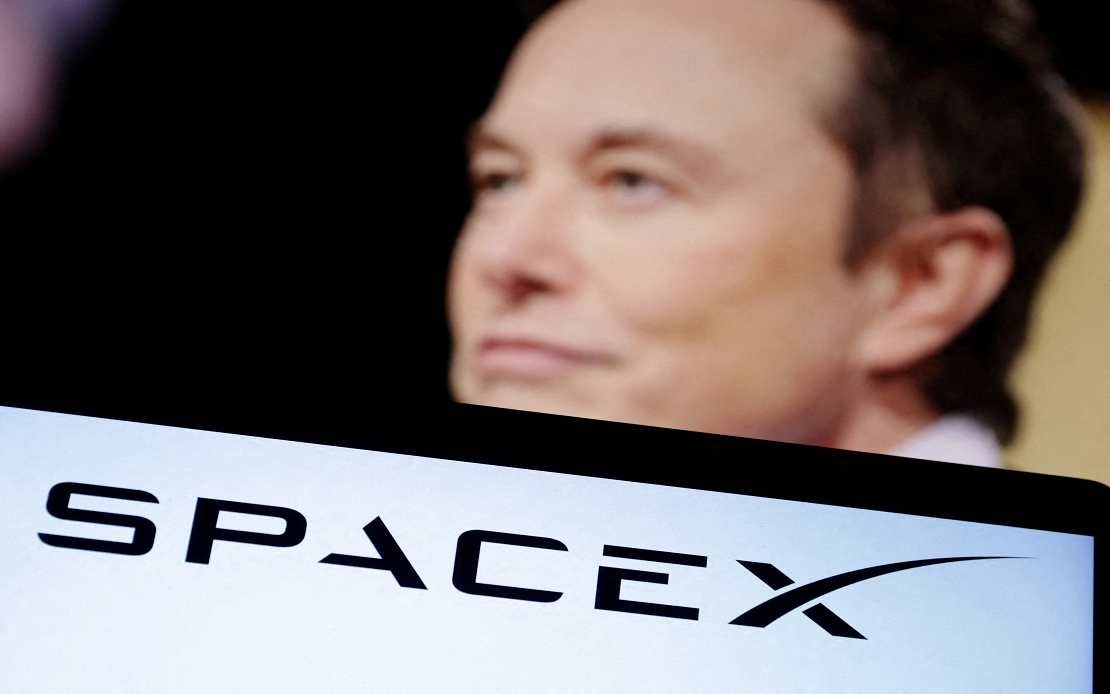
Elon Musk's SpaceX has revealed a complex financial picture in its first quarter as a public company, reporting a net loss of US$541 million even as revenue climbed nearly 92 per cent year-on-year to US$7.8 billion—substantially exceeding analyst estimates of around US$6.9 billion. The company's return to public markets in mid-June through a record US$75 billion initial public offering has positioned it as one of the world's most valuable firms, yet the underlying economics remain a paradox that deserves scrutiny from investors and policymakers tracking the commercialisation of space technology.
While the quarterly loss of US$541 million appears substantial, it represents a significant improvement from the US$1 billion deficit posted in the same period a year earlier, signalling that SpaceX's path toward profitability is accelerating despite carrying the overhead of being a publicly traded enterprise. Operating profit surged 80 per cent to around US$1.66 billion, demonstrating that the company's core business operations are generating increasingly healthy margins—a metric that matters more to operational health than net loss figures inflated by depreciation, stock-based compensation, and other non-cash charges typical of capital-intensive space ventures.
The financial engine powering SpaceX's expansion remains Starlink, its satellite internet constellation service, which contributed approximately US$4.3 billion in revenue during the quarter, nearly two-thirds higher than the previous year's corresponding period. This division's explosive growth reflects the global appetite for high-speed broadband connectivity, particularly in regions underserved by traditional terrestrial infrastructure—a dynamic highly relevant to Southeast Asian markets where rural connectivity remains patchy and expensive. The Starlink customer base expanded from 10.3 million to 12 million subscribers within just three months, underscoring aggressive market penetration and the service's competitive positioning against incumbent telecommunications monopolies and duopolies worldwide.
Starlink's expanding airline customer base represents a crucial revenue diversification strategy that opens new market segments beyond residential and commercial broadband users. Airlines deploying Starlink for in-flight connectivity create a recurring revenue stream while deepening the service's integration into critical infrastructure—a transition that bolsters the unit's defensibility and long-term growth prospects. For Malaysian and regional carriers, this technology represents both opportunity and competitive pressure, as adoption of satellite internet becomes increasingly necessary for maintaining passenger expectations around connectivity during flights.
The valuation paradox surrounding SpaceX merits careful examination. At its mid-June IPO, the company issued shares at US$135 each, implying a market capitalisation approaching US$1.8 trillion—a figure that stands in stark contrast to quarterly losses and justified principally by management's ambitions in artificial intelligence and long-term space infrastructure development. The stock subsequently rallied above US$225 in post-IPO enthusiasm driven substantially by retail investor appetite, before retreating below the original listing price to close regular trading Tuesday around US$125, reflecting the market's recalibration of growth expectations and risk assessment.
The sharp stock volatility carries particular significance as SpaceX approaches the expiration of its lock-up period on Thursday, when company insiders and early investors will be permitted to sell holdings previously restricted from trading. This event typically triggers substantial selling pressure as large shareholders including venture capital firms and early backers seek to crystallise gains accumulated over SpaceX's privately held years. The potential sell-off could accelerate the stock's downward trajectory unless strong fundamental developments or positive market sentiment intervene.
SpaceX's strategic pivot toward enabling direct smartphone connectivity to the Starlink network positions the company to directly challenge established telecommunications operators across the globe. This technological shift would eliminate the need for ground-based cellular infrastructure in many scenarios, effectively disintermediating the terrestrial mobile networks that have dominated wireless communications for decades. Malaysian telecommunications companies and regulators should monitor this development closely, as it could disrupt existing network economics and regulatory frameworks designed around terrestrial spectrum allocation and mobile operator licensing.
The company's operational strategy reflects sustained commitment to reducing space access costs through development of the Starship launch vehicle, currently undergoing test flights. Starship represents an ambitious engineering effort designed to dramatically lower per-kilogram launch costs, potentially transforming satellite deployment economics and enabling new classes of orbital applications. Successful Starship commercialisation would cement SpaceX's dominance in space launch services and accelerate adoption of satellite-based solutions across telecommunications, Earth observation, and scientific research sectors—developments with cascading implications for Southeast Asian countries seeking to leverage space technology for development and resource management.
SpaceX has become functionally indispensable to United States space operations and military logistics, holding exclusive contracts for critical national security missions. This strategic positioning insulates the company from competitive pressures and provides steady revenue regardless of commercial satellite market conditions. However, international competitors including European, Russian, and emerging launch providers continue developing competing systems, and the geopolitical importance of space technology means that regulatory environments could shift rapidly based on strategic competition between great powers.
The financial performance disclosed raises questions about valuation sustainability and the timeline to sustained profitability. While Starlink's growth trajectory remains impressive, the company faces escalating competition from Amazon's Project Kuiper and other emerging satellite internet ventures, plus potential regulatory constraints around orbital debris, radio spectrum allocation, and launch licensing across multiple jurisdictions. Malaysian policymakers considering participation in space-based infrastructure or regulation of satellite services imported from foreign operators should evaluate both SpaceX's technological leadership and the inherent volatility characterising space commerce enterprises.
For Malaysian investors and tech-focused funds considering SpaceX exposure, the current volatility presents both risk and opportunity. The company's technological achievements and market position are genuine, yet the astronomical valuation multiples relative to current profitability leave little margin for execution disappointments or slower-than-expected commercial adoption. The post-lock-up period will provide crucial clarity regarding insider confidence and potential supply-demand dynamics in secondary trading.

