Spain has announced plans to reinstate temporary internal border checks on travellers arriving from Italy, marking an escalation in tensions between two European Union member states over migration management. The measure takes effect on Saturday and will remain in place through September 7, unless circumstances warrant an earlier revision. Checks will occur at ports and airports, focusing on random identity and document verification for incoming passengers.
The Spanish government's decision represents a direct response to Italy's unilateral reintroduction of border controls against Spanish arrivals on August 1. Madrid has characterized Rome's action as unjustified, discriminatory, and fundamentally contrary to the principles underpinning the European Union's operational framework. Spain has formally demanded that Italy withdraw these measures without delay, viewing them as a breach of intra-EU travel norms that underpin the Schengen area's foundational agreements.
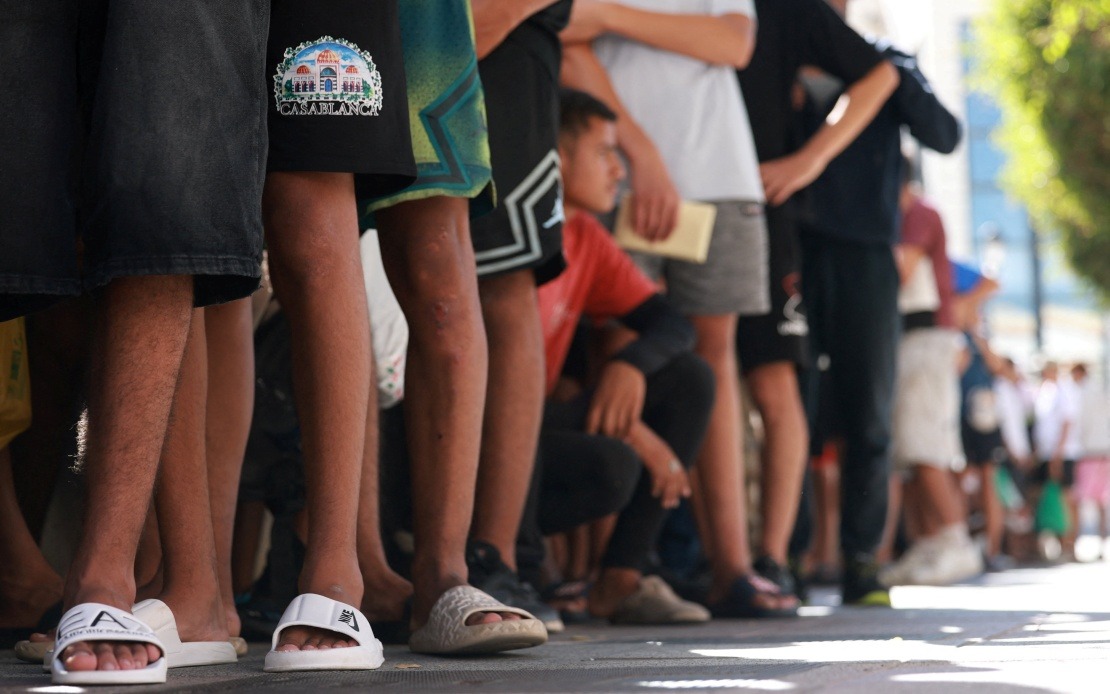
Italy's Prime Minister Giorgia Meloni initiated the original border controls on July 31 following an unprecedented surge of migrants into Ceuta, Spain's North African enclave. The influx was staggering in scope: approximately 80,000 people entered the territory within days at the end of July. However, the situation has since stabilized somewhat, with nearly 75,000 of those arrivals subsequently returning voluntarily to Morocco or elsewhere. Despite this partial resolution, between 3,000 and 5,000 migrants remain stranded in Ceuta, creating severe overcrowding at reception facilities and triggering what Ceuta President Juan Jesus Vivas has described as a critical humanitarian emergency.
The Italian government has justified its continuing border controls by invoking national security and effective border-management prerogatives. Officials in Rome have rejected what they perceive as external pressure on these matters, emphasizing that Italy will not accept ultimatums regarding its sovereignty over such decisions. However, Rome has clarified that its temporary checks apply specifically to third-country nationals arriving from Spain; Spanish citizens and other EU nationals entering by air or sea are exempted from these procedures. Italian border authorities have also indicated their intention to minimize disruption to legitimate cross-border travel and commerce.
For Malaysian and Southeast Asian observers, this European dispute illustrates how migration pressures can rapidly destabilize relationships among neighboring nations, even within formally integrated economic and political structures. The European Union's Schengen area, which permits visa-free movement among member states, is theoretically incompatible with member-state border controls. Yet when migration crises overwhelm reception capacities, nations resort to unilateral protective measures, exposing the practical limits of supranational agreements during emergencies.
The Ceuta crisis itself reflects broader patterns affecting Mediterranean and European migration routes. The enclave's geographic proximity to Morocco and its status as Spanish territory make it a focal point for migrants attempting to reach Western Europe. The sudden July influx suggests that organized movements may be coordinating arrivals to exploit perceived gaps in border enforcement or to test EU responses. Such tactics mirror strategies employed in other regions, including Southeast Asia, where irregular migration flows often spike when smuggling networks identify momentary vulnerabilities.
The dispute between Spain and Italy also underscores the vulnerability of EU border management when consensus breaks down. Unlike Southeast Asian regional frameworks such as ASEAN, which generally respect individual member sovereignty over border matters, the EU has attempted to create unified migration and security protocols. When these protocols are perceived as inadequate during crises, member states frequently revert to autonomous action, triggering retaliatory measures and diplomatic friction. This dynamic mirrors challenges faced in other regional organizations where economic integration outpaces political trust.
The economic implications of these measures extend beyond the immediate Schengen disruption. Spain and Italy are significant trading partners, and even temporary border delays can create friction in supply chains and tourism sectors. For Malaysia's business community engaged in European trade, such incidents serve as reminders that political crises can rapidly translate into logistics challenges and market volatility. Companies with operations or supply chains involving southern European routes must prepare contingency plans when interstate relations deteriorate.
The humanitarian dimension cannot be overlooked. The 3,000 to 5,000 migrants remaining in Ceuta face uncertain prospects while Spanish and Italian officials engage in jurisdictional disputes. International humanitarian organizations have expressed concern about conditions in the overstretched reception facilities. The stalemate between Madrid and Rome effectively leaves vulnerable populations in limbo, unable to proceed further into Europe but unable to return safely due to complex transit dynamics.
Looking forward, resolution likely requires either a negotiated compromise allowing both nations to withdraw their measures simultaneously, or external EU mediation establishing burden-sharing arrangements for migrant management. The European Commission has previously attempted to broker such settlements, but success requires political will from both parties. Without intervention, the tit-for-tat escalation could continue, with broader implications for Schengen zone functionality and intra-EU relations.
For policymakers in Southeast Asia monitoring European developments, this incident provides instructive lessons about migration governance. As urbanization, climate stress, and economic disparities drive migration within the region, ASEAN member states may face similar pressures to implement unilateral border measures. Learning from Europe's experience—both the benefits of coordinated frameworks and the dangers of unilateral action—could help Southeast Asian nations develop more resilient approaches to managing population movements. The Ceuta crisis demonstrates that even wealthy, formally integrated regions struggle with migration challenges; developing nations face proportionally greater difficulties.

