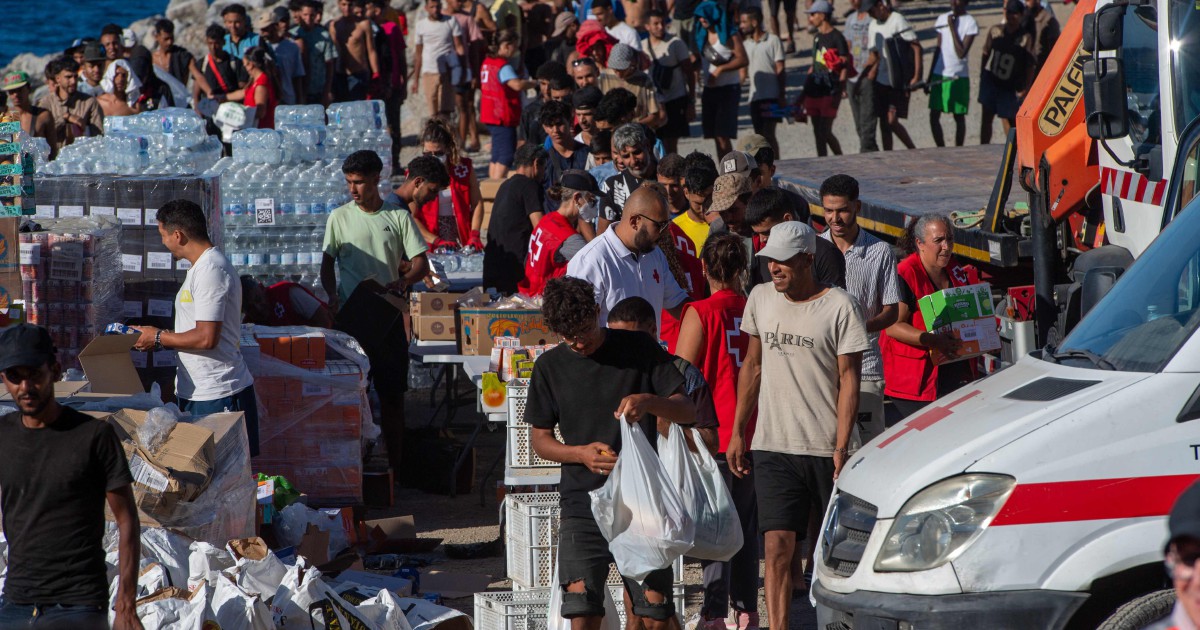
Spain's Prime Minister Pedro Sanchez has publicly blamed Russia and Israel for orchestrating a disinformation campaign that contributed to a sudden influx of migrants entering the Spanish territory of Ceuta last month, marking a significant geopolitical allegation that shifts focus from Morocco's traditional role in migration disputes. The statements, made on Monday, represent a notable departure from earlier speculation about regional actors and inject Cold War tensions into an ongoing Mediterranean migration challenge that has tested European border security and diplomatic relations.
The Ceuta crisis, which unfolded as thousands of migrants attempted to cross from North Africa into Spanish soil within a compressed timeframe, initially sparked assumptions that Morocco might have deliberately relaxed border controls as retaliation for diplomatic grievances. However, Sanchez's attribution of responsibility to external powers suggests the situation was far more complex than a bilateral dispute between Madrid and Rabat. The Spanish premier's characterisation reflects growing international concern about how false narratives and coordinated messaging can amplify real crises and exploit existing vulnerabilities in immigration systems across Europe.
Sanchez indicated that intelligence assessments had uncovered indicators of Russian and Israeli involvement in spreading misleading claims about Spanish migration policy. While the Prime Minister stopped short of detailing specific evidence, his public naming of these actors underscores how disinformation has become a tool for state and non-state actors seeking to destabilise European societies. The accusation aligns with documented patterns of Russian interference in Western politics, though the Israeli dimension introduces a newer and more contested element into discussions about information warfare.
The exoneration of Morocco carries particular weight for Madrid, as it potentially preserves diplomatic channels with a critical neighbour whose cooperation remains essential for managing the Mediterranean migration corridor. Relations between Spain and Morocco have historically oscillated between cooperation and tension, with migration serving as both a flashpoint and a bargaining chip in bilateral negotiations. By publicly clearing Moroccan officials of complicity, Sanchez may be attempting to restore trust and prevent further deterioration in relations that could complicate European border management efforts.
The disinformation blamed on Russia and Israel likely capitalised on pre-existing anxieties about immigration levels in Europe, amplifying narratives about Spanish policy failings or exploiting demographic concerns that resonate across the continent. Such campaigns typically operate by flooding information spaces with conflicting claims, weakening public trust in official statements, and creating confusion that makes coordinated policy responses difficult. In the case of Ceuta, false narratives may have encouraged migrants to attempt crossing by suggesting Spanish authorities were overwhelmed or unable to enforce border controls effectively.
For Malaysia and other Southeast Asian nations, the Ceuta episode offers instructive lessons about how disinformation weaponisation extends beyond traditional geopolitical rivalries to encompass migration and border security challenges. The region's own experience with cross-border migration, human trafficking, and coordinated smuggling networks demonstrates how information operations can interact with ground-level criminal activity to create humanitarian and security crises. Southeast Asian governments increasingly recognise that defending against disinformation requires coordination not only with traditional allies but also with neighbouring countries, particularly those sharing migration pressures.
The Russian element in Sanchez's narrative reflects Moscow's documented interest in exploiting European fractures, particularly around immigration and social cohesion issues that divide publics and governments alike. By amplifying migration anxieties, Russian disinformation operations can simultaneously undermine public confidence in institutions and strain relationships between European nations and their African and Middle Eastern partners. This creates strategic advantage for Moscow without requiring direct military or diplomatic intervention.
The Israeli connection, though less detailed by Sanchez, may relate to broader geopolitical tensions affecting diplomatic relationships and information ecosystems across the Mediterranean region. However, without additional specifics, this dimension remains harder to assess and may reflect broader coordination among various actors with interests in destabilising European migration governance rather than a singular Israeli strategy focused on Spain specifically.
The implications for European migration policy remain significant. If external actors can successfully manipulate migration flows through disinformation, European nations must develop more sophisticated approaches to border security that account for information operations alongside traditional physical and technological measures. This might include coordinated messaging strategies, media literacy initiatives, and intelligence sharing frameworks designed to identify and counter false narratives before they influence migrant behaviour or public opinion.
Spain's experience also highlights the vulnerability of migration systems to weaponised information. With millions of migrants and displaced persons seeking entry into Europe annually, any confusion about policies or opportunities can trigger unpredictable surges that overwhelm infrastructure. Protecting against such manipulation requires sustained cooperation between Spain, Morocco, other EU members, and international partners invested in Mediterranean stability.
Looking forward, Sanchez's public attribution serves multiple purposes: it reframes the crisis as evidence of external interference rather than Spanish policy failure, preserves the crucial Madrid-Rabat relationship, and signals to European partners that migration challenges increasingly entangle broader geopolitical competition. For countries throughout the Mediterranean and beyond, the lesson is clear: effective migration governance cannot ignore the information warfare dimension that increasingly accompanies physical border crises.

